
Pure Peptide Guide: Understanding Peptides for Weight Loss and Research
Introduction
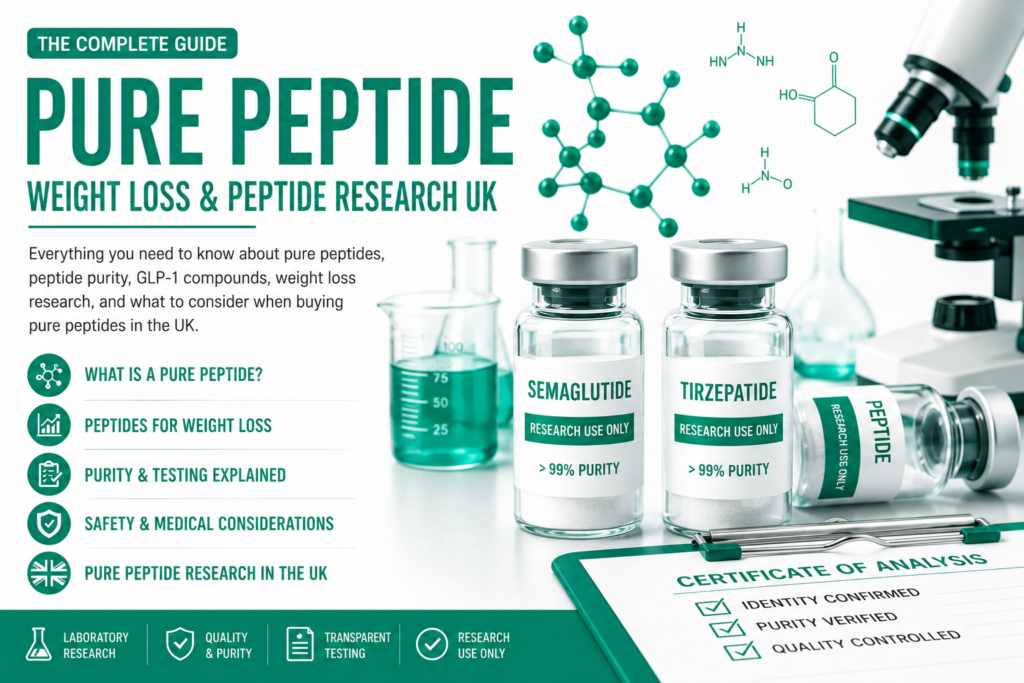
Peptides have become an increasingly important area of scientific and pharmaceutical research, with growing interest in their potential roles in metabolism, hormone signalling, appetite regulation, recovery, and many other biological processes. As awareness has increased, terms such as pure peptide, peptide research, and peptides for weight loss have also become more common among researchers and people looking to better understand peptide science. Pure peptide
But what exactly is a pure peptide, and why does peptide purity matter?
Peptides are short chains of amino acids—the same fundamental building blocks that make up proteins. Within the body, naturally occurring peptides can act as signalling molecules, helping cells communicate and influencing a wide range of biological functions. Scientists can also synthesise peptides for laboratory research, allowing specific compounds and biological pathways to be studied under controlled conditions. Pure peptide
When people search for a pure peptide, they are often looking for information about the identity, composition, quality, or purity of a particular peptide compound. In laboratory research, purity can be particularly important because unwanted substances or inconsistencies may affect experimental results. Researchers may therefore consider factors such as analytical testing, batch documentation, storage conditions, and Certificates of Analysis (COAs) when evaluating peptide materials. Pure peptide
Interest in peptides has grown especially quickly around metabolic and weight-management research. Compounds associated with pathways such as glucagon-like peptide-1 (GLP-1) and glucose-dependent insulinotropic polypeptide (GIP) have received considerable scientific attention because these signalling systems are involved in appetite, satiety, blood glucose regulation, and energy balance.
This research has contributed to the development of regulated prescription medicines containing compounds such as semaglutide, tirzepatide, and liraglutide. These medicines have been extensively studied for specific medical indications, including chronic weight management in appropriate patients. Pure peptide
However, an important distinction needs to be made from the beginning: research peptides and approved prescription medicines are not automatically interchangeable. A laboratory product containing a particular peptide or similarly named compound should not be assumed to have the same regulatory status, intended use, manufacturing standards, or clinical evidence as an approved medicine.
Throughout this guide, we’ll explore what peptides are, what pure peptide means in a research context, how peptide purity is evaluated, how GLP-1 and related pathways are involved in weight-management science, and what distinguishes established medicines from compounds intended specifically for laboratory research.
What Are Peptides?
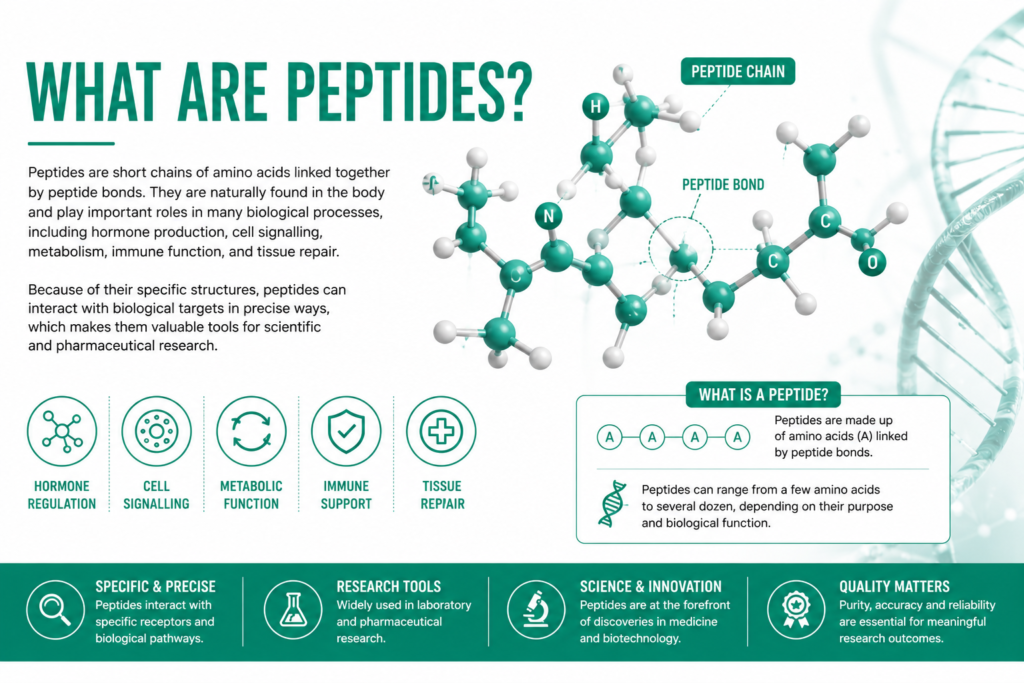
Peptides are naturally occurring or laboratory-synthesised compounds made from chains of amino acids. Amino acids are often described as the building blocks of proteins, but when a relatively short sequence of them joins together through peptide bonds, the resulting molecule is known as a peptide.
Peptides are found throughout the human body and play important roles in biological communication. Some function as signalling molecules, carrying messages between cells and helping regulate processes such as hormone activity, metabolism, immune responses, tissue function, appetite, and blood glucose control.
The main difference between peptides and proteins is generally their size and structural complexity. Peptides contain shorter chains of amino acids, while proteins typically consist of longer chains that fold into more complex three-dimensional structures. Despite their smaller size, peptides can have highly specific biological functions depending on their amino-acid sequence and the receptors or pathways with which they interact.
This specificity is one reason peptides have become an important area of scientific research. Researchers can study individual peptide compounds to better understand receptor activity, cellular signalling, metabolic pathways, and other biological mechanisms.
What Is a Pure Peptide?
The term pure peptide generally refers to a peptide preparation in which the intended peptide represents a high proportion of the material being analysed, with relatively low levels of unwanted peptide-related impurities.
Peptide purity can be particularly important in laboratory research. During peptide synthesis, incomplete sequences, modified molecules, residual synthesis by-products, or other impurities may be present. These can potentially introduce variables into an experiment, making it more difficult to determine whether an observed result is associated with the intended peptide.
However, a stated purity percentage should not be considered the only measure of peptide quality. Researchers may also need to consider the identity of the compound, analytical methods used, batch consistency, storage conditions, handling requirements, and supporting documentation.
Analytical techniques such as high-performance liquid chromatography (HPLC) may be used to assess peptide purity, while mass spectrometry (MS) can help confirm molecular identity. Depending on the product and research requirements, additional analytical testing may also be relevant.
Why Peptide Purity Matters in Research
Using a well-characterised peptide can help researchers improve experimental consistency and reduce uncertainty caused by unwanted components. This becomes particularly important when investigating specific receptors, signalling mechanisms, or concentration-dependent effects.
A Certificate of Analysis (COA) can provide useful information about a particular batch, such as its reported purity, identity, testing method, and analytical results. Researchers should examine what was actually tested rather than relying solely on a purity percentage displayed on a product page.
It is also important to understand that high analytical purity does not automatically mean a peptide is approved or suitable for human use. Purity describes a characteristic of the analysed material; it does not by itself establish sterility, clinical effectiveness, regulatory approval, or safety.
Understanding this distinction provides an important foundation for exploring one of the most widely discussed areas of peptide science today: the role of peptide-based signalling pathways in weight management and metabolic research.
What Are Peptides for Weight Loss?
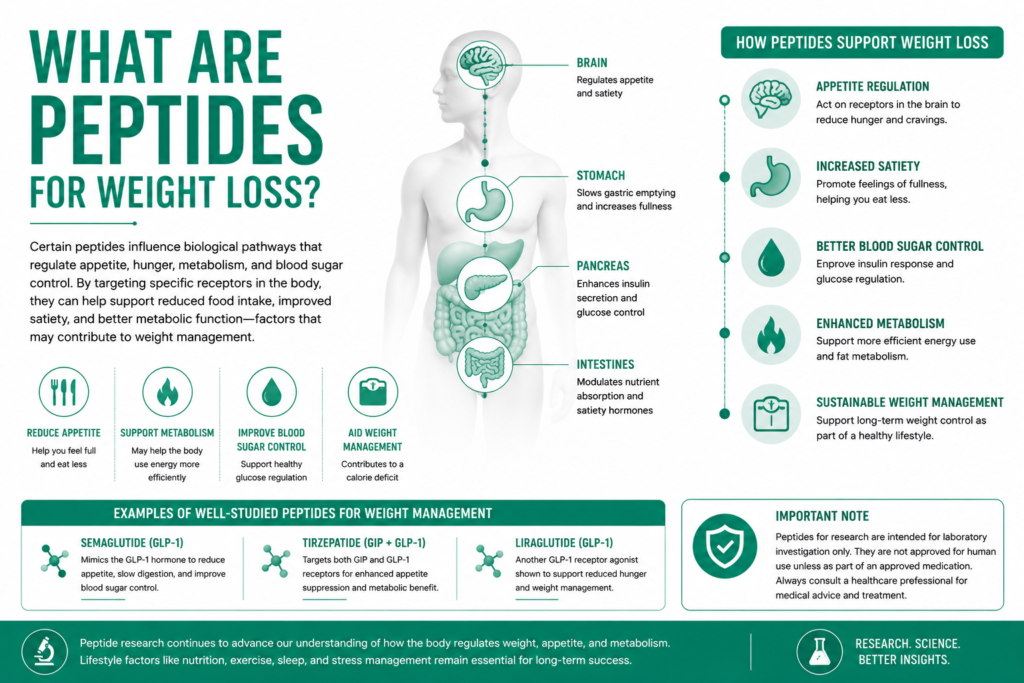
The term peptides for weight loss is commonly used to describe peptide-based compounds and medicines that interact with biological pathways involved in appetite, satiety, digestion, blood glucose regulation, and energy balance. Rather than acting like traditional stimulant-based “fat burners,” certain peptide-based medicines work by mimicking or influencing naturally occurring hormones that help regulate hunger and food intake.
One of the most important pathways in modern weight-management research involves glucagon-like peptide-1 (GLP-1). GLP-1 is a naturally occurring hormone released primarily from the gut after eating. It contributes to several physiological responses, including signalling feelings of fullness, supporting glucose-dependent insulin secretion, and influencing how quickly food moves through the stomach. Pure peptide
This pathway has become particularly significant because medicines such as semaglutide and liraglutide act on GLP-1 receptors. Another compound, tirzepatide, acts on both GLP-1 and glucose-dependent insulinotropic polypeptide (GIP) receptors. These mechanisms have been extensively investigated in clinical research and have contributed to major developments in medical weight management.
How Peptide-Based Medicines Can Support Weight Management
One of the primary ways certain peptide-based medicines support weight management is by influencing appetite and satiety signals. When these pathways are activated, a person may feel satisfied sooner during a meal and remain full for longer afterward. Reduced hunger can make it easier to lower overall food intake when treatment is combined with appropriate nutrition and lifestyle changes. Pure peptide
Some GLP-1-based medicines can also slow gastric emptying, meaning food leaves the stomach more gradually. This effect can contribute to prolonged feelings of fullness, although the response and degree of gastric-emptying effects can vary over time and between individuals.
These medicines also interact with mechanisms involved in blood glucose regulation. GLP-1 receptor activation can increase insulin secretion when blood glucose is elevated and reduce inappropriate glucagon secretion. Tirzepatide adds activity at the GIP receptor, giving it a different pharmacological profile from medicines that target GLP-1 alone.
Not Every Peptide Is a Weight-Loss Peptide
The growing popularity of peptide science has resulted in many different compounds being discussed online in connection with weight management. However, it is important not to place every pure peptide or research peptide into the same category. Pure peptide
Peptides can interact with very different biological pathways, and evidence supporting one compound cannot automatically be applied to another. Some have extensive human clinical data, while others may have only early-stage, preclinical, or laboratory research behind them.
There is also an important difference between a regulated prescription medicine and a peptide supplied specifically for laboratory research. Products intended for research should not be assumed to provide the same safety, effectiveness, manufacturing controls, or regulatory status as approved medicines simply because they contain a similarly named compound. Pure peptide
Understanding these differences makes it easier to evaluate the evidence surrounding individual compounds. Among the peptide-based medicines investigated for weight management, semaglutide, tirzepatide, and liraglutide have some of the most established clinical evidence—and each works in a slightly different way.
How Do Weight-Loss Peptides Work?
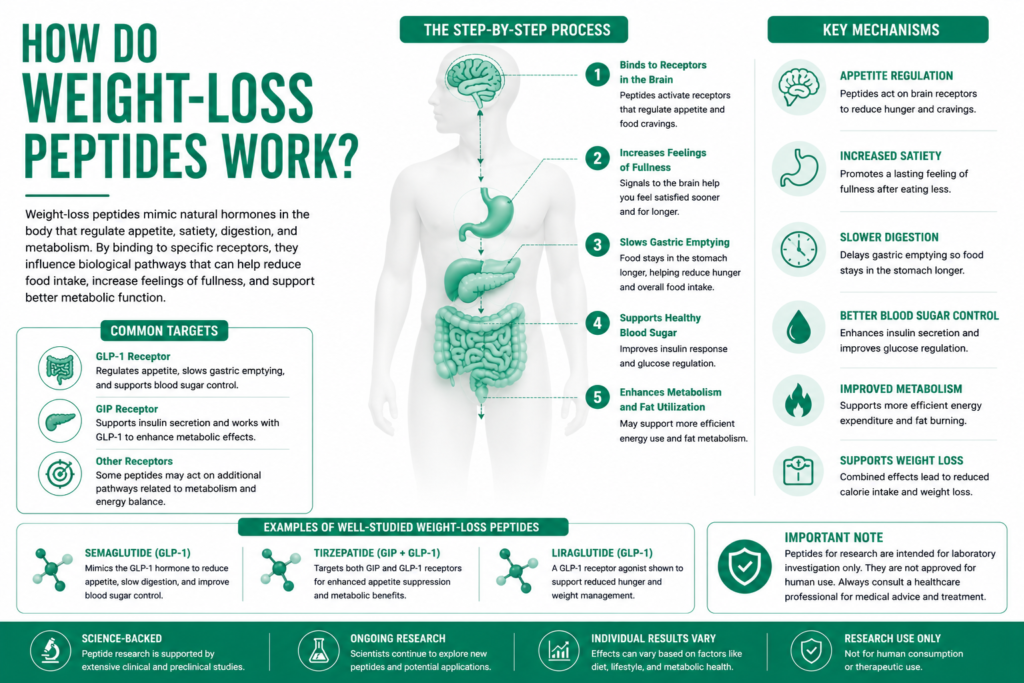
Weight-loss peptides do not simply “burn fat.” Instead, clinically established peptide-based medicines influence biological signalling pathways involved in hunger, satiety, digestion, insulin secretion, and blood glucose regulation. By affecting these systems, certain compounds can reduce appetite and help people consume fewer calories over time. Pure peptide
Much of the current research and clinical interest centres on two naturally occurring incretin hormones: GLP-1 (glucagon-like peptide-1) and GIP (glucose-dependent insulinotropic polypeptide). These hormones are released in response to food and communicate with several organs involved in metabolism and energy regulation.
Appetite and Satiety Signalling
One of the most important effects of GLP-1 receptor activation is its influence on appetite.
After eating, naturally occurring GLP-1 contributes to signals between the digestive system and the brain that indicate food has been consumed. Medicines that activate GLP-1 receptors can strengthen aspects of this signalling, helping some people feel satisfied with smaller amounts of food and experience less hunger between meals. Pure peptide
This reduction in appetite can lead to lower overall calorie intake, which is an important factor in achieving and maintaining weight loss. Pure peptide
However, responses vary between individuals. These medicines are generally used as part of a broader medical weight-management approach that may also include dietary changes, physical activity, behavioural support, and ongoing clinical monitoring.
Slower Gastric Emptying
Certain GLP-1 receptor agonists can also influence gastric emptying, the process by which food moves from the stomach into the small intestine. Pure peptide
When gastric emptying is slowed, food may remain in the stomach for longer. This can contribute to feelings of fullness after eating and may influence how quickly nutrients enter the bloodstream. Pure peptide
This mechanism also helps explain why gastrointestinal effects such as nausea, abdominal discomfort, constipation, diarrhoea, or vomiting can occur with GLP-1-based medicines.
The effect on gastric emptying is not necessarily constant, however, and can vary depending on the specific medicine, treatment duration, dosage, and individual response. Pure peptide
Blood Glucose and Insulin Signalling
GLP-1 also has an important role in glucose regulation. Pure peptide
When blood glucose rises following a meal, GLP-1 receptor activation can stimulate glucose-dependent insulin secretion. Because this response is linked to glucose levels, insulin secretion increases when it is needed rather than being continuously stimulated in the same way regardless of blood glucose.
GLP-1 signalling can also reduce inappropriate glucagon secretion. Glucagon is a hormone involved in increasing blood glucose, particularly when the body requires additional available energy.
These metabolic effects are among the reasons GLP-1 receptor agonists were originally developed and extensively studied in relation to type 2 diabetes before their role in chronic weight management received widespread attention. Pure peptide
GLP-1 and GIP: Why the Difference Matters
Not every peptide-based medicine targets the same pathway.
Semaglutide, for example, acts as a GLP-1 receptor agonist. It mimics aspects of naturally occurring GLP-1 signalling and influences appetite, glucose regulation, and digestive processes.
Tirzepatide has a different mechanism because it activates both GIP and GLP-1 receptors. This dual-receptor activity has become an important area of metabolic research and helps distinguish tirzepatide from medicines that act primarily through GLP-1. Pure peptide
Understanding these mechanisms is important when researching any pure peptide or peptide-related compound. Similar terminology does not mean two compounds behave identically. Their amino-acid structures, receptor targets, pharmacological properties, and available clinical evidence can differ substantially.
For this reason, individual compounds should be evaluated according to their own scientific evidence rather than assuming that every peptide associated with metabolism produces the same effects. Pure peptide
With these mechanisms understood, the next question is particularly important: which peptide-based compounds actually have the strongest evidence for weight management?
Which Peptides Have the Strongest Evidence for Weight Management?
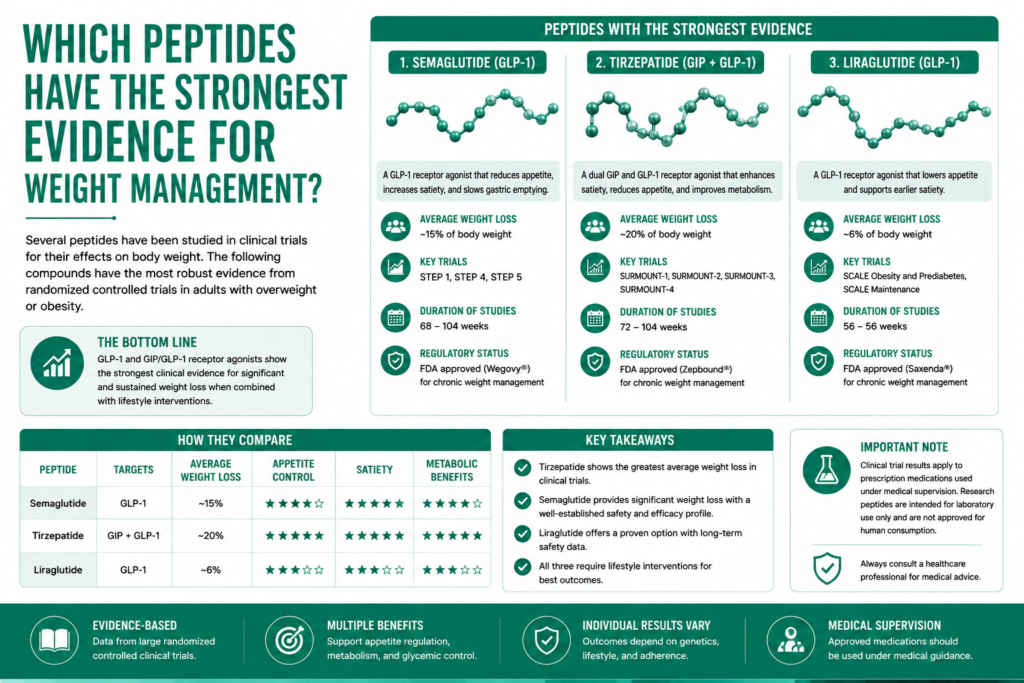
Not every compound promoted as a weight-loss peptide has the same level of scientific support. Some peptides remain primarily subjects of laboratory or early-stage research, while others have been evaluated in large human clinical trials and developed into regulated prescription medicines.
Among the best-studied options are semaglutide, tirzepatide, and liraglutide. These compounds influence incretin pathways involved in appetite, satiety, glucose regulation, and energy intake, although their mechanisms and clinical outcomes are not identical.
It is important to distinguish this clinical evidence from the purity of a research product. A pure peptide with a high reported analytical purity does not automatically have proven weight-management benefits. Evidence of effectiveness comes from appropriately designed clinical studies, not from purity percentages alone.
Semaglutide
Semaglutide is a GLP-1 receptor agonist. It is designed to mimic aspects of the activity of naturally occurring GLP-1, a hormone involved in appetite regulation, insulin secretion, and other metabolic processes.
For weight management, one of semaglutide’s most significant effects is its influence on appetite and energy intake. GLP-1 receptor activation can increase feelings of satiety and reduce hunger, helping some patients consume fewer calories. Pure peptide
Semaglutide has been extensively evaluated in clinical trials. In the STEP 1 trial involving adults with overweight or obesity without diabetes, participants receiving once-weekly semaglutide 2.4 mg alongside lifestyle intervention experienced an average body-weight reduction of approximately 14.9% over 68 weeks, compared with approximately 2.4% with placebo.
These results helped establish semaglutide as an important medicine in modern obesity treatment. However, clinical results from an approved semaglutide medicine should not automatically be attributed to unapproved or research-only products bearing the same compound name. Pure peptide
Tirzepatide
Tirzepatide differs from semaglutide because it targets two incretin receptors: GIP and GLP-1.
This dual mechanism has attracted considerable attention in metabolic and weight-management research. Both pathways participate in physiological responses to food, including insulin signalling and energy regulation, while GLP-1 receptor activity is particularly associated with appetite and satiety.
In the SURMOUNT-1 clinical trial, adults with obesity or overweight and at least one weight-related complication, excluding diabetes, achieved substantial average weight reductions after 72 weeks of tirzepatide treatment. Depending on the assigned dose, mean weight reductions were approximately 15.0%, 19.5%, and 20.9%, compared with around 3.1% for placebo. Pure peptide
These findings established strong clinical evidence for tirzepatide in chronic weight management and demonstrated why dual GIP/GLP-1 receptor activity has become such an important area of metabolic research.
As with semaglutide, these findings relate to controlled clinical studies using regulated pharmaceutical products under defined treatment protocols. They should not be interpreted as evidence that every tirzepatide-labelled research preparation will produce the same outcomes. Pure peptide
Liraglutide
Liraglutide is another GLP-1 receptor agonist with established clinical evidence in weight management. Pure peptide
Like semaglutide, liraglutide influences appetite and satiety through GLP-1 receptor signalling. One practical difference is dosing frequency: liraglutide formulations used for weight management are administered daily, whereas semaglutide weight-management treatment is typically administered once weekly.
Clinical trials have demonstrated meaningful weight reduction with liraglutide when combined with lifestyle intervention. However, average reductions observed in major trials have generally been more modest than those reported in later studies involving semaglutide or tirzepatide. Pure peptide
Despite this, liraglutide remains important to the development of peptide-based obesity treatment and helped establish GLP-1 receptor agonism as a clinically relevant approach to long-term weight management.
Clinical Evidence vs Peptide Purity
When researching peptides, it is essential to separate two concepts that are sometimes incorrectly treated as the same thing: analytical purity and clinical evidence.
A laboratory analysis may indicate that a peptide sample has a high level of purity. This information can be valuable for researchers evaluating the composition of experimental material. However, purity does not establish that the product has been clinically tested, approved as a medicine, or demonstrated to produce weight loss in humans.
Likewise, evidence showing that an approved pharmaceutical formulation of semaglutide or tirzepatide produces weight loss does not automatically establish the safety or effectiveness of every product containing or claiming to contain the same peptide. Pure peptide
For researchers investigating a pure peptide, factors such as identity, purity, analytical documentation, and batch consistency are important laboratory considerations. For medical weight management, however, clinical evidence, regulatory approval, appropriate prescribing, and professional medical supervision are equally important distinctions.
Among currently established peptide-based approaches, semaglutide and tirzepatide have generated particularly strong clinical evidence for substantial weight reduction. Understanding how these two compounds differ provides useful insight into the continuing development of peptide-based metabolic research. Pure peptide
Semaglutide vs Tirzepatide: What’s the Difference?
Semaglutide and tirzepatide are two of the most widely discussed compounds in modern metabolic and weight-management research. Both influence incretin pathways involved in appetite and glucose regulation, but they are not the same peptide-based compound and do not act on exactly the same biological targets. Pure peptide
The key difference is their receptor activity. Semaglutide primarily targets the GLP-1 receptor, while tirzepatide activates both GIP and GLP-1 receptors. This distinction affects how the compounds interact with metabolic signalling pathways and is one reason researchers continue to investigate their respective effects.
| Feature | Semaglutide | Tirzepatide |
| Primary receptor activity | GLP-1 | GIP + GLP-1 |
| Drug class | GLP-1 receptor agonist | Dual GIP/GLP-1 receptor agonist |
| Appetite and satiety signalling | Yes | Yes |
| Glucose-dependent insulin signalling | Yes | Yes |
| Clinical weight-management evidence | Strong | Strong |
| Typical dosing of approved weight-management formulations | Once weekly | Once weekly |
| Requires medical supervision when prescribed | Yes | Yes |
Semaglutide: GLP-1 Receptor Activity
Semaglutide is a GLP-1 receptor agonist, meaning its primary mechanism involves activating receptors for glucagon-like peptide-1.
Through this pathway, semaglutide can influence appetite and satiety, helping patients feel fuller and potentially reducing overall energy intake. It also affects glucose-dependent insulin secretion and other aspects of metabolic regulation.
Its relatively long duration of action allows approved semaglutide formulations used for weight management to be administered once weekly.
Tirzepatide: Dual GIP and GLP-1 Activity
Tirzepatide takes a different approach by activating both the GIP and GLP-1 receptors.
GIP, or glucose-dependent insulinotropic polypeptide, is another naturally occurring incretin hormone released in response to food. By combining activity at GIP and GLP-1 receptors within a single molecule, tirzepatide has a pharmacological profile that differs from GLP-1-only receptor agonists. Pure peptide
Large clinical trials have demonstrated substantial weight reductions with tirzepatide, making dual incretin receptor agonism an important area of continuing metabolic research.
Is Tirzepatide Stronger Than Semaglutide?
Clinical research suggests that tirzepatide can produce greater average weight reduction than semaglutide in some populations and treatment settings. However, this does not mean tirzepatide is automatically the better treatment for every individual. Pure peptide
Treatment decisions can depend on factors including a person’s medical history, treatment goals, other medications, tolerability, contraindications, availability, and the specific product approved for their condition.
Comparisons should also be based on appropriate clinical evidence rather than simply comparing milligram quantities. A 10 mg dose of one compound cannot be considered directly equivalent to 10 mg of another because their structures, receptor activity, dosing schedules, and pharmacological properties differ.
Why This Difference Matters in Pure Peptide Research
The comparison also demonstrates an important principle when evaluating any pure peptide: compounds should be identified and studied individually. Pure peptide
Two peptides may both be associated with metabolic research while interacting with different receptors or producing different biological responses. Purity alone cannot reveal these differences. Researchers must also consider molecular identity, amino-acid sequence, mechanism of action, concentration, analytical documentation, and the available scientific evidence. Pure peptide
The same principle applies when evaluating products labelled with familiar compound names. An approved prescription medicine and a laboratory research product are not interchangeable simply because they reference the same active compound.
Semaglutide and tirzepatide therefore provide a useful example of why peptide identity, purity, mechanism, and evidence should be considered separately when interpreting peptide research.
Are All Peptides Marketed for Weight Loss Proven to Work?
No. Although peptides have become increasingly popular in discussions about metabolism and weight management, not every peptide marketed or discussed for weight loss has strong clinical evidence behind it.
This distinction is important because the term “weight-loss peptide” is often used broadly online. It may refer to established prescription medicines, experimental compounds, research peptides, or products promoted primarily through anecdotal claims. These categories should not be treated as equivalent. Pure peptide
Semaglutide, tirzepatide, and liraglutide have been investigated in large human clinical trials, and specific pharmaceutical formulations have received regulatory approval for defined medical indications. Other peptides discussed in connection with fat loss, metabolism, growth hormone signalling, or body composition may have much more limited evidence.
Clinical Evidence Matters
A compound’s potential effect should be evaluated according to the quality of the evidence supporting it.
Human randomised controlled trials generally provide much stronger evidence about effectiveness and safety than laboratory experiments, animal studies, observational reports, or individual testimonials.
Early research can still be scientifically valuable. Laboratory and preclinical studies often help researchers understand how a compound interacts with receptors, cells, tissues, or metabolic pathways. However, promising laboratory findings do not guarantee that the same effect will occur safely or meaningfully in humans.
For this reason, statements such as “this peptide burns fat” or “this peptide causes weight loss” should be approached carefully when they are not supported by appropriate human clinical research.
Research Peptides vs Approved Medicines
One of the most important distinctions in peptide research is the difference between a research peptide and an approved prescription medicine.
A research peptide is generally supplied for controlled laboratory investigation. Researchers may use these materials to examine molecular characteristics, receptor interactions, biochemical pathways, stability, or other experimental questions.
An approved medicine, by comparison, has undergone a regulatory process that evaluates factors such as its quality, safety, effectiveness, manufacturing controls, formulation, and intended clinical use.
Even when a research product and a pharmaceutical medicine reference the same compound—for example, semaglutide or tirzepatide—they should not automatically be considered equivalent.
The pharmaceutical product may contain a specifically formulated active ingredient manufactured under regulated conditions and supplied with defined dosing, storage, prescribing, and safety information. A research product is supplied for a different purpose and should be evaluated according to its stated intended use.
Does Higher Peptide Purity Mean Better Weight-Loss Results?
Not necessarily.
A pure peptide may have a high reported analytical purity, but this tells researchers about the composition of the tested sample—not how much weight a person would lose from it.
For example, a reported purity of 98% or 99% does not establish:
- clinical effectiveness;
- appropriate human dosage;
- sterility;
- safety for administration;
- regulatory approval; or
- suitability for medical treatment.
These are separate considerations that require different forms of evidence and testing.
Peptide purity remains highly relevant in laboratory research because researchers need confidence that experiments are examining the intended compound with minimal interference from unwanted peptide-related impurities. But analytical purity should never be presented as proof of clinical effectiveness or safety.
Be Careful With Online Weight-Loss Claims
Peptide research is developing rapidly, and new compounds continue to attract attention. This can also result in marketing claims moving faster than the scientific evidence.
Researchers and readers should therefore look beyond dramatic claims and consider questions such as: Has the compound been studied in humans? Was the study controlled? How many participants were included? Have the findings been replicated? What adverse effects were reported? Has a medicine containing the compound been approved for the claimed use?
This evidence-based approach is particularly important when researching a pure peptide associated with metabolism or body-weight regulation.
Peptides can be scientifically interesting without being clinically proven treatments. Maintaining that distinction makes it possible to discuss emerging peptide research while remaining clear about what the available evidence actually demonstrates.
Why Peptide Purity and Testing Matter
When evaluating a pure peptide for laboratory research, the name of the compound is only part of the picture. Researchers also need reliable information about its identity, purity, consistency, and analytical characteristics. These factors can directly influence the reliability and reproducibility of experimental results.
Peptide synthesis is a complex process. During production, incomplete peptide sequences, modified sequences, residual synthesis materials, degradation products, or other peptide-related impurities may occur. Analytical testing helps researchers better understand what is present in a particular sample or batch.
For this reason, reputable peptide research should consider more than a purity percentage displayed on a product label or product page.
Peptide Identity
Before considering purity, researchers need to establish whether the material being analysed is actually the intended peptide.
Identity and purity are related but different concepts. A sample could potentially show a high percentage for its dominant component without that information alone confirming that the dominant component has the expected molecular identity.
Mass spectrometry (MS) is commonly used in peptide analysis to help determine molecular mass and support confirmation that the analysed material corresponds to the expected peptide.
For researchers, this distinction is important. Knowing that a sample is highly pure has limited value if the identity of the material has not also been appropriately characterised.
Peptide Purity Analysis
High-performance liquid chromatography (HPLC) is widely used to analyse peptide preparations. It separates components within a sample according to their interactions with the chromatographic system, allowing laboratories to evaluate the relative composition of the analysed material.
An HPLC result may provide a reported purity percentage for the peptide sample. For example, a laboratory may report that the main peptide peak accounts for a particular percentage of the detected chromatographic signal under the test conditions.
However, a reported percentage should always be interpreted alongside the analytical method and supporting documentation. It should not be treated as a universal measurement of every possible impurity that could be present.
This is why researchers looking for a pure peptide should consider the analytical evidence behind a purity claim rather than relying solely on the number itself.
Batch Consistency
Consistency between batches is another important consideration in peptide research.
If researchers conduct the same experiment using materials from different batches, substantial variation between those materials could introduce another variable into the study. Maintaining appropriate batch documentation allows researchers to identify exactly which material was used during a particular experiment.
Useful information may include a batch or lot number, testing date, product identification, reported analytical results, and relevant storage information.
Batch traceability can therefore contribute to better experimental documentation and reproducibility.
Understanding a Peptide Certificate of Analysis
A Certificate of Analysis (COA) is a document used to report analytical information associated with a particular product or batch.
Depending on the testing performed, a peptide COA may contain information such as:
- product or compound name;
- batch or lot identification;
- testing date;
- analytical method;
- reported purity;
- chromatographic results;
- molecular mass information; and
- other relevant analytical observations.
Researchers should look beyond the headline purity figure and examine what testing was actually performed.
For example, an HPLC analysis may provide information about chromatographic purity, while mass spectrometry can provide evidence supporting molecular identity. The two methods answer different analytical questions and can therefore complement each other.
Storage and Handling Also Matter
Even a well-characterised pure peptide can change if it is stored or handled incorrectly.
Factors such as temperature, moisture, light exposure, repeated temperature fluctuations, and storage duration may affect the stability of some peptide materials. Researchers should therefore follow the storage conditions specified for the particular compound and maintain appropriate laboratory handling procedures.
The stability requirements of one peptide should not automatically be applied to another, as different molecular structures can have different sensitivities.
Does a High Purity Result Mean a Peptide Is Safe for Human Use?
No. This is one of the most important distinctions when interpreting peptide testing.
A high analytical purity result does not by itself demonstrate that a product is sterile, clinically effective, approved as a medicine, or suitable for human administration.
Purity testing answers a specific analytical question about the composition of the tested material. Medical safety requires a much broader body of evidence and regulatory controls.
For laboratory researchers, the objective is therefore not simply to find the highest purity number available. It is to evaluate peptide identity, analytical purity, testing documentation, batch traceability, storage conditions, and intended use together.
Understanding these factors makes it easier to evaluate pure peptide products critically and determine whether the documentation provided is appropriate for the intended research application.
What Should You Look for When Researching Pure Peptides?
Choosing a pure peptide for laboratory research involves more than searching for the highest advertised purity percentage. Researchers should consider the compound’s identity, available analytical documentation, batch information, storage requirements, and intended use before determining whether a product is appropriate for a particular research project.
A transparent supplier should make important product information easy to find and understand. This allows researchers to compare peptide materials more effectively and maintain accurate records throughout their work.
Clearly Identified Peptide Compounds
The first consideration should be the identity of the peptide.
Product information should clearly state the compound being supplied rather than relying on vague descriptions or marketing terminology. Depending on the peptide, useful information may include the compound name, quantity, formulation, and other relevant specifications.
This is particularly important when researching compounds associated with similar biological pathways. Two peptides may both be discussed within metabolic research while having very different molecular structures and receptor activities.
Researchers should therefore select materials according to the specific compound required for their experiment rather than assuming that different peptides within the same research category are interchangeable.
Analytical Testing and Documentation
When evaluating a pure peptide, researchers should consider what analytical information is available to support the product specifications.
Documentation such as a Certificate of Analysis may provide information about the testing performed on a particular batch. HPLC data can be used to assess chromatographic purity, while mass spectrometry may help support confirmation of molecular identity.
Rather than looking only at a headline purity percentage, researchers should ask what analytical method produced that figure and whether the documentation can be associated with the relevant product or batch.
Clear testing information provides a stronger basis for evaluating research material than unsupported purity claims alone.
Batch and Lot Information
Batch traceability is valuable for maintaining accurate laboratory records.
Where applicable, a peptide product may have a batch or lot identifier that connects it with relevant analytical documentation. Researchers can record this information alongside experimental data, making it easier to identify which material was used during a particular study.
This can become particularly useful when experiments are repeated or when results obtained using different batches need to be compared.
Storage Information
Peptides can vary in their stability and storage requirements. Researchers should therefore check the recommended conditions for the specific compound they are working with.
Temperature, moisture, light exposure, storage duration, and repeated changes in environmental conditions may affect certain peptide materials.
Appropriate storage does not improve the original purity of a peptide, but it can help preserve the characteristics of the material during its intended research period.
Transparent Research-Use Labelling
The intended use of a peptide should be clearly communicated.
A product supplied specifically for laboratory research should be labelled accordingly and should not be presented as though it were an approved prescription medicine.
This distinction becomes especially important with compounds such as semaglutide or tirzepatide. Although regulated pharmaceutical products containing these compounds have established medical applications, a research product carrying the same compound name should not automatically be considered equivalent to the approved medicine.
Clear research-use information helps researchers understand the context in which a product is being supplied.
Supplier Transparency
Researchers may also want to consider the overall transparency of the supplier.
Useful information can include accessible product specifications, testing documentation where available, clear contact information, storage guidance, shipping policies, returns information, and explanations of how research products are categorised.
A supplier should avoid relying on exaggerated claims or presenting analytical purity as proof of medical safety or clinical effectiveness.
For researchers exploring pure peptide UK products, this transparency can make it easier to compare available materials based on documented characteristics rather than marketing claims alone. Pure peptide
Ultimately, selecting a peptide for research should involve evaluating the complete information available about the product. Identity, purity, analytical documentation, batch traceability, storage requirements, supplier transparency, and intended use all contribute to a more informed assessment of peptide research materials.
Safety and Medical Considerations
Peptide-based medicines have become an important part of modern metabolic and weight-management treatment, but their potential benefits must be considered alongside their risks. Prescription medicines such as semaglutide, tirzepatide, and liraglutide can cause side effects and are not appropriate for every individual.
This is also where the distinction between an approved medicine and a pure peptide supplied for laboratory research becomes especially important. Analytical purity alone does not establish that a research product is safe, sterile, clinically effective, or suitable for human administration.
Potential Side Effects of GLP-1-Based Medicines
Gastrointestinal side effects are among the most commonly reported effects associated with GLP-1-based weight-management medicines. Depending on the medicine and individual response, these can include:
- nausea;
- vomiting;
- diarrhoea;
- constipation;
- abdominal discomfort; and
- reduced appetite.
Some adverse effects can be more serious, which is why prescription weight-management medicines should be used under appropriate medical supervision. A qualified healthcare professional can consider a patient’s medical history, other medicines, treatment goals, contraindications, and response to treatment. Pure peptide
Side-effect profiles can also differ between compounds. The safety information established for one medicine should therefore not automatically be applied to every peptide associated with metabolic research.
Medical Supervision Matters
Weight-management medicines are not intended to replace every other aspect of long-term weight management. When clinically appropriate, they are generally used alongside measures such as nutrition, physical activity, behavioural changes, and ongoing medical monitoring.
Medical supervision is also important because treatment may need to be adjusted according to tolerability and individual response. Pure peptide
People considering prescription treatment for obesity or another medical condition should discuss their options with an appropriately qualified healthcare professional rather than attempting to determine suitability from online product information alone.
Research Peptides Are Not Prescription Medicines
A research peptide and an approved pharmaceutical product should not be treated as interchangeable, even when they reference the same compound.
Approved medicines are manufactured and supplied within regulatory frameworks governing factors such as formulation, manufacturing controls, quality, prescribing information, and approved indications.
Research peptides are supplied for laboratory investigation and should be used according to their stated research purpose. Pure peptide
This distinction is particularly relevant for compounds such as semaglutide and tirzepatide. Clinical evidence associated with approved pharmaceutical formulations does not establish that a research-use product containing or claiming to contain the same compound has equivalent safety, quality, sterility, bioavailability, or effectiveness.
Purity Does Not Equal Safety
Researchers searching for a pure peptide may encounter products advertised with high analytical purity percentages. While purity information can be valuable when evaluating laboratory material, it should not be confused with a medical safety assessment.
A reported purity result does not by itself establish:
- sterility;
- absence of every possible contaminant;
- suitability for injection or consumption;
- an appropriate human dose;
- clinical effectiveness; or
- regulatory approval for medical treatment.
These characteristics require different forms of testing, evidence, manufacturing controls, and regulatory assessment. Pure peptide
Understanding this distinction helps prevent analytical terminology from being interpreted as a medical claim.
Responsible Peptide Research
Responsible peptide research begins with understanding exactly what a product is intended for.
Researchers should evaluate available analytical documentation, follow appropriate laboratory procedures, observe recommended storage requirements, and maintain accurate records of the materials used in their experiments. Pure peptide
For products designated for research use, information about clinical medicines can provide useful scientific context, but it should not be interpreted as instructions for personal treatment or human administration.
Maintaining a clear separation between laboratory peptide research and medical treatment allows researchers to explore peptide science while recognising the different standards of evidence, regulation, and oversight that apply to each. Pure peptide
Pure Peptide Research in the UK
Peptide science continues to attract significant interest across biotechnology, pharmaceutical development, and laboratory research in the UK. Researchers investigate peptides for a wide range of purposes, from understanding receptor signalling and cellular communication to studying metabolic pathways and the molecular mechanisms involved in human biology. Pure peptide
This growing interest has also increased online searches for terms such as pure peptide UK, pure peptides UK, and peptide research UK. However, finding a peptide by name is only the beginning. Researchers should also understand the compound’s intended use, analytical characteristics, documentation, and appropriate handling requirements.
The Growing Role of Peptides in Research
One reason peptides are scientifically valuable is their ability to interact with specific biological targets. Pure peptide
Depending on their structure, peptides may bind to receptors or participate in signalling pathways associated with metabolism, endocrine function, cellular activity, tissue processes, and many other areas of biological research.
Metabolic research is a particularly visible example. Scientific investigation of incretin pathways such as GLP-1 and GIP has contributed to a better understanding of appetite, glucose regulation, insulin signalling, and energy balance. Pure peptide
The development of medicines such as semaglutide and tirzepatide demonstrates how research into peptide-related signalling can eventually contribute to pharmaceutical development. However, established medicines and laboratory research materials remain distinct categories with different intended uses and regulatory requirements.
What UK Researchers Should Consider
Researchers looking for a pure peptide in the UK should consider more than availability or the purity percentage displayed alongside a product. Pure peptide
Important factors can include the identity of the compound, available analytical testing, batch information, storage requirements, product specifications, and whether the material is clearly designated for its intended research purpose.
Where analytical documentation is available, researchers should examine what testing has actually been performed. For example, HPLC may provide information about chromatographic purity, while mass spectrometry can provide supporting information about molecular identity. Pure peptide
Maintaining this documentation alongside laboratory records can also help with experimental traceability and reproducibility.
Research Products and Licensed Medicines Are Different
The distinction between research products and licensed medicines is particularly important when discussing compounds that are already familiar to the general public.
A compound may be the subject of laboratory research while also being used as the active ingredient in a regulated pharmaceutical product. This does not mean that every product carrying that compound’s name has the same intended use or regulatory status.
Researchers should therefore avoid assuming that a pure peptide research product is equivalent to a licensed medicine simply because the compound name is identical or similar.
Clinical medicines are supplied within regulatory frameworks that address their manufacturing, formulation, quality, safety, effectiveness, prescribing information, and approved uses. Research materials are supplied for experimental purposes and should be evaluated within that context.
Finding Pure Peptides for UK Research
For UK researchers, a useful peptide supplier should provide clear and accessible information that makes it easier to understand what is being purchased for laboratory work.
Product pages should clearly identify the peptide and provide relevant specifications, research-use information, storage guidance, and analytical documentation where available. Clear shipping, returns, contact, and quality information can provide additional transparency.
Researchers can explore Pure Lab Peptides to learn more about available peptide research products, individual compound specifications, and supporting product information.
Whether investigating metabolic pathways or other areas of peptide science, the same principle remains important: choosing a pure peptide should be based on the requirements of the research project and the available analytical information—not on unsupported medical or performance claims.
Explore Pure Peptide Research Products at Pure Lab Peptides
As peptide science continues to develop, access to clearly identified research materials and transparent product information is important for researchers investigating specific compounds and biological pathways.
At Pure Lab Peptides, researchers can explore a selection of peptide products intended for laboratory research. The aim is to make it easier to review individual compounds, product specifications, available analytical information, and other relevant details before selecting materials for a research project.
Explore Peptides for Different Areas of Research
Peptide research covers a broad range of scientific interests. Depending on the compound, researchers may investigate areas such as receptor signalling, metabolic pathways, cellular communication, endocrine mechanisms, and other biochemical processes.
This means there is no single pure peptide suitable for every research objective. Individual compounds can differ substantially in their molecular structures, receptor targets, and established areas of scientific investigation.
Researchers should therefore evaluate each peptide individually and select materials according to the requirements and design of their particular research project.
Review Product Information Before Ordering
Before selecting a peptide, researchers should carefully review the information provided for the individual product.
Depending on the compound, this may include its name, quantity, product specifications, recommended storage conditions, research classification, and available analytical documentation.
Where a Certificate of Analysis or other testing information is provided, researchers can use this documentation alongside the product specifications to better understand the characteristics of the material being considered.
This approach is particularly important when searching for pure peptides in the UK, where product transparency can help researchers make more informed purchasing decisions.
Research-Focused Peptide Information
Pure Lab Peptides provides product information designed to help researchers explore available compounds and understand their research context.
For compounds associated with widely studied pathways such as GLP-1 or GIP, it is important to distinguish scientific information about the compound from claims about the research product itself. Clinical evidence associated with an approved pharmaceutical formulation should not automatically be interpreted as evidence for a laboratory research product carrying the same compound name.
This distinction allows researchers to explore the science behind individual peptides while maintaining a clear separation between laboratory research materials and regulated medicines.
Discover Pure Peptides for UK Research
Whether you are researching a specific peptide or exploring compounds relevant to a particular biological pathway, Pure Lab Peptides provides a convenient place to discover available research products and review their individual specifications.
Explore our peptide collection to learn more about the compounds available for research, review relevant product information, and identify materials suited to your laboratory requirements.
Explore Pure Peptides at Pure Lab Peptides.
Products designated for research use are intended for laboratory research purposes and should be handled according to their stated intended use.
Frequently Asked Questions About Pure Peptides
What Is a Pure Peptide?
A pure peptide generally refers to a peptide preparation in which the intended peptide represents a high proportion of the analysed material relative to detectable peptide-related impurities. Purity may be evaluated using analytical techniques such as high-performance liquid chromatography (HPLC).
However, purity should be considered alongside other information, including molecular identity, testing methods, batch documentation, storage conditions, and intended use.
What Does Peptide Purity Mean?
Peptide purity describes the relative amount of the intended peptide detected within a sample under a particular analytical method.
For example, HPLC can separate different components within a sample and provide information about chromatographic purity. A high reported purity percentage can be valuable for laboratory research, but the result should always be interpreted according to the analytical method used.
Importantly, peptide purity does not by itself demonstrate sterility, clinical effectiveness, regulatory approval, or suitability for human use.
How Is the Identity of a Peptide Confirmed?
Researchers may use analytical methods such as mass spectrometry (MS) to support confirmation of a peptide’s molecular identity.
HPLC and mass spectrometry provide different types of information. HPLC is commonly used to assess chromatographic purity, while mass spectrometry can help determine whether the molecular mass of the analysed compound corresponds with the expected peptide.
Using complementary analytical information can provide researchers with a more complete understanding of a peptide sample.
What Are Peptides Used for in Research?
Peptides are studied across numerous areas of biological and pharmaceutical research. Depending on the compound, researchers may investigate receptor signalling, metabolism, endocrine pathways, cellular communication, protein interactions, and other biochemical processes.
Different peptides have different molecular targets and properties, so research findings involving one peptide should not automatically be applied to another.
Are Peptides Used for Weight Management?
Yes. Certain peptide-based medicines have established clinical applications in weight management.
GLP-1 receptor agonists such as semaglutide and liraglutide influence biological pathways involved in appetite, satiety, and glucose regulation. Tirzepatide targets both GIP and GLP-1 receptors and has also demonstrated substantial weight reduction in clinical studies. Pure peptide
These findings relate to regulated pharmaceutical products studied under controlled clinical conditions. They should not be automatically applied to research-use peptide products.
What Is the Difference Between Semaglutide and Tirzepatide?
The main difference is their receptor activity.
Semaglutide acts primarily as a GLP-1 receptor agonist, while tirzepatide activates both GIP and GLP-1 receptors.
Both pathways are involved in metabolic signalling, but their different mechanisms mean the compounds should not be considered interchangeable. Their doses also cannot be compared directly on a milligram-for-milligram basis. Pure peptide
Are Research Peptides the Same as Prescription Medicines?
No. A research peptide and an approved prescription medicine are different product categories, even when they reference the same compound.
Prescription medicines are manufactured, formulated, evaluated, and supplied according to regulatory requirements for their approved medical uses. Research peptides are supplied for laboratory investigation according to their stated intended purpose. Pure peptide
A pure peptide research product should therefore not be assumed to have the same formulation, manufacturing controls, sterility, clinical evidence, or regulatory status as an approved medicine.
Does 99% Peptide Purity Mean It Is Safe for Human Use?
No. A reported 99% purity result describes an analytical characteristic of the tested sample. It does not establish that the product is safe for injection, consumption, or any other form of human administration. Pure peptide
Clinical safety requires substantially different evidence and controls. Factors such as sterility, formulation, manufacturing standards, dosing, toxicology, clinical testing, and regulatory assessment are separate from analytical peptide purity.
What Should Researchers Look for When Buying Pure Peptides in the UK?
Researchers searching for pure peptides in the UK should consider the complete product information rather than focusing exclusively on price or an advertised purity percentage. Pure peptide
Important considerations can include peptide identity, product specifications, batch or lot information, analytical documentation where available, storage guidance, research-use labelling, supplier transparency, and clear shipping and returns information.
These factors can help researchers select materials appropriate for their particular laboratory requirements while maintaining accurate research records.
Understanding Pure Peptides and Peptide Research
Peptide science has developed into an important area of modern biological, pharmaceutical, and metabolic research. From investigating cellular signalling to understanding pathways associated with appetite and glucose regulation, peptides continue to provide researchers with valuable tools for studying complex biological processes. Pure peptide
As this field grows, understanding what pure peptide actually means becomes increasingly important. Peptide purity can provide useful information about the composition of research material, but it should never be considered in isolation. Molecular identity, analytical methods, batch documentation, storage conditions, and intended use all contribute to a more complete assessment of a peptide product.
The same principle applies to peptides associated with weight management. Compounds such as semaglutide, tirzepatide, and liraglutide have generated substantial scientific interest because regulated pharmaceutical formulations have been studied extensively in clinical settings. Their research has helped expand our understanding of GLP-1, GIP, appetite regulation, glucose signalling, and metabolic health.
However, clinical evidence for an approved medicine should not automatically be transferred to a laboratory research product carrying the same compound name. Research peptides and prescription medicines serve different purposes and should remain clearly distinguished.
For researchers searching for pure peptides in the UK, careful evaluation of product information and available analytical documentation can help support more informed research decisions. Rather than focusing solely on an advertised purity percentage, consider the complete picture: compound identity, testing, traceability, storage requirements, product specifications, and research-use classification.
Explore Pure Peptide Research
Pure Lab Peptides provides access to peptide products and information for laboratory research. Explore individual compounds, review available product specifications, and learn more about peptides relevant to different areas of scientific investigation. Pure peptide
Explore Pure Lab Peptides and discover peptide research products for your laboratory requirements.
Products designated for research use are intended for laboratory research purposes only. Information provided about clinically studied compounds is for educational and scientific context and should not be interpreted as medical advice or instructions for human use.