
UK Peptides: A Complete Guide to Peptide Research, Quality and Weight Management
Introduction
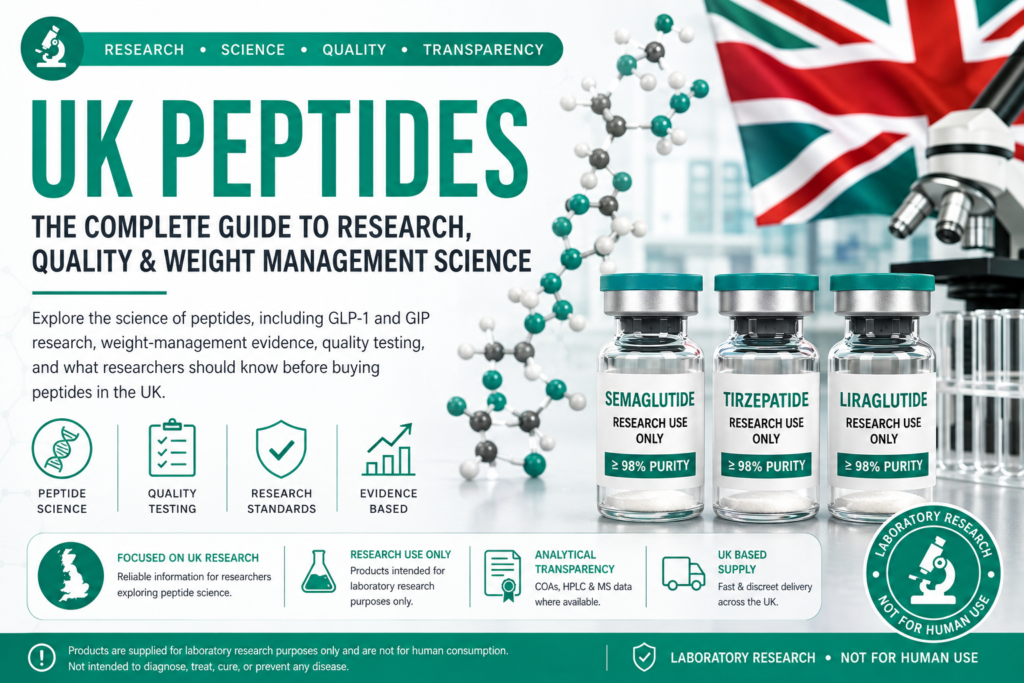
Interest in UK peptides has grown significantly as peptide science continues to expand across biotechnology, pharmaceutical development, metabolic research, and laboratory investigation. Researchers are studying an increasingly diverse range of peptide compounds to better understand biological signalling, receptor activity, cellular communication, metabolism, and other complex processes within living systems.
Peptides themselves are relatively short chains of amino acids linked together by peptide bonds. Although they are generally smaller than proteins, peptides can have highly specific biological functions. Many naturally occurring peptides act as signalling molecules, allowing cells and organs to communicate and helping regulate processes such as hormone activity, appetite, glucose metabolism, immune responses, and tissue function. UK peptides
This ability to interact with specific biological targets is one reason peptides have become such an important area of scientific research.
For researchers exploring peptides in the UK, however, understanding the name of a compound is only the beginning. Peptide identity, purity, analytical testing, batch documentation, storage requirements, and intended use can all be important considerations when evaluating materials for laboratory research. UK peptides
The growth of metabolic research has brought particular attention to peptide-related pathways involved in appetite and glucose regulation. Compounds associated with GLP-1 (glucagon-like peptide-1) and GIP (glucose-dependent insulinotropic polypeptide) signalling have become widely studied because of their roles in appetite, satiety, insulin signalling, blood glucose regulation, and energy balance.
This research has contributed to the development of regulated medicines containing compounds such as semaglutide, tirzepatide, and liraglutide. Specific pharmaceutical formulations of these compounds have been investigated extensively in human clinical trials, including studies examining their use in chronic weight management. UK peptides
However, the increasing public awareness of these medicines has also created potential confusion between UK research peptides and regulated prescription products.
A peptide supplied for laboratory research should not automatically be considered equivalent to an approved pharmaceutical medicine simply because the two products reference the same compound. Their intended uses, formulations, manufacturing requirements, regulatory status, and supporting evidence may be very different.
Similarly, a high peptide purity percentage does not by itself establish that a product is clinically effective, sterile, approved as a medicine, or appropriate for human use. For laboratory researchers, purity is one analytical consideration among several that can include molecular identity, testing methods, batch traceability, stability, and appropriate storage. UK peptides
Throughout this guide, we will explore what peptides are, why they are studied, how to evaluate UK peptides for research, and what analytical information researchers should consider. We will also examine the science behind GLP-1 and GIP pathways, the clinical evidence surrounding semaglutide, tirzepatide, and liraglutide, and the important distinction between laboratory research materials and regulated medicines.
Whether you are learning about peptide science for the first time or researching available UK peptides, understanding these distinctions provides a stronger foundation for evaluating peptide research, product information, and the scientific evidence behind individual compounds. UK peptides
What Are Peptides and Why Are They Researched?
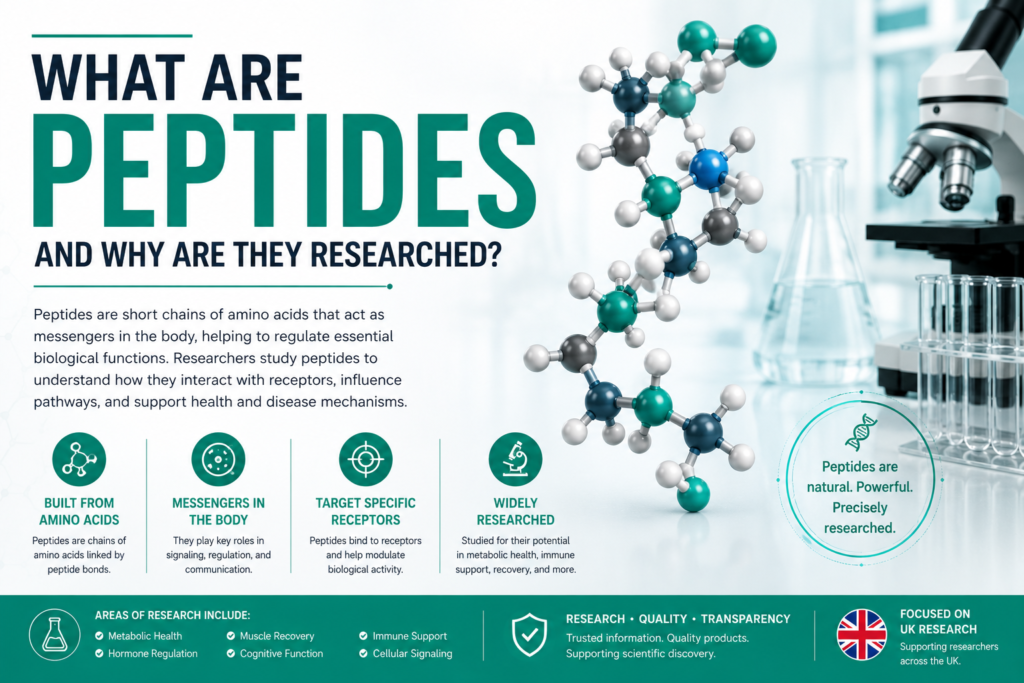
Peptides are short chains of amino acids connected by chemical bonds known as peptide bonds. Amino acids are the fundamental building blocks of proteins, but peptides generally contain shorter sequences and often perform highly specific biological functions. UK peptides
Peptides occur naturally throughout living organisms. In the human body, many act as signalling molecules that allow cells, tissues, and organs to communicate with one another. Depending on their structure and biological target, peptides can participate in processes involving hormones, metabolism, immune activity, appetite, glucose regulation, and cellular function.
Scientists can also produce peptides synthetically for controlled laboratory investigation. This makes peptide research particularly valuable because researchers can study individual compounds and examine how their molecular structures relate to specific biological pathways. UK peptides
How Do Peptides Work in the Body?
Many peptides produce their biological effects by interacting with specific receptors located on or within cells. UK peptides
A useful way to understand this process is to think of a peptide as a biological messenger. Its molecular structure may allow it to bind to a particular receptor, which can then initiate or modify signalling processes inside the cell.
However, peptides do not all target the same receptors or produce the same effects. Small differences in amino-acid sequence and molecular structure can significantly influence how a peptide behaves. UK peptides
For example, naturally occurring peptide hormones participate in several important physiological processes. GLP-1 contributes to appetite and glucose regulation, while other peptide signalling systems are involved in growth, endocrine function, immune responses, and numerous cellular processes.
This specificity makes peptides particularly interesting to researchers because individual signalling pathways can be investigated in greater detail. UK peptides
Why Are Peptides Important to Scientific Research?
Peptide research covers a broad range of scientific disciplines. UK peptides
Researchers may investigate peptides to understand receptor interactions, cellular signalling, molecular structure, metabolic pathways, endocrine mechanisms, or potential pharmaceutical applications. Peptides can also serve as useful experimental tools when scientists want to investigate the function of a particular receptor or biochemical pathway.
Metabolic research provides a prominent example. Investigation of GLP-1 and GIP signalling has contributed to a greater understanding of appetite regulation, insulin signalling, blood glucose control, and energy balance. UK peptides
Research in these areas has also contributed to pharmaceutical development. Compounds such as semaglutide and tirzepatide demonstrate how the study of peptide-related biological pathways can eventually contribute to regulated medicines after extensive preclinical development, clinical trials, manufacturing controls, and regulatory evaluation.
Why UK Peptide Research Is Growing
Interest in UK peptides reflects the broader expansion of peptide science across biotechnology, pharmaceutical research, and laboratory investigation.
Researchers now have access to a wide variety of compounds designed for different experimental applications. This makes it increasingly important to understand not only what a particular peptide is called, but also its molecular identity, intended research application, available analytical documentation, and storage requirements.
A peptide associated with metabolic research, for example, should not automatically be treated as interchangeable with another compound simply because both are discussed within the same research category.
The scientific value of a peptide depends on the specific question being investigated and the quality of the material and documentation used in the experiment.
Laboratory Research vs Clinical Application
Another important consideration when researching peptides in the UK is the distinction between laboratory investigation and clinical medicine. UK peptides
Research peptides can be used to investigate molecular mechanisms, receptor activity, stability, biochemical characteristics, and other scientific questions. Prescription medicines, on the other hand, are developed and regulated for specific medical indications and are subject to requirements relating to formulation, manufacturing, quality, safety, effectiveness, and clinical use.
The distinction becomes especially important when the same compound name appears in both scientific research and pharmaceutical medicine. UK peptides
Understanding these fundamental differences provides the foundation for examining the UK peptide research market, including what researchers should look for when evaluating peptide products, analytical documentation, and suppliers.
Understanding the UK Peptide Research Market
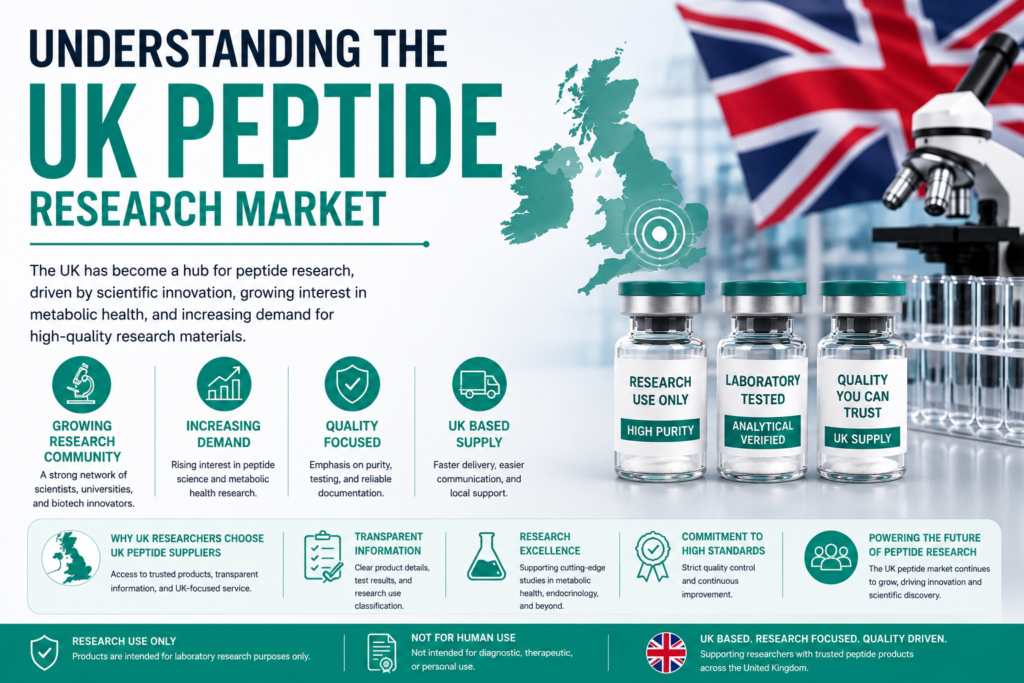
The growing scientific interest in peptides has contributed to an expanding market for UK peptides intended for laboratory and research applications. Researchers can now encounter a wide range of peptide compounds associated with areas such as metabolic signalling, endocrine pathways, cellular communication, molecular biology, and pharmaceutical research. UK peptides
However, the increasing availability of research peptides also makes careful product evaluation more important. Two products carrying the same peptide name may differ in their specifications, analytical documentation, batch information, storage requirements, and intended use.
For researchers, choosing a peptide should therefore involve more than finding a familiar compound or comparing prices. UK peptides
What Are UK Research Peptides?
The term UK research peptides generally refers to peptide materials supplied for scientific or laboratory investigation within the UK market. UK peptides
Depending on the compound and research objective, these materials may be used to investigate molecular properties, receptor interactions, biochemical pathways, stability, or other experimental questions.
Research peptides can include compounds associated with many different areas of science. Some have been studied for decades, while others represent newer areas of investigation. UK peptides
Importantly, the term “research peptide” describes the intended research context of the material. It does not mean that the product is an approved medicine or has been established as safe or effective for human treatment.
Product Specifications Matter
When evaluating peptides in the UK, researchers should review the specifications provided for the individual compound. UK peptides
Useful information may include the peptide name, stated quantity, molecular information, product format, recommended storage conditions, batch identification, and available analytical documentation.
Clear specifications help researchers determine whether a particular material is relevant to their experimental requirements. UK peptides
This is particularly important when working with closely related compounds. Similar names or research categories do not necessarily indicate identical molecular structures, receptor activity, or experimental characteristics.
Analytical Documentation
Analytical information can provide researchers with additional insight into the characteristics of a peptide sample. UK peptides
For example, high-performance liquid chromatography (HPLC) may be used to evaluate chromatographic purity, while mass spectrometry (MS) can help support confirmation of molecular identity.
Where available, this information may be presented through a Certificate of Analysis (COA) associated with a particular product or batch. UK peptides
Researchers should consider what was actually tested rather than relying exclusively on an advertised purity percentage. A statement such as “99% purity” has more research value when the analytical method, sample or batch, and supporting results can also be evaluated.
Batch Traceability and Consistency
Batch information can be particularly valuable when conducting repeat experiments.
If a researcher uses materials from several different batches, maintaining accurate lot or batch records can help identify which material was associated with each experiment. This can support experimental traceability and make it easier to investigate unexpected variations in results. UK peptides
For this reason, researchers evaluating UK peptide suppliers may want to consider whether product and testing information can be connected to identifiable batches where applicable.
Supplier Transparency
Transparency is another important consideration within the UK peptide research market. UK peptides
A research-focused supplier should make it reasonably straightforward to understand what product is being offered and how it is classified.
Researchers may want to look for clear information concerning product specifications, research-use designation, available analytical testing, storage recommendations, shipping conditions, returns policies, and contact details. UK peptides
Marketing language should not replace scientific documentation. Claims about purity, quality, or biological activity should be considered in the context of the evidence provided to support them.
Research Peptides vs Prescription Medicines
One of the most important distinctions in the UK peptides market is the difference between a laboratory research product and a regulated prescription medicine. UK peptides
This can become confusing when compounds such as semaglutide, tirzepatide, or liraglutide are discussed because these names are associated with established pharmaceutical research and regulated medicines.
An approved pharmaceutical formulation containing one of these compounds has been developed and evaluated for defined clinical purposes under regulatory requirements. UK peptides
A research peptide carrying the same compound name is supplied for a different purpose.
It should not automatically be assumed to have the same formulation, manufacturing controls, sterility, clinical performance, regulatory approval, or suitability for human administration as the corresponding prescription medicine. UK peptides
This distinction is especially important as public interest in GLP-1 and related compounds continues to grow.
Understanding how the UK research peptide market differs from the pharmaceutical medicines market allows researchers to evaluate products according to their intended purpose. It also provides important context for one of the most widely discussed areas of peptide science today: peptides associated with weight-management and metabolic research.
What Are Peptides for Weight Loss?
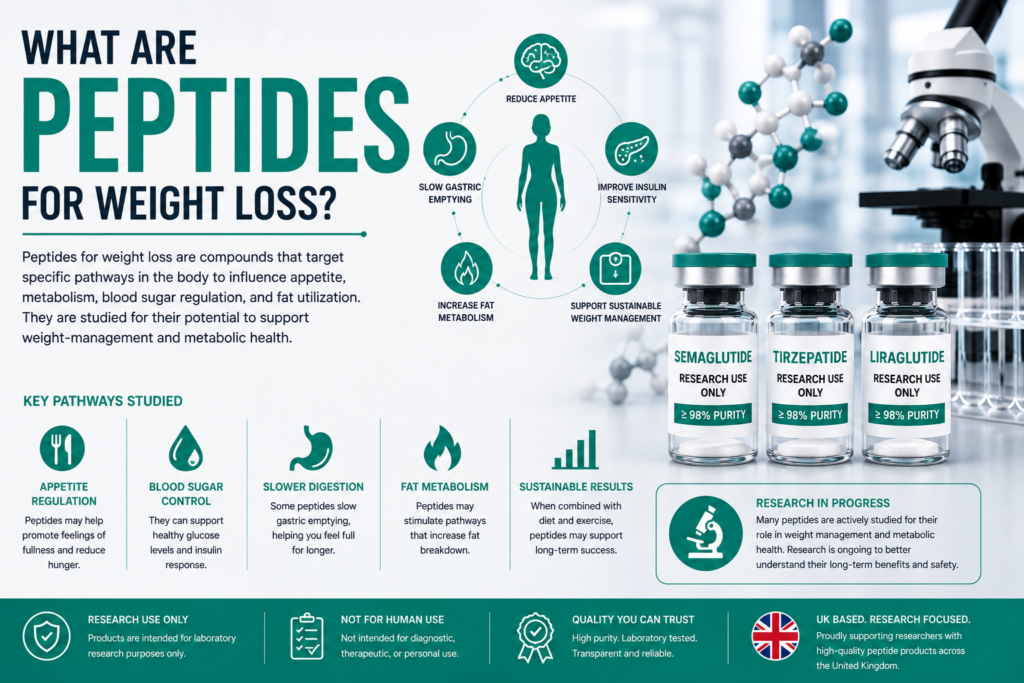
The term peptides for weight loss is commonly used to describe peptide-based medicines and compounds associated with biological pathways involved in appetite, satiety, digestion, glucose regulation, and energy balance. This area has attracted considerable scientific and public interest, particularly because of research involving GLP-1 and GIP signalling.
Unlike traditional stimulant-based “fat burners,” clinically established peptide-based weight-management medicines do not primarily work by directly increasing stimulation or simply “burning” body fat. Instead, they influence hormonal signalling systems that can affect hunger, food intake, digestion, and metabolic regulation.
For researchers exploring UK peptides, understanding these mechanisms is important because compounds associated with weight management do not all work in the same way, nor do they all have the same level of clinical evidence. UK peptides
GLP-1 Peptides and Weight Management
GLP-1, or glucagon-like peptide-1, is a naturally occurring hormone released primarily from the gut in response to food intake. UK peptides
It plays several roles in metabolic regulation. GLP-1 contributes to signals associated with fullness after eating, supports glucose-dependent insulin secretion, influences glucagon activity, and can affect gastric emptying.
These characteristics made the GLP-1 pathway an important target for pharmaceutical research. UK peptides
Medicines such as semaglutide and liraglutide act as GLP-1 receptor agonists. Rather than being identical to naturally occurring GLP-1, these compounds are designed to activate GLP-1 receptors while having pharmacological properties that allow their effects to persist longer than the body’s native hormone. UK peptides
In clinical use, GLP-1 receptor agonists can reduce appetite and energy intake in some patients. When used appropriately alongside lifestyle measures, specific approved medicines in this class have demonstrated clinically meaningful weight reduction.
Appetite and Satiety
One of the major mechanisms associated with GLP-1-based weight-management medicines involves appetite and satiety signalling.
Satiety describes the feeling of fullness and satisfaction that occurs during and after eating. By influencing GLP-1 receptors and related signalling pathways, certain medicines can increase feelings of fullness and reduce hunger.
As a result, some patients may naturally consume less food because they feel satisfied after eating smaller amounts or experience reduced appetite between meals. UK peptides
Over time, reduced energy intake can contribute to weight loss when energy consumption remains below the body’s energy requirements.
Slower Gastric Emptying
GLP-1 receptor activation can also influence gastric emptying, which is the movement of food from the stomach into the small intestine.
Slower gastric emptying can contribute to a longer sensation of fullness following a meal. It may also influence the rate at which nutrients enter the bloodstream. UK peptides
However, this mechanism is more complex than simply keeping food in the stomach. The degree of gastric-emptying effect can differ between compounds and may change with continued treatment.
It is therefore more accurate to consider gastric emptying as one component of a broader set of metabolic and appetite-related effects. UK peptides
What Is GIP?
Another important hormone in modern metabolic research is GIP, or glucose-dependent insulinotropic polypeptide.
Like GLP-1, GIP is an incretin hormone released in response to food. It participates in metabolic signalling and contributes to glucose-dependent insulin responses. UK peptides
Interest in GIP increased substantially with the development of tirzepatide, which differs from traditional GLP-1 receptor agonists because it activates both GIP and GLP-1 receptors.
This dual-receptor activity has made tirzepatide an important subject in modern metabolic and weight-management research.
GLP-1 vs GIP/GLP-1 Peptides
The difference between these pathways can be simplified as follows:
| Compound | Main Receptor Activity | Research/Clinical Area |
| Semaglutide | GLP-1 | Glucose regulation and weight management |
| Liraglutide | GLP-1 | Glucose regulation and weight management |
| Tirzepatide | GIP + GLP-1 | Glucose regulation and weight management |
Although these compounds are frequently grouped together in discussions about weight-loss peptides, their molecular structures and receptor activity differ. UK peptides
This is why researchers should avoid assuming that all UK peptides associated with metabolic research are interchangeable or that evidence supporting one compound automatically applies to another.
Clinical Medicines and UK Research Peptides Are Different
The growing popularity of GLP-1-related medicines has also made it particularly important to distinguish pharmaceutical products from laboratory materials. UK peptides
Clinical evidence demonstrating weight reduction with approved semaglutide, tirzepatide, or liraglutide formulations relates to specific medicines evaluated under controlled clinical conditions.
A UK research peptide carrying the same compound name should not automatically be assumed to have equivalent formulation, manufacturing controls, safety, sterility, effectiveness, or regulatory approval. UK peptides
Research materials should therefore be evaluated according to their stated laboratory purpose, while decisions concerning medical weight-management treatment should involve appropriately qualified healthcare professionals.
Understanding these distinctions provides the foundation for examining how peptide-based weight-management medicines actually influence appetite, digestion, and metabolic signalling.
How Do Weight-Loss Peptides Work?
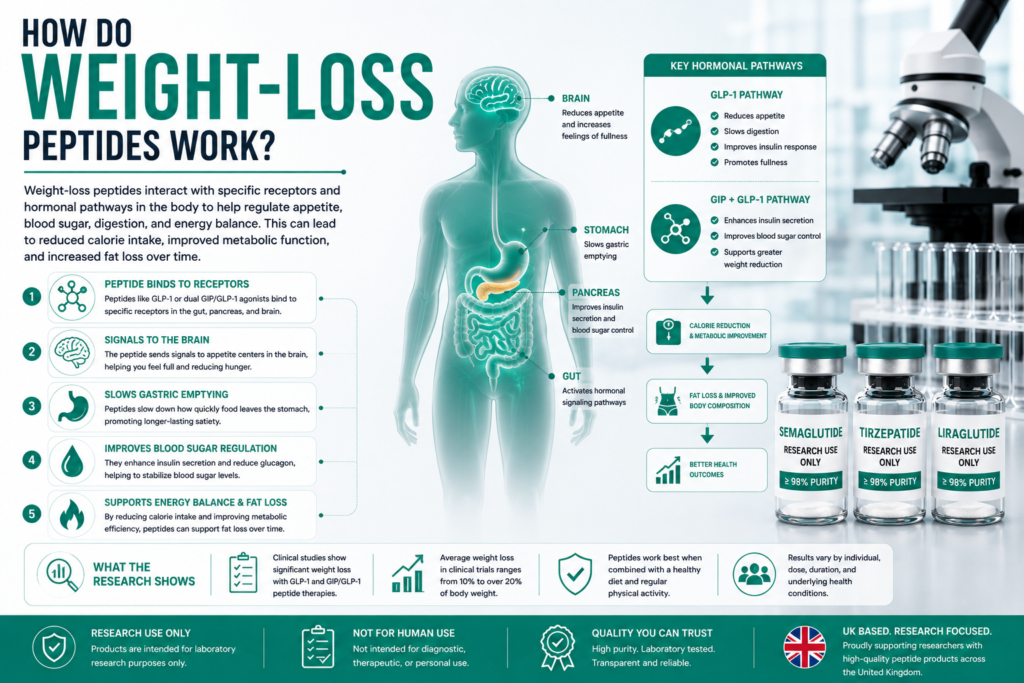
Weight-loss peptides do not work through a single mechanism. Clinically established peptide-based medicines can influence several interconnected biological systems involved in appetite, satiety, digestion, blood glucose regulation, and insulin signalling.
Much of the scientific interest in this area centres on incretin hormones, particularly GLP-1 (glucagon-like peptide-1) and GIP (glucose-dependent insulinotropic polypeptide). These hormones are naturally released in response to food and participate in communication between the digestive system, pancreas, brain, and other tissues involved in metabolic regulation. UK peptides
Understanding these pathways is especially relevant when researching UK peptides, because compounds associated with metabolic research can target different receptors and produce different biological effects.
Appetite Regulation
One of the most important mechanisms associated with GLP-1 receptor agonists is their influence on appetite. UK peptides
GLP-1 receptors are present in areas involved in the regulation of food intake. Activating these pathways can strengthen signals associated with fullness and reduce hunger in some individuals.
This can result in lower overall energy intake because a person may feel satisfied after consuming less food or experience less desire to eat between meals. UK peptides
The effect should not be confused with direct fat burning. Weight reduction occurs primarily because sustained changes in appetite and food intake can make it easier to maintain an energy deficit over time.
Increased Satiety
Satiety refers to the feeling of satisfaction and fullness that develops during and after eating.
Certain GLP-1-based medicines enhance signalling associated with satiety, which can help explain why some people report feeling full after smaller meals.
This is an important distinction from stimulant-style weight-loss products. Rather than primarily increasing stimulation, these medicines influence physiological systems that normally participate in the body’s response to food. UK peptides
However, individual responses vary, and appetite reduction should not be assumed to occur to the same degree in everyone.
Slower Gastric Emptying
Some GLP-1 receptor agonists can also slow gastric emptying, the process through which food moves from the stomach into the small intestine.
When this process is slowed, food may remain in the stomach for longer, which can contribute to prolonged feelings of fullness following a meal. UK peptides
Changes in gastric emptying can also affect how quickly nutrients enter the digestive system. However, the magnitude of this effect can vary according to the compound, dose, duration of treatment, and individual response.
Gastric emptying is therefore only one part of the broader mechanism through which GLP-1-related medicines can influence weight management.
Blood Glucose and Insulin Regulation
Incretin hormones also play an important role in blood glucose regulation.
GLP-1 receptor activation can increase glucose-dependent insulin secretion. This means insulin secretion is enhanced when blood glucose levels are elevated, particularly following food intake. UK peptides
GLP-1 signalling can also influence glucagon, another hormone involved in maintaining blood glucose levels.
These mechanisms help explain why GLP-1 receptor agonists were extensively investigated and used in type 2 diabetes management before their role in chronic weight management became widely recognised. UK peptides
Why Tirzepatide Works Differently
Tirzepatide has a different pharmacological profile because it activates both GIP and GLP-1 receptors.
GIP is another naturally occurring incretin hormone involved in the body’s response to nutrients. By targeting both receptor systems, tirzepatide influences multiple aspects of metabolic signalling through a single molecule. UK peptides
This dual-receptor mechanism distinguishes tirzepatide from compounds such as semaglutide and liraglutide, which primarily target the GLP-1 receptor.
Clinical research has demonstrated substantial weight reduction with approved tirzepatide formulations, making combined GIP/GLP-1 receptor activity an important area of continuing metabolic research.
Different Peptides Can Produce Different Effects
One of the most important principles for researchers investigating UK peptides is that compounds should be evaluated individually. UK peptides
Two peptides may both be associated with metabolic or weight-management research while differing significantly in their molecular structure, receptor affinity, biological activity, stability, and available scientific evidence.
A compound’s effects therefore cannot be predicted simply because it belongs to a broad category described online as “weight-loss peptides.” UK peptides
The same applies to dosage. Milligram quantities cannot be directly compared between different compounds because potency, receptor activity, pharmacokinetics, and formulation can differ substantially.
Understanding how these mechanisms differ provides useful scientific context, but it also raises an important question: which peptide-based compounds actually have the strongest clinical evidence for weight management?
Which Peptides Have the Strongest Weight-Management Evidence?
Not every peptide associated with weight management has the same level of scientific evidence. Some compounds have been evaluated in large, controlled human clinical trials, while others remain subjects of early-stage, preclinical, or laboratory research.
Among the most extensively studied peptide-based medicines for weight management are semaglutide, tirzepatide, and liraglutide. Each influences incretin signalling, although their mechanisms and the magnitude of weight reduction observed in clinical trials differ.
For anyone researching UK peptides, it is important to separate evidence concerning regulated pharmaceutical medicines from information about laboratory research materials. A compound may have strong clinical evidence as an approved medicine without every research product carrying the same name having equivalent clinical characteristics.
Semaglutide
Semaglutide is a GLP-1 receptor agonist that influences pathways associated with appetite, satiety, glucose-dependent insulin secretion, and other aspects of metabolic regulation. UK peptides
Its effects on appetite and energy intake have made semaglutide particularly important in modern obesity research.
One of the landmark studies was the STEP 1 clinical trial, which evaluated once-weekly semaglutide 2.4 mg alongside lifestyle intervention in adults with overweight or obesity without diabetes. UK peptides
After 68 weeks, participants receiving semaglutide experienced an average body-weight reduction of approximately 14.9%, compared with approximately 2.4% among participants receiving placebo.
The study provided strong evidence that a regulated semaglutide formulation, combined with lifestyle intervention, could produce substantial weight reduction in the population studied. UK peptides
Specific semaglutide medicines have subsequently become established options for chronic weight management in appropriate patients.
Tirzepatide
Tirzepatide differs from semaglutide because it acts as a dual GIP and GLP-1 receptor agonist.
This means a single molecule activates two incretin receptor pathways involved in metabolic regulation.
The SURMOUNT-1 trial provided particularly important evidence regarding tirzepatide and weight management. The study involved adults with obesity or overweight and at least one weight-related complication, excluding diabetes. UK peptides
After 72 weeks, mean body-weight reductions were approximately 15.0%, 19.5%, and 20.9% across the three tirzepatide dose groups, compared with approximately 3.1% with placebo.
These results helped establish dual GIP/GLP-1 receptor agonism as a major development in metabolic and obesity research.
As with semaglutide, however, these percentages relate to specific pharmaceutical formulations studied under controlled clinical conditions and should not be treated as guaranteed outcomes for individuals. UK peptides
Liraglutide
Liraglutide is another established GLP-1 receptor agonist with clinical evidence supporting its use in chronic weight management for appropriate patients. UK peptides
It acts through GLP-1 receptor signalling and can influence appetite, satiety, glucose regulation, and food intake.
Liraglutide played an important role in establishing GLP-1 receptor agonism as an approach to medical weight management. However, average weight reductions reported in major liraglutide studies have generally been more modest than those subsequently observed in major semaglutide and tirzepatide trials.
Another practical difference is dosing frequency. Approved liraglutide formulations used for weight management are typically administered daily, whereas relevant semaglutide and tirzepatide formulations are generally administered once weekly. UK peptides
Which Has the Strongest Evidence?
All three compounds have substantial clinical research behind them, but semaglutide and tirzepatide have become particularly prominent because of the magnitude of weight reduction demonstrated in major clinical trials.
Tirzepatide has produced especially large average reductions in some studies, while semaglutide has an extensive body of evidence supporting GLP-1 receptor agonism in weight management.
However, comparing headline percentages alone does not determine which medicine is appropriate for a particular individual. Clinical treatment decisions can depend on medical history, contraindications, side effects, other medications, treatment objectives, availability, and professional assessment.
What About Other “Weight-Loss Peptides”?
Numerous other peptides are discussed online in connection with fat loss, metabolism, growth hormone pathways, or body composition. UK peptides
The amount and quality of evidence supporting these compounds can vary considerably.
A peptide may have an interesting biological mechanism or encouraging results in laboratory or animal research without having convincing evidence that it safely produces meaningful weight loss in humans. UK peptides
Researchers evaluating UK peptides should therefore consider the hierarchy of scientific evidence. Large randomised human clinical trials generally provide substantially stronger evidence for treatment effectiveness than animal studies, laboratory experiments, testimonials, or theoretical mechanisms.
Clinical Evidence Does Not Equal Research-Product Approval
There is also an important distinction between evidence for a compound and the regulatory status of an individual product. UK peptides
Clinical trials involving regulated pharmaceutical semaglutide or tirzepatide formulations do not establish that every laboratory product labelled with these compound names has the same formulation, purity profile, sterility, bioavailability, safety, or clinical effectiveness.
Similarly, a research peptide advertised with a high analytical purity percentage should not be interpreted as clinically proven simply because the underlying compound has been investigated as a medicine. UK peptides
For UK peptide research, clinical studies can provide valuable scientific context about particular molecules and biological pathways. Research materials themselves, however, should continue to be evaluated according to their stated intended use and available analytical documentation.
With semaglutide and tirzepatide now representing two of the most prominent compounds in this field, understanding how they differ from one another provides further insight into the development of modern peptide-based weight-management research. UK peptides
Semaglutide vs Tirzepatide: What’s the Difference?
Semaglutide and tirzepatide are two of the most widely researched compounds in modern metabolic and weight-management science. Both influence incretin pathways involved in appetite, satiety, insulin signalling, and blood glucose regulation, but they achieve these effects through different receptor mechanisms. UK peptides
For researchers exploring UK peptides, understanding this distinction is important. Compounds that appear within the same research category can have different molecular structures, receptor targets, pharmacological properties, and levels of supporting evidence.
The primary difference between semaglutide and tirzepatide is straightforward: semaglutide primarily activates GLP-1 receptors, while tirzepatide activates both GIP and GLP-1 receptors.
| Feature | Semaglutide | Tirzepatide |
| Drug class | GLP-1 receptor agonist | Dual GIP/GLP-1 receptor agonist |
| GLP-1 receptor activity | Yes | Yes |
| GIP receptor activity | No | Yes |
| Appetite and satiety effects | Yes | Yes |
| Glucose-dependent insulin signalling | Yes | Yes |
| Major weight-management evidence | Strong | Strong |
| Relevant approved formulations | Once weekly | Once weekly |
| Medical supervision required | Yes | Yes |
How Semaglutide Works
Semaglutide is designed to activate the GLP-1 receptor.
GLP-1 is a naturally occurring incretin hormone involved in the body’s response to food. Activation of this pathway can influence appetite, increase feelings of satiety, support glucose-dependent insulin secretion, and affect gastric emptying. UK peptides
These combined mechanisms can reduce overall energy intake in some patients, contributing to weight reduction when an approved medicine is used appropriately alongside lifestyle intervention.
Semaglutide’s pharmacological characteristics also allow relevant pharmaceutical formulations to provide sustained receptor activity with once-weekly administration. UK peptides
How Tirzepatide Works
Tirzepatide takes a different approach by combining GIP and GLP-1 receptor agonism within a single molecule.
Both GIP and GLP-1 are naturally occurring incretin hormones released in response to nutrients. They participate in metabolic signalling, although their physiological actions are not identical.
By activating both receptors, tirzepatide has a distinct pharmacological profile from GLP-1-only receptor agonists such as semaglutide. UK peptides
This dual-receptor mechanism has become an important area of metabolic research, particularly following clinical trials demonstrating substantial average weight reductions with regulated tirzepatide formulations.
Which Has Shown Greater Weight Reduction?
Clinical evidence has shown substantial average weight reduction with both compounds.
Direct comparisons require appropriate head-to-head trials because results from separate studies can be affected by differences in participants, study design, treatment duration, doses, and other factors.
Clinical research has nevertheless demonstrated that tirzepatide can produce greater average weight reduction than semaglutide in certain study populations and treatment settings. UK peptides
This does not mean tirzepatide is automatically the most appropriate treatment for every patient. Treatment decisions involve considerably more than comparing average weight-loss percentages.
Can Their Doses Be Compared Directly?
No. Semaglutide and tirzepatide doses should not be compared milligram for milligram.
For example, a particular number of milligrams of tirzepatide is not equivalent to the same number of milligrams of semaglutide.
The compounds have different molecular structures, receptor profiles, pharmacological properties, and approved dosing schedules. Milligram quantities therefore cannot be used as a simple measure of comparative strength.
This principle applies broadly when researching UK peptides: dose quantities should be interpreted within the context of the individual compound rather than compared directly across unrelated or differently acting peptides.
Clinical Medicines vs Research Peptides
Another important distinction concerns the type of product being discussed. UK peptides
When clinical studies report weight reduction with semaglutide or tirzepatide, researchers are evaluating specific pharmaceutical formulations produced and administered under controlled study conditions.
A laboratory research product carrying the same compound name should not automatically be considered equivalent to the medicine used in those studies. UK peptides
Differences may exist in formulation, manufacturing controls, testing requirements, intended use, sterility, regulatory oversight, and other characteristics.
Therefore, clinical evidence associated with approved medicines should be used as scientific context rather than as proof that an individual UK research peptide will produce equivalent outcomes. UK peptides
What This Comparison Shows About Peptide Research
The comparison between semaglutide and tirzepatide illustrates a broader principle within peptide science: similar research applications do not mean identical mechanisms.
Two compounds can both influence weight-management pathways while interacting with different receptors and producing different pharmacological responses.
Researchers should therefore evaluate peptide identity, receptor activity, analytical information, and scientific evidence individually rather than treating all metabolic peptides as interchangeable.
This becomes even more important when considering the many additional compounds promoted online as “weight-loss peptides,” because not all of them have evidence comparable to semaglutide or tirzepatide.
Are All UK Peptides Marketed for Weight Loss Proven?
No. Although peptide-based weight-management medicines have attracted significant attention, not every peptide promoted or discussed for weight loss has strong clinical evidence supporting it.
The term “weight-loss peptide” is used very broadly online. It can refer to regulated prescription medicines, experimental compounds, laboratory research peptides, or substances promoted mainly through theoretical mechanisms and anecdotal claims.
For researchers exploring UK peptides, these categories should not be treated as equivalent. The amount and quality of scientific evidence behind individual compounds can differ considerably.
Clinical Evidence vs Research Interest
A peptide can be scientifically interesting without being a clinically proven weight-management treatment.
Researchers may investigate a compound because it interacts with a receptor or biological pathway associated with appetite, metabolism, energy regulation, or body composition. These findings can provide valuable information about how biological systems function.
However, identifying a potentially relevant mechanism is only an early part of establishing whether a compound could safely and effectively produce a particular outcome in humans.
Evidence can come from several stages of research, including laboratory experiments, animal studies, observational research, and controlled human clinical trials. Each provides different information and carries different limitations.
Large, well-designed randomised controlled trials generally provide much stronger evidence for clinical effectiveness than theoretical mechanisms, animal research, or individual testimonials.
Why Preclinical Research Is Different
Preclinical research can include laboratory experiments involving cells, tissues, biochemical systems, or animal models.
These studies are extremely valuable for understanding molecular mechanisms and determining whether further investigation may be justified. However, results obtained in laboratory systems or animals do not guarantee that the same outcome will occur in humans.
Differences in metabolism, physiology, dosage, exposure, and other biological factors can significantly affect how research findings translate from one model to another.
For this reason, a peptide showing interesting metabolic activity in preclinical research should not automatically be described as a proven weight-loss treatment.
Be Careful With Online Peptide Claims
The rapid growth of interest in UK peptides has also resulted in increasingly bold claims appearing online.
Statements such as “burns fat,” “rapid weight loss,” or “guaranteed fat reduction” should be evaluated carefully, particularly when they are not supported by appropriate human clinical evidence.
Researchers should consider questions such as:
- Has the compound been investigated in humans?
- Were the studies randomised and controlled?
- How many participants were included?
- How long did the study last?
- Were the findings replicated?
- What adverse effects were reported?
- Was the product studied for the specific outcome being claimed?
These questions provide a much stronger basis for evaluating scientific evidence than testimonials or promotional descriptions.
High Peptide Purity Does Not Prove Weight-Loss Effectiveness
Analytical purity and clinical effectiveness are also separate concepts.
A UK research peptide may be reported as having a high level of chromatographic purity. This information can be useful when researchers are evaluating the composition of laboratory material.
However, a purity result does not establish that the peptide causes weight loss.
For example, a reported purity of 98% or 99% does not by itself demonstrate:
- effectiveness for weight management;
- an appropriate human dosage;
- safety for human administration;
- sterility;
- regulatory approval; or
- suitability for medical treatment.
Clinical effectiveness must be demonstrated through appropriate research rather than inferred from analytical purity.
Research Peptides and Approved Medicines Should Remain Separate
Semaglutide, tirzepatide, and liraglutide provide useful examples of why this distinction matters.
Specific pharmaceutical formulations containing these compounds have undergone extensive clinical investigation and regulatory evaluation for defined medical indications.
A laboratory product carrying one of the same compound names is supplied for a different purpose and should not automatically inherit the clinical claims associated with an approved medicine.
For anyone researching peptides in the UK, the compound name, research evidence, analytical characteristics, intended use, and regulatory status should therefore be evaluated separately.
This evidence-based approach makes it possible to recognise promising areas of peptide science without overstating what individual compounds or research products have actually been demonstrated to do.
Once the scientific evidence has been considered, another important question becomes relevant for laboratory researchers: how can the quality of UK peptides be evaluated?
UK Peptide Quality: What Should Researchers Look For?
When selecting UK peptides for laboratory research, quality should be evaluated using more than a product name or an advertised purity percentage. Researchers may need to consider several characteristics of the material, including its molecular identity, analytical purity, batch information, supporting documentation, storage requirements, and intended research use.
Reliable experimental work depends partly on understanding the materials being studied. If the identity or composition of a peptide is uncertain, this can introduce additional variables that may affect the interpretation and reproducibility of research results.
For this reason, researchers should examine the analytical information supporting a peptide product rather than relying exclusively on marketing descriptions.
Peptide Identity
Before evaluating purity, researchers should consider whether the material has been appropriately identified as the intended peptide.
Identity and purity are related but separate analytical questions.
A sample may contain one dominant component, but that alone does not establish that the component has the molecular identity expected by the researcher. Appropriate analytical techniques can provide additional information supporting identification of the material.
Depending on the peptide and laboratory requirements, researchers may therefore consider molecular information alongside chromatographic purity results.
HPLC Peptide Testing
High-performance liquid chromatography (HPLC) is commonly used in peptide analysis to separate different components within a sample.
As the sample passes through the chromatographic system, its components interact differently with the stationary and mobile phases. This allows them to separate and appear as individual peaks within the resulting chromatogram.
The main peptide component may represent a large proportion of the detected chromatographic signal, allowing a laboratory to report a purity percentage under the particular analytical conditions used.
For researchers evaluating UK peptides, HPLC data can therefore provide useful information about the relative chromatographic composition of a sample.
However, an HPLC purity percentage should not be interpreted as proof that every possible impurity or contaminant has been excluded. The result relates to what the analytical method was designed and capable of detecting under the test conditions.
Mass Spectrometry and Peptide Identity
Mass spectrometry (MS) provides a different type of analytical information.
Rather than primarily separating components to estimate chromatographic purity, mass spectrometry can help determine molecular mass and support confirmation that an analysed compound corresponds with the expected peptide.
This makes HPLC and mass spectrometry complementary techniques.
HPLC may help answer:
“How much of the detected chromatographic material corresponds to the primary component?”
Mass spectrometry may help answer:
“Does the molecular mass of the analysed material correspond with the expected compound?”
Using both types of information can provide researchers with a more complete analytical picture than relying on a purity percentage alone.
Understanding a Peptide Certificate of Analysis
A Certificate of Analysis (COA) is commonly used to communicate analytical information associated with a particular peptide product or batch.
Depending on the supplier, laboratory, product, and tests performed, a peptide COA may include information such as:
- peptide or compound name;
- batch or lot number;
- testing date;
- analytical method;
- reported purity;
- HPLC chromatogram;
- molecular mass;
- mass spectrometry results; and
- other relevant analytical observations.
Researchers should examine the actual information contained within the document rather than assuming that every COA provides the same level of testing.
A document stating a purity percentage without explaining how that result was obtained provides less analytical context than documentation containing the testing method and associated results.
Batch Traceability
Batch or lot identification is another useful consideration when sourcing UK research peptides.
Researchers may conduct experiments over several weeks or months, sometimes using material from different production batches. Recording the batch used in each experiment can help maintain traceability.
If unexpected differences appear between experiments, researchers can then determine whether different batches were involved and consider whether further investigation is appropriate.
Where analytical documentation is supplied, researchers may also want to determine whether the documentation can be connected to the specific batch being evaluated.
Peptide Storage and Stability
Analytical quality at the time of testing does not guarantee that a peptide will remain unchanged indefinitely.
Peptide stability can be influenced by factors such as temperature, moisture, light exposure, storage duration, and repeated environmental changes.
Different peptides can also have different stability characteristics. Researchers should therefore follow storage information appropriate to the individual compound rather than assuming that every peptide requires identical conditions.
Maintaining suitable storage conditions helps researchers preserve the characteristics of their materials throughout the intended research period.
Research-Use Information
Product quality should also include clarity regarding intended use.
A peptide supplied for laboratory research should be clearly presented within that context. Researchers should be able to distinguish research materials from pharmaceutical products intended for medical treatment.
This becomes particularly important when evaluating UK peptides carrying names that are also associated with approved medicines.
A research product labelled semaglutide or tirzepatide, for example, should not automatically be considered equivalent to a regulated pharmaceutical formulation containing that compound.
Looking Beyond the Purity Percentage
A headline figure such as “99% purity” may appear impressive, but researchers should consider the wider analytical picture.
A more complete evaluation may consider:
Identity + Purity + Analytical Method + Batch Traceability + Documentation + Storage + Intended Use
Together, these factors provide substantially more information about a research material than a single percentage.
For researchers comparing UK peptide suppliers, transparent analytical documentation and clearly presented product information can therefore be more meaningful than unsupported claims about being the “highest quality” or “purest” peptide available.
Understanding peptide quality also leads to an important question that is frequently misunderstood: does high peptide purity mean that a product is safe for human use?
Does Peptide Purity Mean a Product Is Safe?
No. Peptide purity and product safety are not the same thing.
A high reported purity percentage can provide useful analytical information when evaluating UK peptides for laboratory research, but it does not by itself establish that a product is safe, sterile, clinically effective, approved as a medicine, or suitable for human administration.
This distinction is particularly important because percentages such as “98% pure” or “99% pure” can easily be interpreted as broader measures of product quality or safety. In reality, the figure usually answers a much narrower analytical question.
What Does Peptide Purity Actually Tell Researchers?
Peptide purity generally describes the relative amount of the intended or primary peptide component detected using a particular analytical method.
For example, HPLC can separate components within a sample and provide information about their relative chromatographic abundance. If the primary peptide accounts for a high proportion of the detected signal, a high chromatographic purity may be reported.
This information can be valuable for laboratory research because unwanted peptide-related components may introduce variables into an experiment.
However, the result should be interpreted according to the analytical method used and what that method was designed to measure.
Purity Does Not Establish Sterility
One of the most important distinctions is between purity and sterility.
A sample can potentially have high chromatographic purity without that analysis establishing whether the material is sterile.
Sterility concerns the absence of viable microorganisms and requires different testing and manufacturing controls from those used to determine peptide purity.
Therefore, researchers should never interpret an HPLC purity percentage as evidence of sterility.
Purity Does Not Establish Human Safety
A high purity result also does not determine whether a peptide is safe for human use.
Medical safety requires substantially more information, potentially including toxicology, pharmacology, formulation, manufacturing controls, clinical studies, adverse-event monitoring, contraindications, and regulatory assessment.
An analytical purity test does not answer these questions.
For UK research peptides, purity information should therefore remain within its appropriate laboratory context rather than being interpreted as a medical safety assessment.
Purity Does Not Prove Clinical Effectiveness
The same distinction applies to effectiveness.
A peptide could theoretically have very high analytical purity while having little or no reliable evidence supporting a particular clinical outcome.
Conversely, strong clinical evidence for a compound comes from appropriately designed research involving the relevant pharmaceutical formulation—not simply from demonstrating that the active compound is analytically pure.
For example, the clinical evidence surrounding semaglutide and tirzepatide comes from controlled studies of specific pharmaceutical products administered according to defined protocols.
A laboratory peptide carrying the same compound name does not automatically inherit those clinical findings.
A High Purity Percentage Does Not Establish:
When evaluating UK peptides, researchers should remember that an advertised purity percentage alone does not establish:
- sterility;
- safety for injection or consumption;
- suitability for human administration;
- an appropriate human dose;
- absence of every possible contaminant;
- pharmaceutical manufacturing standards;
- clinical effectiveness;
- regulatory approval; or
- suitability for treating a medical condition.
Each of these requires different evidence, testing, controls, or regulatory assessment.
Research Quality Requires a Broader View
For laboratory research, purity remains an important characteristic—but it should be considered alongside other information.
Researchers may need to evaluate peptide identity, analytical methodology, batch documentation, molecular information, storage conditions, product specifications, and intended use.
A more meaningful assessment of UK peptide quality therefore considers the complete analytical and product documentation rather than relying on a single percentage.
Understanding this distinction is also useful when comparing suppliers. Instead of simply asking which company advertises the highest purity, researchers can examine how transparent the supplier is about identity, testing, documentation, traceability, storage, and research-use classification.
These factors provide a stronger foundation for the next consideration: how to choose a UK peptide supplier for laboratory research.
How to Choose a UK Peptide Supplier for Research
Choosing a UK peptide supplier for laboratory research involves more than comparing product prices or looking for the highest advertised purity percentage. Researchers should consider the quality and transparency of the information available about the compounds they intend to study.
A research-focused supplier should make it straightforward to identify what is being offered, understand its intended use, review relevant product specifications, and access supporting information where available.
For researchers comparing UK peptides, several factors can help provide a more complete picture of a supplier and its products.
Clear Product Information
Each peptide should be clearly identified.
Product pages should provide enough information for researchers to distinguish one compound from another and determine whether it is relevant to their experimental requirements.
Depending on the peptide, useful information may include the compound name, quantity, product format, molecular information, research classification, and recommended storage conditions.
Vague descriptions or exaggerated claims are less useful than clearly presented scientific and product information.
Analytical Testing
Analytical information can help researchers better understand the characteristics of the peptide material being considered.
Where available, researchers may want to review information from techniques such as HPLC and mass spectrometry.
HPLC can provide information about chromatographic purity, while mass spectrometry can support confirmation of molecular identity. These methods answer different analytical questions and may provide a more complete picture when considered together.
A supplier advertising UK peptides with specific purity claims should ideally provide enough supporting information for researchers to understand how those claims were determined.
Certificates of Analysis
A Certificate of Analysis (COA) can provide additional information about the testing associated with a peptide or batch.
Researchers should examine the contents of the COA rather than simply checking whether one exists.
Depending on the testing performed, useful information may include the peptide name, batch or lot number, analytical method, testing date, purity results, chromatographic data, and molecular-mass information.
Where possible, researchers should also determine whether the analytical documentation corresponds to the relevant product or batch.
Batch Traceability
Batch identification can help researchers maintain accurate laboratory records.
If an experiment is repeated using materials obtained at different times, recording the relevant batch numbers can make it easier to identify which material was used in each study.
This can be particularly valuable when investigating unexpected differences between experimental results.
A transparent UK peptide supplier should therefore provide appropriate product or batch identification where applicable.
Storage Guidance
Different peptides may require different storage conditions to help maintain their stability.
Researchers should check whether the supplier provides clear guidance concerning temperature, light exposure, moisture, and other relevant storage considerations.
Peptide stability should not be assumed to be identical across all compounds. Following product-specific storage information can help researchers preserve materials throughout the intended research period.
UK Shipping Information
For researchers ordering peptides in the UK, shipping information is another practical consideration.
A supplier should clearly explain available delivery options, expected processing procedures, shipping policies, and any relevant handling information.
Researchers may also want to review what happens if an order is delayed, damaged, or otherwise affected during delivery.
Transparent shipping and returns information makes it easier to understand the complete ordering process before purchasing research materials.
Clear Research-Use Classification
The intended use of a peptide should be clearly communicated.
Products supplied specifically for laboratory investigation should be presented as research materials rather than marketed as substitutes for prescription medicines.
This distinction is particularly important for compounds such as semaglutide and tirzepatide, where the same compound names are also associated with regulated pharmaceutical products.
A responsible supplier should avoid suggesting that clinical evidence for an approved medicine automatically establishes the safety or effectiveness of its research-use product.
Supplier Transparency and Support
Researchers may occasionally need clarification about product specifications, documentation, shipping, or storage.
Accessible contact information and clear customer support policies can therefore be useful when comparing UK peptide suppliers.
Transparency also extends to the overall presentation of the website. Quality information, research disclaimers, shipping policies, returns information, contact details, and product documentation should be reasonably easy to locate.
Choosing Based on Evidence, Not Marketing Claims
Statements such as “highest quality,” “pharmaceutical grade,” or “best peptides in the UK” should not replace supporting evidence.
Researchers should look at what can actually be evaluated: compound identity, analytical information, documentation, traceability, storage guidance, research-use classification, and supplier transparency.
For researchers exploring available compounds, Pure Lab Peptides provides a destination for reviewing peptide research products, individual product specifications, and related research information.
The objective when selecting UK peptides should ultimately be to find materials appropriate for the intended laboratory application while having enough information to make an informed research purchasing decision.
These same considerations become particularly important when researchers move from comparing suppliers to buying peptides online in the UK.
Buying Peptides Online in the UK: What Researchers Should Consider
The availability of UK peptides online has made it easier for researchers to explore compounds relevant to a wide range of laboratory applications. However, convenience should not replace careful evaluation of the material, supplier, documentation, and intended research use.
When researchers search terms such as buy peptides UK, peptides for sale UK, or research peptides UK, they may encounter products with very different specifications and levels of supporting information. Evaluating these differences before placing an order can help researchers select materials that are appropriate for their particular laboratory requirements.
Identify the Peptide Required for Your Research
Before ordering, researchers should clearly identify the compound required for the intended experiment.
Peptides that appear within the same research category are not necessarily interchangeable. Differences in amino-acid sequence, molecular structure, receptor activity, stability, and other characteristics can influence their experimental behaviour.
This is particularly relevant in metabolic research. Semaglutide, tirzepatide, and liraglutide, for example, may all be discussed in relation to incretin signalling, but they are distinct compounds with different pharmacological characteristics.
Researchers should therefore select a peptide according to the requirements of the experiment rather than simply choosing a product because it belongs to a popular research category.
Review Product Specifications
Before buying UK peptides online, examine the individual product page carefully.
Relevant information may include:
- compound name;
- stated quantity;
- molecular information where applicable;
- product format;
- batch or lot information;
- recommended storage conditions;
- available analytical documentation; and
- intended research-use classification.
Clear product specifications make it easier to compare materials and maintain accurate laboratory records after an order has been received.
Check Available Analytical Information
Analytical documentation can provide additional information about the characteristics of a peptide sample.
Where available, researchers may want to review HPLC results relating to chromatographic purity and mass spectrometry information supporting molecular identity.
A Certificate of Analysis may bring some of this information together in a single document.
Rather than relying solely on statements such as “99% pure,” researchers should consider what testing was performed, what the reported result represents, and whether the documentation relates to the relevant product or batch.
Consider Storage Requirements Before Ordering
Peptide stability can depend on appropriate storage and handling.
Before ordering a research peptide, researchers should understand its recommended storage conditions and determine whether suitable facilities are available.
Temperature, moisture, light exposure, storage duration, and repeated environmental changes can potentially affect some peptide materials.
Checking these requirements before purchasing can help avoid situations where research material arrives but cannot be stored appropriately.
Review UK Delivery Information
Shipping is another practical consideration when purchasing peptides in the UK.
Researchers should review available delivery methods, order-processing information, expected shipping procedures, and relevant policies concerning delayed or damaged parcels.
If a peptide has particular handling or storage requirements, researchers may also want to consider how delivery conditions relate to the stability characteristics of the material.
Clear shipping information allows researchers to understand what to expect between placing an order and receiving their research products.
Check Returns and Support Policies
Before placing an order, researchers should also review the supplier’s returns, replacement, and customer-support policies.
Questions can occasionally arise concerning an order, product documentation, shipping, or product specifications. Accessible support information can make these situations easier to resolve.
A transparent supplier should clearly explain how customers can make contact and what policies apply when an order-related problem occurs.
Understand the Intended Use
One of the most important considerations when buying research peptides UK products is understanding exactly how they are classified.
A peptide supplied for laboratory research should be used according to its stated intended purpose. Research-use products should not be assumed to be approved pharmaceutical medicines simply because the compound name is also associated with a prescription treatment.
For example, clinical research involving regulated semaglutide or tirzepatide medicines does not establish that a research-use product bearing the same name has equivalent formulation, sterility, safety, effectiveness, or regulatory approval.
This distinction should remain clear throughout the purchasing process.
Buy Based on Research Requirements, Not Hype
Peptide science is a rapidly developing field, and popular compounds can attract significant online attention. Researchers should avoid allowing trends, testimonials, or exaggerated marketing claims to determine their purchasing decisions.
Instead, evaluate the material according to the requirements of the research project and the information that can actually be examined.
For researchers looking to buy peptides in the UK for laboratory research, important considerations include compound identity, product specifications, analytical documentation, batch information, storage guidance, shipping policies, supplier transparency, and research-use classification.
Taking this evidence-focused approach can help researchers make more informed purchasing decisions while maintaining the distinction between laboratory peptide research and medical treatment.
Safety, Regulation and Responsible Peptide Research
As interest in UK peptides continues to grow, understanding the difference between laboratory research materials and regulated medicines becomes increasingly important. Peptide science can provide valuable insight into biological pathways, but research findings, analytical purity, and pharmaceutical approval represent very different concepts.
Compounds such as semaglutide, tirzepatide, and liraglutide demonstrate this distinction clearly. Specific pharmaceutical formulations containing these compounds have been evaluated in clinical trials and approved for particular medical indications. A research-use product carrying the same compound name should not automatically be treated as the equivalent of those medicines.
Prescription Peptide-Based Medicines Require Medical Oversight
Prescription medicines used for weight management are not appropriate for everyone.
GLP-1 and related medicines can cause adverse effects and may require consideration of an individual’s medical history, other medications, contraindications, and treatment objectives. Their use should therefore involve an appropriately qualified healthcare professional.
Commonly reported adverse effects with GLP-1-based treatments include gastrointestinal symptoms such as nausea, vomiting, diarrhoea, constipation, and abdominal discomfort. More serious risks can also occur depending on the medicine and individual circumstances.
This is why information about peptide science should not be interpreted as personalised medical advice or instructions for self-treatment.
UK Research Peptides Are Not Substitutes for Medicines
A UK research peptide supplied for laboratory investigation serves a fundamentally different purpose from a prescription medicine.
Research materials may be used to investigate molecular characteristics, receptor interactions, biochemical pathways, stability, or other experimental questions. They are not automatically intended, tested, or authorised for treating medical conditions.
This distinction remains important even when the research peptide shares a compound name with an active ingredient used in an approved pharmaceutical product.
Clinical evidence for a regulated semaglutide or tirzepatide formulation does not automatically establish the safety, effectiveness, sterility, formulation, or regulatory status of a laboratory research product.
Regulatory Approval Applies to Specific Products and Uses
Regulatory approval should not be interpreted as a blanket approval of every product containing or claiming to contain a particular compound.
Medicines are evaluated as specific pharmaceutical products, including their formulation, manufacturing process, quality controls, clinical evidence, intended indication, and prescribing information.
Therefore, the fact that a particular compound has been incorporated into an approved medicine does not mean every product carrying that compound’s name has undergone the same regulatory evaluation.
For researchers evaluating peptides in the UK, the regulatory status and intended use of the individual product should always be considered separately.
Analytical Purity Is Not Medical Approval
As discussed earlier, a peptide may have a high reported analytical purity while still lacking the evidence and controls required for medical use.
HPLC or mass spectrometry can provide valuable information about characteristics such as chromatographic purity and molecular identity, but these tests do not independently establish clinical safety.
A high purity percentage does not automatically demonstrate:
- sterility;
- safety for human administration;
- an appropriate human dosage;
- clinical effectiveness;
- absence of every possible contaminant; or
- approval as a medicine.
Researchers should therefore interpret analytical results according to the questions those tests are designed to answer.
Responsible Laboratory Handling
Responsible peptide research also involves appropriate laboratory procedures.
Researchers should review product-specific storage information, maintain suitable environmental conditions, record relevant batch details, and follow established laboratory protocols for handling research materials.
Accurate documentation can be particularly valuable when experiments are repeated or materials from different batches are compared.
Depending on the nature of the research, institutions may also have their own requirements concerning risk assessments, laboratory procedures, disposal, documentation, and research governance.
Maintaining the Research and Medical Boundary
The increasing public visibility of peptide-based medicines can make the boundary between scientific research and medical treatment appear less clear than it actually is.
Responsible communication about UK peptides should maintain that boundary.
Clinical research can be discussed to explain why particular compounds or pathways are scientifically significant. However, evidence concerning an approved medicine should not be used to imply that a research-use product provides the same clinical benefits.
Similarly, researchers should distinguish between laboratory findings, preclinical evidence, clinical trials, and regulatory approval when evaluating claims about individual peptides.
Maintaining these distinctions supports a more accurate and responsible understanding of peptide science while allowing researchers to continue exploring the rapidly developing field of UK peptide research.
Explore UK Peptides at Pure Lab Peptides
Finding the right UK peptides for laboratory research begins with understanding the compound, its intended research application, and the information available to support an informed purchasing decision.
At Pure Lab Peptides, researchers can explore a growing selection of peptide research products and review individual product information before choosing materials relevant to their laboratory requirements.
Rather than treating every peptide as interchangeable, researchers should consider the identity, specifications, available analytical information, storage requirements, and intended use of each compound individually.
Explore Peptides for Different Areas of Research
Peptide science covers a wide range of research areas.
Depending on the compound, researchers may investigate biological processes associated with receptor signalling, cellular communication, metabolic pathways, endocrine mechanisms, molecular interactions, and other areas of experimental science.
Metabolic peptides have attracted particular attention because of scientific developments involving GLP-1, GIP, and related signalling pathways. However, peptide research extends considerably beyond weight-management science.
Researchers can explore the available UK peptide collection according to the objectives of their individual research projects rather than relying solely on trends or general peptide categories.
Review Product Specifications
Before selecting a research peptide, review the information provided for the individual compound.
Product information may include details such as the peptide name, quantity, molecular characteristics where applicable, recommended storage conditions, research-use classification, and other relevant specifications.
These details can help researchers determine whether a particular peptide is appropriate for their planned laboratory work.
Where analytical documentation is available, researchers should also review what testing was performed and what the reported results represent.
Review Peptide Quality Information
Quality assessment should extend beyond a headline purity percentage.
Researchers evaluating UK peptides may want to consider available information relating to molecular identity, chromatographic purity, analytical methods, batch traceability, storage, and product documentation.
Where provided, Certificates of Analysis can offer additional information about testing associated with a particular peptide or batch.
Understanding the analytical information behind a product allows researchers to make more informed comparisons between available research materials.
UK-Focused Peptide Research
For researchers looking for peptides in the UK, ordering through a UK-focused website can also make it easier to review relevant product availability, delivery information, research documentation, and support resources in one place.
Pure Lab Peptides provides a dedicated destination for exploring peptide research products and learning more about individual compounds before placing an order.
Researchers should always select materials according to the needs of their experiments and follow the storage, handling, and research-use information associated with the individual product.
Explore UK Peptides for Laboratory Research
Whether you are investigating metabolic signalling, receptor activity, molecular characteristics, or another area of peptide science, selecting appropriate research materials begins with reliable product information.
Explore the peptide collection at Pure Lab Peptides to discover available compounds, review individual product specifications, and learn more about peptide research.
Explore UK Peptides at Pure Lab Peptides
Products designated for research use are intended for laboratory research purposes only. Information concerning clinically studied compounds is provided for scientific and educational context and should not be interpreted as medical advice or instructions for human use.
Frequently Asked Questions About UK Peptides
What Are Peptides?
Peptides are relatively short chains of amino acids connected by peptide bonds. They occur naturally throughout biological systems and can perform important signalling and regulatory functions.
Depending on their structure, peptides may interact with specific receptors or participate in pathways associated with metabolism, hormone signalling, cellular communication, immune activity, and numerous other biological processes.
Synthetic peptides can also be produced for controlled laboratory investigation, allowing researchers to study individual compounds and biological mechanisms in greater detail.
What Are UK Research Peptides?
UK research peptides are peptide materials supplied for laboratory or scientific investigation within the UK research market.
Depending on the compound, researchers may use these materials to investigate molecular characteristics, receptor activity, biochemical pathways, stability, or other experimental questions.
A research peptide should not automatically be considered an approved medicine. Its intended use and regulatory status should always be considered separately from clinical applications associated with the underlying compound.
What Are Peptides Used for in Research?
Peptides are investigated across biotechnology, molecular biology, pharmaceutical development, metabolic research, and other scientific disciplines.
Researchers may study how peptides interact with receptors, influence cellular signalling, participate in metabolic pathways, or behave under different experimental conditions.
Different peptides have different structures and biological targets, so findings involving one compound should not automatically be applied to another.
What Is Peptide Purity?
Peptide purity generally describes the relative proportion of the intended peptide detected within a sample using a particular analytical method.
High-performance liquid chromatography (HPLC) is commonly used to evaluate chromatographic purity.
However, an advertised purity percentage should not be interpreted as a complete measure of product quality. Researchers should also consider molecular identity, analytical methodology, batch information, storage requirements, and supporting documentation.
How Are Research Peptides Tested?
Different analytical techniques can be used depending on the information researchers or laboratories need to obtain.
HPLC may be used to evaluate chromatographic purity, while mass spectrometry (MS) can provide information supporting molecular identity by examining molecular mass.
These techniques answer different analytical questions and can therefore complement each other when evaluating UK peptides for laboratory research.
What Is a Peptide Certificate of Analysis?
A Certificate of Analysis (COA) is a document containing analytical information associated with a product or batch.
Depending on the testing performed, a peptide COA may include the compound name, batch or lot number, testing date, analytical method, reported purity, chromatographic results, molecular-mass information, or other relevant analytical data.
Researchers should review what testing was actually performed rather than relying solely on the presence of a COA or a headline purity figure.
What Are GLP-1 Peptides?
GLP-1, or glucagon-like peptide-1, is a naturally occurring incretin hormone involved in metabolic signalling.
It participates in processes associated with appetite, satiety, glucose-dependent insulin secretion, glucagon activity, and digestion.
Pharmaceutical research into this pathway contributed to the development of GLP-1 receptor agonists such as semaglutide and liraglutide. These compounds are distinct from naturally occurring GLP-1 but activate the same receptor pathway.
What Is the Difference Between Semaglutide and Tirzepatide?
The primary difference is their receptor activity.
Semaglutide primarily activates GLP-1 receptors, whereas tirzepatide activates both GIP and GLP-1 receptors.
This dual-receptor activity gives tirzepatide a different pharmacological profile from GLP-1-only receptor agonists. Both compounds have substantial clinical evidence associated with specific regulated pharmaceutical formulations.
However, their doses, mechanisms, and research characteristics should not be considered interchangeable.
Are Research Peptides the Same as Prescription Medicines?
No.
A research peptide and a prescription medicine are different product categories, even when they reference the same underlying compound.
Prescription medicines are manufactured and supplied within regulatory frameworks covering factors such as formulation, manufacturing controls, quality, safety, clinical effectiveness, approved indications, and prescribing information.
Research peptides are supplied for laboratory investigation according to their stated intended use.
Clinical evidence associated with an approved medicine should therefore not automatically be attributed to a research product carrying the same compound name.
Are All Peptides Marketed for Weight Loss Clinically Proven?
No. The level of evidence varies considerably between compounds.
Semaglutide, tirzepatide, and liraglutide have been evaluated extensively in human clinical research through specific pharmaceutical formulations.
Other compounds discussed online as “weight-loss peptides” may have substantially less evidence, with some supported primarily by laboratory studies, animal research, theoretical mechanisms, or anecdotal reports.
Researchers should distinguish between preclinical findings and evidence from controlled human clinical trials.
Does 99% Peptide Purity Mean It Is Safe for Human Use?
No.
A reported 99% purity result describes an analytical characteristic of the tested sample. It does not establish sterility, safety for human administration, an appropriate dosage, clinical effectiveness, or regulatory approval.
For UK research peptides, analytical purity should be interpreted within the context of laboratory research rather than as evidence of medical safety.
What Should Researchers Look for in a UK Peptide Supplier?
Researchers comparing UK peptide suppliers should consider the complete product and supplier information available.
Important factors can include clearly identified compounds, detailed product specifications, available analytical documentation, batch traceability, appropriate storage guidance, transparent shipping and returns policies, accessible support, and clear research-use classification.
These characteristics provide a stronger basis for evaluating research materials than unsupported claims about being the “best” or “purest” peptide supplier.
Where Can Researchers Find Peptides in the UK?
Researchers looking for UK peptides can explore specialist research suppliers that provide clearly identified peptide products and relevant product information.
Pure Lab Peptides provides a selection of peptide research products for researchers in the UK, alongside individual product specifications and related information.
Before selecting any research material, researchers should review the compound, available analytical documentation, storage requirements, and intended use to determine whether it is appropriate for their particular laboratory application.
Understanding UK Peptides and Peptide Research
Peptide science continues to develop rapidly, creating new opportunities for researchers to investigate biological signalling, receptor activity, metabolic pathways, molecular interactions, and many other areas of experimental science.
For researchers exploring UK peptides, understanding the science behind individual compounds is only one part of making an informed decision. Peptide identity, analytical purity, testing methods, batch traceability, storage requirements, product documentation, and intended use should all be considered when evaluating materials for laboratory research.
The growing scientific and public interest in compounds such as semaglutide, tirzepatide, and liraglutide also demonstrates why these distinctions have become increasingly important.
Research into GLP-1 and GIP pathways has transformed our understanding of appetite, satiety, insulin signalling, blood glucose regulation, and energy balance. Specific pharmaceutical formulations based on these pathways have also demonstrated significant results in controlled clinical weight-management studies.
However, clinical evidence and laboratory research products should remain clearly separated.
An approved pharmaceutical medicine containing a particular compound is not automatically equivalent to a UK research peptide carrying the same compound name. Differences can exist in formulation, manufacturing controls, analytical requirements, intended use, regulatory oversight, sterility, and supporting clinical evidence.
Similarly, a high peptide purity percentage should not be interpreted as proof of medical safety or effectiveness. Analytical purity provides researchers with information about a particular characteristic of the tested material; it does not establish that the product is suitable for human administration.
Making Informed UK Peptide Research Decisions
Researchers should therefore evaluate peptide materials according to the requirements of their individual experiments.
Before selecting a peptide, consider questions such as:
Is the compound clearly identified? What analytical testing has been performed? Is batch information available? Are appropriate storage instructions provided? Can the analytical documentation be connected to the product being evaluated? Is the intended research use clearly stated?
Taking this broader approach can provide considerably more useful information than simply choosing the product with the highest advertised purity percentage.
The same principles apply when comparing UK peptide suppliers. Transparent product information, accessible documentation, appropriate research-use classification, clear shipping policies, and reliable support can all contribute to a more informed research purchasing decision.
Explore UK Peptides at Pure Lab Peptides
For researchers interested in exploring peptide compounds for laboratory investigation, Pure Lab Peptides provides access to a selection of research-focused peptide products and supporting product information.
Browse available compounds, review individual specifications, explore relevant peptide information, and select research materials according to the requirements of your laboratory project.
Explore UK Peptides at Pure Lab Peptides and discover research products for your laboratory requirements.
Products designated for research use are intended for laboratory research purposes only. References to clinical studies or regulated medicines are provided for scientific and educational context and should not be interpreted as medical advice, treatment recommendations, or instructions for human use.
One Response