
Buy Peptides UK: A Guide to Research Peptides, GLP-1 Medicines and Safe UK Purchasing
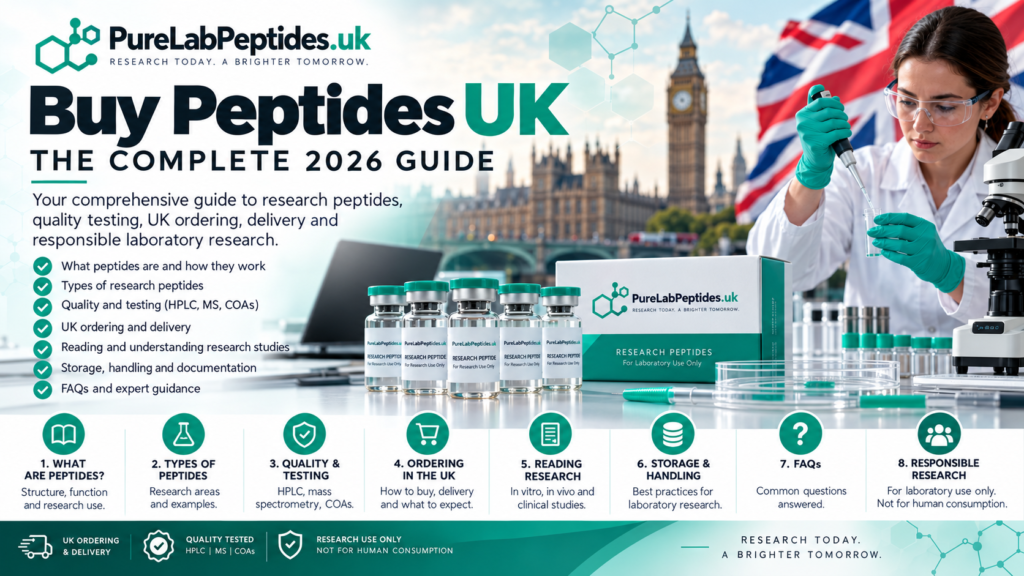
1. What Does “Buy Peptides UK” Actually Mean?
Searching “buy peptides UK” can lead to a surprisingly wide range of products. Some websites offer peptides intended strictly for laboratory and scientific research, while others provide regulated prescription medicines through pharmacies and healthcare services. Although both may be described using the word “peptide,” they should not be treated as the same type of product. Buy Peptides UK
Understanding this distinction is particularly important as interest in peptide science continues to grow.
What Are Peptides?
Peptides are short chains of amino acids. Amino acids are the building blocks used to form proteins, and naturally occurring peptides participate in many biological processes.
Scientists can also produce synthetic peptides for laboratory investigation. These materials allow researchers to examine subjects such as peptide structure, molecular interactions, cellular signalling and biochemical pathways under controlled experimental conditions.
This is one reason someone searching for peptides for sale in the UK may encounter products labelled “for research use only.”
That label matters.
A research peptide is supplied as laboratory material and should not automatically be considered a medicine, supplement or product suitable for human consumption.
Research Peptides and Medicines Are Different
The growing popularity of peptide-related terminology online can make the distinction between research materials and medicines difficult for consumers to understand.
A website may offer synthetic compounds for analytical or laboratory investigation. These products can be relevant to universities, independent laboratories and other legitimate research environments, but their availability does not establish that they are approved for human use. Buy Peptides UK
Prescription peptide-based medicines belong to a different category.
Certain medicines use peptide or peptide-related hormone pathways and have undergone regulatory assessment for specific medical indications. Their manufacture, prescribing, dispensing and use are subject to pharmaceutical regulations.
For example, GLP-1-based medicines have received considerable attention in the UK because certain products are licensed for diabetes or weight management.
These should not be confused with experimental compounds sold online as research peptides.
Why Has Interest in Peptides Increased?
Scientific interest in peptides spans numerous areas of modern biological research.
Researchers investigate peptides to better understand molecular signalling, protein interactions, cellular communication, metabolic pathways and other biological mechanisms.
At the same time, public awareness of peptides has increased substantially because of prescription medicines associated with GLP-1 and related hormone pathways.
This combination has caused terms such as buy peptides UK, peptide research UK, and UK peptide supplier to appear more frequently in online searches.
However, increased popularity does not remove the need to understand exactly what is being purchased. Buy Peptides UK
The name of a compound alone does not establish its regulatory status, intended use, quality or suitability for a particular purpose.
What About Peptides for Weight Management?
Weight management is one area where the distinction becomes especially important.
Some regulated prescription medicines act on peptide-related hormone pathways involved in appetite, digestion, blood-glucose regulation and feelings of fullness.
Examples include GLP-1 receptor agonists and medicines that target more than one hormone pathway.
In the UK, specific products containing compounds such as semaglutide and tirzepatide are licensed for particular indications and must be supplied through appropriate medical channels.
This does not mean that every product advertised online using terms such as “GLP-1,” “weight-loss peptide,” “research peptide” or the name of an active compound is equivalent to an authorised prescription medicine.
A research-labelled vial should not be treated as a substitute for a licensed pharmaceutical product.
What Should You Know Before You Buy Peptides in the UK?
Before purchasing any peptide product, first identify what category of product you actually need.
If you are purchasing material for legitimate laboratory research, examine the product identity, stated specifications, intended research application and available analytical documentation.
If you are looking for treatment for weight management, diabetes or another medical condition, the appropriate route is different. Prescription medicines should be obtained through qualified healthcare professionals and legitimate regulated providers following an appropriate clinical assessment.
Be cautious when a seller blurs these categories.
A website offering a product labelled “research use only” while simultaneously providing human dosing, injection instructions or promises of weight loss creates an important warning sign. Research products should not be promoted as unapproved alternatives to prescription treatment.
Buying Peptides in the UK Starts With Understanding Their Purpose
The phrase “buy peptides UK” therefore does not describe a single type of purchase.
It can refer to researchers sourcing synthetic peptides for controlled laboratory experiments, or consumers searching for information about regulated peptide-based medicines.
The distinction determines what standards, regulations and purchasing pathways apply. Buy Peptides UK
At PureLabPeptides.uk, peptide products are positioned for laboratory research purposes. Research materials should be evaluated according to their relevance to an experimental project and should not be interpreted as medicines simply because similar compounds or biological pathways appear in pharmaceutical research.
For individuals interested in peptide-based medicines for weight management, the appropriate starting point is a qualified healthcare professional who can determine whether a licensed treatment is suitable.
Understanding this difference is the foundation for making a more informed decision when searching to buy peptides in the UK.
In the next section, we will look more closely at what peptides are, how they are constructed from amino acids, and why scientists study them in laboratory research.
2. What Are Peptides and Why Are They Researched?

Peptides are naturally occurring or synthetically produced chains of amino acids. Amino acids are often described as the building blocks of proteins, but peptides are generally shorter structures consisting of amino acids connected by chemical bonds known as peptide bonds.
Although relatively small compared with many proteins, peptides can participate in complex biological processes. Naturally occurring peptides are involved in cellular communication, hormone signalling and numerous other biochemical functions throughout living organisms. Buy Peptides UK
This versatility has made peptides an important subject of modern scientific research.
Researchers study both naturally occurring peptides and synthetic versions created specifically for controlled laboratory experiments. By examining these compounds under carefully defined conditions, scientists can investigate how differences in amino-acid sequence, molecular structure and chemical properties influence experimental behaviour.
How Are Peptides Different From Proteins?
Peptides and proteins are both constructed from amino acids, but they differ primarily in their size and structural complexity.
A peptide may contain only a few amino-acid residues or a considerably longer sequence. Proteins generally contain longer amino-acid chains that fold into complex three-dimensional structures.
Short peptides are particularly useful in certain areas of research because their defined sequences allow scientists to investigate relationships between molecular structure and experimental activity. Buy Peptides UK
For example, researchers may compare an original peptide with a modified analogue containing one or more changes to its amino-acid sequence.
Observing how those modifications affect measurable characteristics can contribute to a better understanding of structure-function relationships.
Naturally Occurring vs Synthetic Peptides
Some peptides occur naturally within humans, animals, plants and other organisms.
Others can be produced synthetically in laboratories.
Synthetic peptide production allows researchers to create specific amino-acid sequences under controlled conditions. Scientists can reproduce naturally occurring sequences, investigate fragments of larger molecules or design modified analogues for experimental purposes. Buy Peptides UK
This flexibility has helped peptide science become relevant to disciplines including:
- Molecular biology
- Biochemistry
- Cell biology
- Analytical chemistry
- Pharmacology research
- Protein and peptide interaction studies
- Metabolic pathway research
- Receptor and signalling research
- Structural biology
- Experimental biotechnology
The fact that a peptide can be synthesised for laboratory investigation does not, however, mean that it has been demonstrated to be safe or effective as a medicine.
That distinction is particularly important when researching peptide products online.
Why Do Scientists Research Peptides?
One reason peptides attract scientific attention is their involvement in molecular signalling.
Cells constantly communicate through complicated networks of receptors, proteins, hormones and other signalling molecules. Certain naturally occurring peptides form part of these systems. Buy Peptides UK
Scientists can investigate peptide interactions to better understand how particular biological pathways operate.
Laboratory experiments may examine questions such as how a peptide interacts with another molecule, whether changing its amino-acid sequence affects its properties, how stable it remains under particular experimental conditions, or what molecular changes occur in a controlled research model.
Other studies may focus primarily on analytical characteristics rather than biological activity.
The exact purpose depends on the peptide and research design.
What Is a Research Peptide?
When people search online to buy peptides UK, they will frequently encounter the term “research peptide.”
A research peptide is generally a peptide material supplied for scientific, analytical or laboratory investigation rather than as a medicine or consumer supplement. Buy Peptides UK
Depending on the compound and research objective, laboratories may use peptide materials for experiments involving molecular analysis, analytical characterisation, biochemical assays or other controlled investigations.
Researchers should evaluate the specifications associated with the particular material they intend to use.
Where relevant, this can include reviewing product identity and available batch-specific analytical information.
Importantly, a “research use only” designation should not be interpreted as permission for self-administration.
Research materials are not automatically authorised medicines simply because the same or a related molecule has been investigated medically.
Why Peptide Identity Matters
Accurate identification is especially important in scientific research.
Two compounds may have similar names while differing in amino-acid sequence, molecular structure, salt form or other characteristics.
Researchers therefore need to understand precisely which material they are purchasing. Buy Peptides UK
Depending on the project, scientists may consider information such as the peptide name, amino-acid sequence, molecular formula, molecular weight and available analytical documentation.
Product-specific information should be verified rather than assumed from information about similarly named compounds.
This is particularly important when comparing materials from different suppliers.
Understanding Peptide Purity and Analytical Documentation
Researchers shopping for peptide materials may encounter terms such as purity, HPLC, mass spectrometry and Certificate of Analysis (COA).
These terms relate to analytical characterisation, but they should be interpreted carefully.
For example, a stated purity percentage does not by itself provide every piece of information required to determine whether a material is suitable for a particular experiment.
Researchers should consider the analytical method used, the sample or batch tested and whether documentation actually corresponds to the material being purchased.
A generic marketing statement such as “high purity” should not replace relevant batch-specific analytical information when experimental accuracy depends on precise characterisation. Buy Peptides UK
Research Peptides Are Not Automatically Medicines
This distinction deserves particular emphasis.
A peptide may be scientifically interesting without being an approved medical treatment.
Laboratory studies can generate hypotheses and provide valuable information about molecular mechanisms, but findings from test-tube experiments, cellular models or animal research do not automatically demonstrate safety or effectiveness in humans.
Clinical medicines require a substantially different level of evidence and regulatory oversight.
This is why a research peptide should not be marketed as though it were interchangeable with an authorised prescription medicine.
For consumers searching for weight-management treatments, this difference becomes especially important when encountering compounds associated with GLP-1, GIP or other metabolic pathways. Buy Peptides UK
Buying Research Peptides in the UK
Researchers looking to buy peptides in the UK should begin with the requirements of their experiment rather than marketing claims surrounding a particular compound.
Consider the intended laboratory application, product identity, available specifications and relevant analytical documentation.
At PureLabPeptides.uk, products are positioned as materials for laboratory research rather than medicines for human or veterinary use.
Understanding this distinction helps researchers make more informed purchasing decisions while preventing research products from being confused with regulated prescription treatments.
Peptides represent a fascinating and rapidly developing area of molecular science, but research peptides and prescription peptide medicines serve fundamentally different purposes.
The next section explores that distinction in greater detail and explains why a product sold for laboratory research should not be treated as an alternative to a licensed medicine. Buy Peptides UK
3. Research Peptides vs Prescription Peptide Medicines: What’s the Difference?
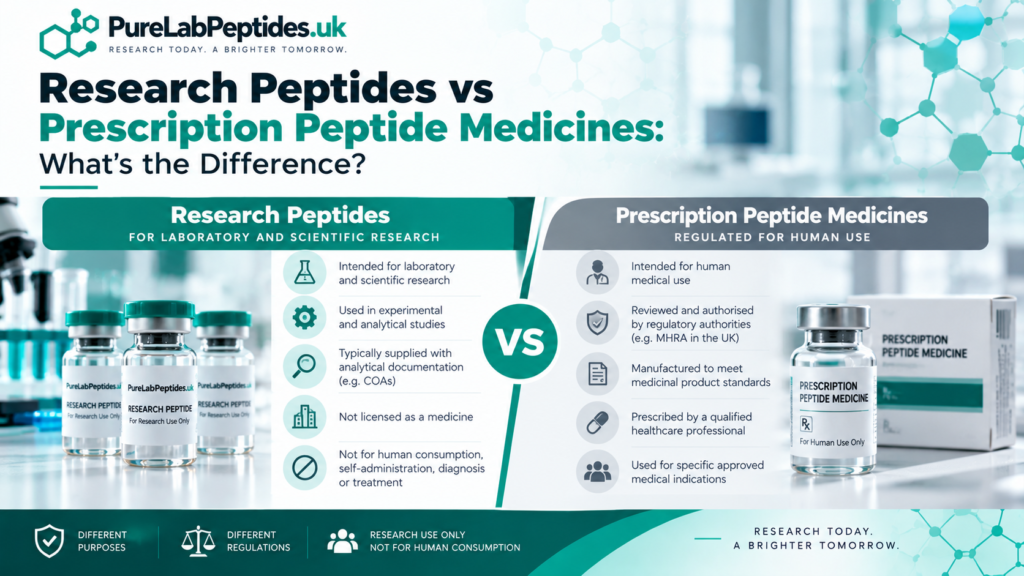
When searching to buy peptides UK, one of the most important distinctions to understand is the difference between a research peptide and a prescription peptide-based medicine.
The two categories may sometimes involve similar scientific terminology, molecular pathways or even related compounds, but they are not interchangeable.
A research peptide is generally supplied for controlled laboratory, analytical or scientific investigation. A prescription medicine, by contrast, is manufactured and supplied within a regulated pharmaceutical framework and prescribed for an authorised medical purpose where appropriate. Buy Peptides UK
Understanding this distinction is particularly important when discussing peptides associated with weight management.
What Is a Research Peptide?
Research peptides are materials intended for scientific investigation.
Depending on the compound, researchers may use them to investigate areas such as molecular signalling, receptor interactions, biochemical pathways, peptide structure, stability, cellular responses or analytical characteristics.
A product clearly labelled “for research use only” should be treated according to that intended purpose.
It should not automatically be considered suitable for human consumption simply because scientific literature discusses the same peptide or a related molecule. Buy Peptides UK
Similarly, finding promising results in laboratory or animal studies does not transform a research compound into an approved treatment.
Research is a process of investigating questions. It is not equivalent to regulatory approval.
What Is a Prescription Peptide Medicine?
Prescription medicines are fundamentally different.
Before a medicine can be authorised for a particular indication, regulators evaluate evidence relating to areas such as pharmaceutical quality, safety and effectiveness.
Manufacturing standards, formulation, strength, labelling and supply controls are also relevant parts of pharmaceutical regulation.
Once authorised, a medicine has specific approved uses and conditions attached to that authorisation.
This means that the active ingredient alone does not tell the entire story.
The brand, formulation, strength, indication and regulatory status all matter. Buy Peptides UK
For example, different medicines can contain the same active ingredient while being authorised for different medical purposes.
Semaglutide Shows Why This Difference Matters
Semaglutide provides a useful example.
People searching online for weight-loss treatments may encounter the word semaglutide across numerous websites and product listings.
However, seeing “semaglutide” on a label does not automatically mean that a product is equivalent to a licensed UK medicine.
In the UK, specific semaglutide medicines have particular authorised indications.
Wegovy, for example, is licensed for weight management in eligible people when used within its approved conditions alongside appropriate dietary and physical-activity measures. Buy Peptides UK
Other semaglutide brands have different licensed uses.
Therefore, a laboratory vial labelled with the name of an active compound should not be assumed to have the same pharmaceutical status, formulation or intended use as an authorised medicine containing that compound.
The Same Principle Applies to Tirzepatide
Tirzepatide provides another important example.
It acts on GIP and GLP-1 pathways and is used within regulated medical care for specified indications.
A licensed pharmaceutical product containing tirzepatide is supplied according to defined manufacturing, prescribing and dispensing requirements.
That is fundamentally different from encountering a vial of material online labelled as a research compound.
Consumers should not assume that two products are interchangeable simply because their labels reference the same molecule.
This distinction becomes particularly important when unregulated sellers use the popularity of prescription medicines to promote products described as “research” materials while simultaneously implying that customers can use them for weight loss.
“Research Use Only” Should Mean Research Use Only
The phrase “research use only” should have a clear meaning.
A genuine research product should be positioned for laboratory and analytical investigation. Buy Peptides UK
It should not be marketed simultaneously with instructions encouraging consumers to inject, ingest or otherwise self-administer the material.
Likewise, claims such as:
“Lose weight quickly,”
“Use this instead of Wegovy,”
“No prescription required,” or
“Same as Mounjaro but cheaper”
would blur the distinction between laboratory material and a medicinal product.
Researchers purchasing scientific materials should therefore pay attention not only to the product itself but also to how the supplier represents its intended use. Buy Peptides UK
Why Regulatory Approval Matters
Regulatory authorisation provides information about a specific medicinal product—not every product containing or claiming to contain a similarly named compound.
An authorised medicine is assessed in relation to its defined formulation, manufacturing controls, intended indication and supporting evidence.
Research products do not automatically inherit that regulatory status.
This principle is essential when reading scientific studies as well. Buy Peptides UK
A compound may appear in published research without being authorised as a medicine.
Likewise, preclinical findings may justify further investigation without demonstrating that the material is safe or effective for self-directed human use.
Laboratory Research and Clinical Treatment Have Different Goals
The objectives of laboratory research and medical treatment are also different.
Laboratory researchers may investigate questions such as:
- How does a peptide interact with a particular molecular target?
- Does altering an amino-acid sequence change measurable properties?
- How stable is the peptide under specific experimental conditions?
- What signalling pathways appear to respond in a particular model?
- How does one peptide compare with another under identical conditions?
Clinical treatment asks different questions.
A healthcare professional needs to determine whether an authorised medicine is appropriate for an individual patient, considering medical history, potential contraindications, current medicines, expected benefits and possible adverse effects. Buy Peptides UK
These are fundamentally different environments.
What Should Researchers Look for?
Researchers intending to buy peptides in the UK should focus on whether a product is suitable for their particular experimental requirements.
Depending on the research project, relevant considerations may include product identity, amino-acid sequence, stated quantity, available analytical information and batch-specific documentation.
Researchers should also evaluate whether a supplier clearly distinguishes laboratory products from medicines.
At PureLabPeptides.uk, research peptides are positioned for scientific and laboratory investigation and should not be interpreted as prescription medicines or products intended for self-administration.
What Should People Seeking Weight-Loss Treatment Do?
Someone looking for medical weight-management treatment should follow a different route. Buy Peptides UK
Rather than purchasing a product labelled “research use only,” they should speak with an appropriately qualified healthcare professional.
A proper clinical assessment can determine whether prescription weight-management treatment is suitable and which licensed option, if any, is appropriate.
This also creates an opportunity to discuss potential side effects, existing health conditions, other medicines and ongoing monitoring.
Understanding the Difference Before You Buy Peptides UK
The key distinction is therefore straightforward:
Research peptides are materials for scientific investigation. Prescription peptide medicines are regulated medicinal products supplied for appropriate clinical use.
One should not be presented as a substitute for the other.
For researchers, reputable peptide sourcing involves understanding exactly what material is being purchased and evaluating its suitability for the intended experiment. Buy Peptides UK
For individuals interested in weight management, the appropriate pathway involves regulated healthcare rather than self-administering laboratory products.
Keeping these categories separate makes it much easier to understand the rapidly expanding peptide market and to evaluate the results that appear when searching to buy peptides UK.
The next section examines one of the areas responsible for much of today’s interest in peptide-based medicines: GLP-1 and related treatments for weight management.
4. What Role Do Peptide-Based Medicines Play in Weight Management?
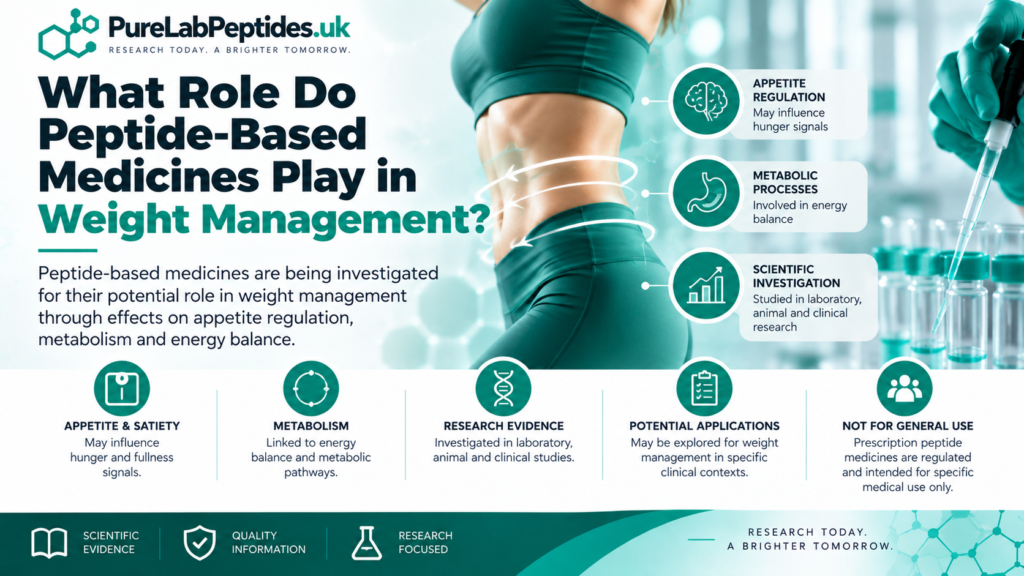
Much of the recent public interest in peptides has been driven by medicines used for weight management and type 2 diabetes. In particular, treatments that act on GLP-1 and related hormone pathways have become widely discussed in the UK.
These medicines have changed how clinicians can approach weight management for some eligible patients, but they should not be confused with products sold simply as research peptides.
Prescription weight-management medicines are regulated pharmaceutical products. Their use should follow an appropriate clinical assessment, and they are intended to complement—not replace—sustainable dietary, physical-activity and wider health measures.
What Is GLP-1?
GLP-1 stands for glucagon-like peptide-1.
It is a naturally occurring hormone involved in several physiological processes associated with eating and blood-glucose regulation.
After food is consumed, GLP-1 forms part of the signalling system between the digestive system, pancreas and brain.
Among its physiological roles, GLP-1 contributes to feelings of fullness, influences insulin secretion when blood glucose is elevated and affects the rate at which food leaves the stomach.
Researchers and pharmaceutical developers have investigated these pathways extensively, leading to medicines designed to act on GLP-1 receptors.
These medicines are commonly known as GLP-1 receptor agonists.
How Can GLP-1 Medicines Support Weight Management?
GLP-1-based medicines can influence several processes associated with appetite and food intake.
One important effect is increased satiety—the feeling of being satisfied or full after eating.
For some people, this can make it easier to consume less food while following a structured weight-management programme.
GLP-1 medicines can also slow gastric emptying. This means food may move from the stomach into the small intestine more slowly.
Their effects on glucose-dependent insulin secretion are particularly relevant to their role in diabetes treatment.
These mechanisms help explain why certain GLP-1 medicines have been investigated and authorised for specific metabolic conditions.
However, they are not designed to function as instant or effortless weight-loss solutions.
What Is a Dual GIP/GLP-1 Medicine?
Not every modern weight-management medicine targets only GLP-1.
Tirzepatide, for example, acts on both GIP and GLP-1 receptors.
GIP stands for glucose-dependent insulinotropic polypeptide.
Both GIP and GLP-1 are naturally occurring hormones involved in metabolic signalling.
By targeting both pathways, tirzepatide differs pharmacologically from medicines that act primarily as GLP-1 receptor agonists.
This distinction demonstrates why the broad term “weight-loss peptide” can be misleading.
Different medicines can target different receptors and have different formulations, authorised indications and prescribing requirements.
Semaglutide and Weight Management
Semaglutide is one of the best-known compounds associated with GLP-1 receptor signalling.
However, the specific medicinal product and its licensed indication matter.
In the UK, Wegovy is a semaglutide medicine licensed for weight management in eligible people under specified conditions.
Semaglutide is also found in products used for type 2 diabetes, but consumers should not assume that every semaglutide-containing product has the same licensed purpose.
This is an important distinction for anyone researching peptide-related products online.
A laboratory material labelled “semaglutide” is not automatically equivalent to Wegovy or another regulated pharmaceutical product.
Tirzepatide and Weight Management
Tirzepatide has also become an important part of discussions surrounding modern weight-management treatment.
In the UK, Mounjaro is licensed for weight management in eligible adults under specified conditions, in addition to its role in type 2 diabetes treatment.
As with semaglutide, the active compound should not be considered independently from the regulated medicine containing it.
A legitimate prescription medicine has a defined formulation, strength, manufacturing process, packaging and authorised indication.
A research material carrying the name “tirzepatide” should therefore not automatically be treated as equivalent to Mounjaro.
Prescription Medicines Work Alongside Lifestyle Changes
GLP-1 and related medicines are not intended to replace nutrition, physical activity or broader health management.
When these medicines are prescribed for weight management, they are generally used alongside measures such as a reduced-calorie diet and increased physical activity.
Long-term weight management can also involve sleep, behavioural habits, nutritional quality and management of existing medical conditions.
The medicine forms one component of a broader treatment strategy.
This is one reason ongoing healthcare support can be valuable.
A qualified professional can monitor progress, assess adverse effects and determine whether treatment continues to be appropriate.
Are GLP-1 Medicines Suitable for Everyone?
No.
Prescription weight-management medicines are not intended for everyone who wants to lose weight.
Eligibility depends on the specific medicine, its authorised indication and an individual’s circumstances.
A healthcare professional may need to consider factors such as body-mass index, existing health conditions, other medicines and relevant medical history.
Pregnancy, breastfeeding and plans for pregnancy can also be important considerations.
This is why purchasing prescription weight-management medicines without a proper medical assessment can create unnecessary risks.
Side Effects Still Matter
The popularity of GLP-1 medicines should not obscure the fact that they can cause side effects.
Commonly reported gastrointestinal effects can include nausea, vomiting, diarrhoea, constipation and abdominal discomfort.
More serious complications can also occur and require appropriate medical attention.
Patients should receive clear information about possible adverse effects and understand when symptoms require professional assessment.
No legitimate provider should guarantee that a prescription weight-management medicine will produce a particular amount of weight loss or claim that it has “no side effects.”
GLP-1 Medicines Are Not Cosmetic Weight-Loss Products
Another important distinction concerns the reason these medicines are prescribed.
Prescription weight-management medicines should not be viewed simply as products for achieving a particular appearance.
They are medical treatments intended for appropriate patients who meet relevant prescribing criteria.
Someone who wants to lose a small amount of weight for purely aesthetic reasons should not assume that a GLP-1 medicine is automatically appropriate.
The decision should be based on clinical assessment rather than online popularity or social-media trends.
What About Research Peptides Marketed for Weight Loss?
This is where consumers searching to buy peptides UK need to be especially careful.
Some online sellers use terms associated with popular pharmaceutical compounds while offering products labelled “for research use only.”
Research materials should not be self-administered as substitutes for prescription medicines.
Likewise, experimental peptides should not be promoted as proven weight-loss treatments simply because laboratory or animal research has investigated metabolic pathways.
Preclinical research and regulatory approval are fundamentally different standards of evidence.
Understanding Peptides and Weight Management
Peptide-related science has contributed to major developments in modern metabolic medicine.
GLP-1 receptor agonists and dual GIP/GLP-1 medicines demonstrate how understanding naturally occurring hormone pathways can contribute to pharmaceutical development.
But this success should not lead consumers to assume that all peptides are weight-loss medicines.
Research peptides, experimental compounds and licensed prescription medicines belong to different categories.
At PureLabPeptides.uk, products identified as research peptides should be considered materials for controlled laboratory investigation rather than treatments for weight management.
Anyone seeking medical treatment for overweight or obesity should instead discuss appropriate options with a qualified healthcare professional and obtain prescription medicines through regulated channels.
For people researching where to buy peptides in the UK, understanding this distinction is essential: a peptide can be scientifically interesting without being an authorised medicine, while an approved peptide-based treatment comes with specific indications, prescribing requirements and regulatory controls.
The next section looks more closely at which GLP-1 and related medicines are licensed in the UK and why the brand, active ingredient and approved indication all matter.
5. Which GLP-1 Medicines Are Licensed in the UK?
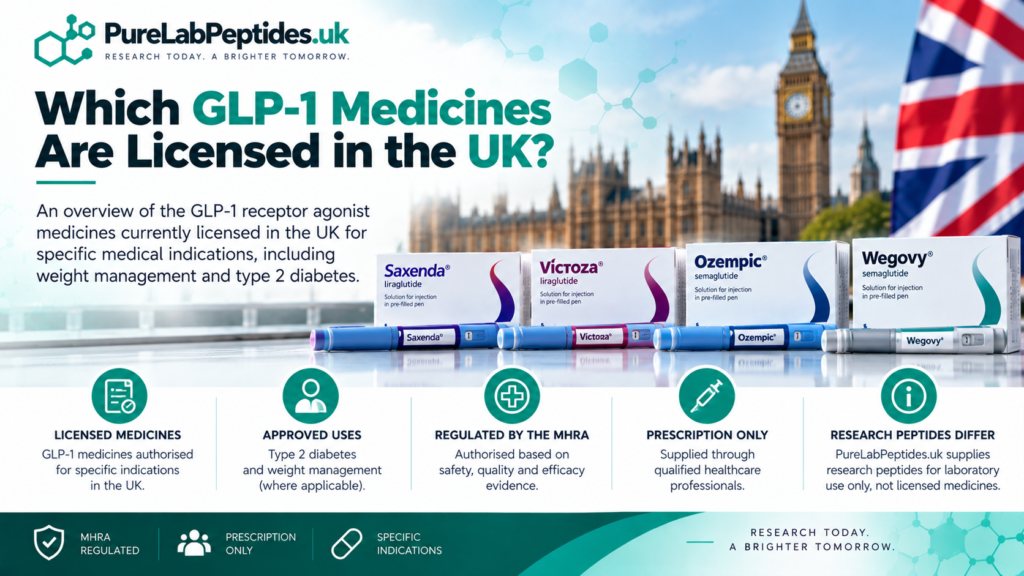
The rapid growth of interest in GLP-1 medicines has created considerable confusion about which products are actually authorised for weight management in the UK.
Names such as semaglutide, tirzepatide and liraglutide frequently appear in online discussions, advertisements and searches related to weight loss. However, the name of an active ingredient alone does not tell you whether a particular product is licensed for weight management.
The brand, formulation, approved indication and regulatory status all matter.
This distinction is particularly important for people searching online to buy peptides UK, because laboratory research materials should never be assumed to be equivalent to licensed prescription medicines.
Wegovy: Semaglutide for Weight Management
Wegovy contains the active ingredient semaglutide and is authorised in the UK for weight management in eligible patients under specified conditions.
Semaglutide is a GLP-1 receptor agonist. It acts on GLP-1 receptors and can influence appetite and feelings of fullness.
When prescribed for weight management, Wegovy is intended to be used alongside appropriate dietary and physical-activity measures.
An important development occurred in June 2026, when the MHRA authorised a tablet formulation of Wegovy for weight loss and weight management in eligible adults.
This expanded the available formulations beyond injectable Wegovy.
However, Wegovy remains a prescription medicine. Its regulatory status does not extend to laboratory materials or independently manufactured products simply because they are labelled “semaglutide.”
Ozempic: Semaglutide for Type 2 Diabetes
Ozempic also contains semaglutide, but its licensed purpose should not be confused with that of Wegovy.
In the UK, Ozempic is licensed for the treatment of type 2 diabetes, rather than as a weight-management medicine.
This provides an excellent example of why consumers should pay attention to more than the active ingredient.
Two products may contain semaglutide while having different authorised indications.
Consequently, seeing the word “semaglutide” on an online product listing does not automatically establish that the product is an authorised weight-management treatment.
Rybelsus: Oral Semaglutide for Type 2 Diabetes
Rybelsus is another semaglutide-containing medicine.
Unlike injectable Ozempic, Rybelsus is supplied as an oral tablet.
Its licensed indication in the UK concerns type 2 diabetes, rather than weight management.
This distinction is especially relevant now that an oral formulation of Wegovy has also received UK authorisation for weight management.
Consumers should therefore avoid assuming that all oral semaglutide products have the same approved indication.
The individual medicinal product remains important.
Mounjaro: Tirzepatide
Mounjaro contains tirzepatide.
Unlike medicines acting solely through the GLP-1 receptor, tirzepatide acts on both GIP and GLP-1 receptors.
This is why it is commonly described as a dual GIP/GLP-1 receptor agonist.
In the UK, Mounjaro is licensed for specified uses involving both type 2 diabetes and weight management.
For weight management, prescribing depends on eligibility and appropriate clinical assessment.
Mounjaro is a prescription-only medicine and should not be confused with products sold online as “research tirzepatide.”
A research vial bearing the name tirzepatide is not automatically equivalent to the authorised pharmaceutical product Mounjaro.
Liraglutide
Liraglutide is another GLP-1 receptor agonist that has been used in the UK.
However, the authorised indication can be brand-specific.
Some liraglutide products have been used in diabetes treatment, while particular formulations have been authorised for weight management.
This once again demonstrates why consumers should look beyond the active ingredient.
The correct questions include:
What is the specific medicine?
What is its licensed indication?
Has it been prescribed appropriately?
Is it being supplied through a legitimate pharmacy?
These questions provide considerably more useful information than simply asking whether a compound belongs to the GLP-1 family.
A New Development: Orforglipron
The UK GLP-1 landscape continued to develop in August 2026.
The MHRA authorised orforglipron, marketed as Foundayo, making the UK the first European country to authorise this oral GLP-1 medicine for both specified weight-management and type 2 diabetes uses.
Unlike the injectable products that have dominated much of the public discussion surrounding GLP-1 treatment, orforglipron is supplied as a tablet.
Its authorisation demonstrates how rapidly this area of pharmaceutical development continues to evolve.
It also reinforces an important point: regulatory status can change as new products and formulations complete the appropriate assessment process.
Researchers and consumers should therefore rely on current regulatory information rather than old articles, social-media posts or assumptions based on another product containing a similar compound.
Licensed Does Not Mean Suitable for Everyone
A medicine being licensed for weight management does not mean that anyone wanting to lose weight should use it.
Authorisation specifies the circumstances under which the medicine can be prescribed.
Individual suitability still requires assessment by a qualified healthcare professional.
Factors such as BMI, weight-related health conditions, medical history, other medicines, pregnancy considerations and potential contraindications may influence prescribing decisions.
GLP-1 medicines are therefore very different from ordinary consumer products that can simply be selected from an online catalogue.
Why Brand and Formulation Matter
One of the most important lessons from the current UK market is that the active ingredient alone is insufficient to determine how a medicine should be used.
Consider semaglutide.
It can appear in:
Wegovy – authorised for specified weight-management uses.
Ozempic – authorised for type 2 diabetes rather than weight management.
Rybelsus – an oral semaglutide medicine authorised for type 2 diabetes.
The situation can become even more confusing when websites offer laboratory materials carrying the generic name of the same compound.
This is why consumers should never assume that a research vial containing or claiming to contain a particular peptide is interchangeable with an authorised pharmaceutical product.
Research Products Are a Separate Category
For people searching to buy peptides in the UK, the distinction between these medicines and research peptides remains essential.
A research peptide supplied by a laboratory-focused retailer is intended for scientific investigation.
It should not be marketed as a cheaper or easier alternative to Wegovy, Mounjaro or another prescription medicine.
Likewise, the fact that a particular molecule is used in an authorised medicine does not automatically make every independently manufactured version of that molecule an authorised medicine.
Pharmaceutical authorisation applies to the specific medicinal product, including its manufacturing controls, formulation, presentation and approved indication.
What About Powdered GLP-1 Vials?
Consumers should be particularly cautious about websites offering GLP-1 products as powders in vials that customers are expected to mix before injecting.
These should not be assumed to be equivalent to authorised UK medicines.
Products labelled for laboratory research should remain within their intended research setting rather than being prepared or self-administered as substitutes for prescription treatment.
Anyone seeking GLP-1 treatment for weight management should use an appropriate clinical pathway instead.
What This Means When Searching “Buy Peptides UK”
Someone searching to buy peptides UK may encounter both laboratory materials and information concerning pharmaceutical treatments.
Understanding which category a product belongs to should come before making any purchasing decision.
Researchers looking for peptides for controlled scientific investigation should assess research-specific factors such as product identity, experimental suitability and relevant analytical documentation.
Someone seeking treatment for overweight, obesity or diabetes should instead consult a qualified healthcare professional and obtain any prescribed medicine through a legitimate regulated provider.
At PureLabPeptides.uk, research peptide products should remain clearly positioned for laboratory and scientific investigation rather than being represented as substitutes for prescription GLP-1 medicines.
The distinction protects both scientific integrity and consumers.
The next section will examine who may be considered for prescription weight-management treatment and the factors healthcare professionals consider when determining eligibility.
6. Who May Be Eligible for Prescription Weight-Management Treatment?
Prescription weight-management medicines are not designed for everyone who wants to lose weight.
Treatments such as GLP-1 receptor agonists and dual GIP/GLP-1 medicines are prescribed according to specific clinical criteria. A qualified healthcare professional should assess whether a particular treatment is appropriate based on the individual’s health, weight-related risks, medical history and other relevant factors.
This is another important distinction for people searching to buy peptides UK. Research peptides can be purchased for legitimate laboratory investigation, but prescription weight-management medicines require a medical pathway because individual suitability and safety need to be considered.
BMI Is One Factor, Not the Entire Assessment
Body-mass index, commonly abbreviated to BMI, is frequently used when assessing eligibility for weight-management treatment.
BMI compares a person’s weight with their height and provides a standardised measurement used within healthcare.
However, BMI should not necessarily be considered in isolation.
A healthcare professional may consider BMI alongside existing medical conditions, previous weight-management efforts and the person’s overall risk of developing complications associated with overweight or obesity.
The eligibility criteria can also differ between medicines and prescribing pathways.
This means there is no single universal BMI threshold that automatically makes every person eligible for every weight-management medicine.
Weight-Related Health Conditions May Matter
Existing health conditions can play an important role in determining whether medical weight-management treatment is appropriate.
Depending on the medicine and applicable guidance, clinicians may consider conditions associated with excess weight, including:
- Type 2 diabetes
- High blood pressure
- Cardiovascular disease or cardiovascular risk
- Obstructive sleep apnoea
- Abnormal blood lipid levels
- Other clinically significant weight-related conditions
The presence of these conditions does not automatically mean that a GLP-1 medicine will be prescribed.
Instead, they form part of the wider clinical assessment.
Medical History Is Important
A responsible prescriber needs more information than someone’s height and weight.
Medical history can reveal factors that affect whether a medicine is appropriate or whether additional monitoring may be necessary.
This assessment may include previous illnesses, gastrointestinal problems, pancreatic history, kidney function, endocrine conditions and other clinically relevant information.
A healthcare professional may also ask about previous weight-management approaches and any difficulties experienced with them.
Providing accurate medical information is important because withholding relevant details can make prescribing less safe.
Current Medicines Need to Be Reviewed
Another important part of the assessment is reviewing medicines the person already takes.
Prescription medicines do not operate independently of everything else in the body.
Potential interactions, overlapping adverse effects and changes in how other medicines are absorbed or managed may need consideration.
This is particularly relevant because GLP-1 medicines can affect gastrointestinal function, including the rate at which the stomach empties.
A prescriber may therefore need to review existing prescriptions before deciding whether treatment is appropriate.
People should not stop or alter existing medicines simply because they are considering a weight-management treatment unless advised to do so by an appropriate healthcare professional.
Pregnancy and Breastfeeding Require Particular Attention
Pregnancy plans, pregnancy and breastfeeding are important considerations when discussing GLP-1 medicines.
These medicines are not ordinary weight-loss supplements and should not be started casually without consideration of reproductive circumstances.
Anyone who is pregnant, breastfeeding, planning pregnancy or who becomes pregnant while taking a prescription weight-management medicine should obtain appropriate medical advice.
The specific recommendations can differ between medicines, making product-specific professional guidance particularly important.
Weight-Loss Medicines Are Not Intended for Cosmetic Use
The growing visibility of GLP-1 medicines on social media can create the impression that they are appropriate for anyone wanting to become slimmer.
That is not their intended role.
Prescription weight-management treatment is designed for people meeting relevant medical criteria rather than for individuals simply seeking rapid cosmetic weight loss.
This distinction matters because even effective medicines carry potential adverse effects and require an appropriate balance between expected benefits and possible risks.
A person at a healthy weight should not attempt to obtain these medicines simply to lose a few kilograms for aesthetic reasons.
Previous Weight-Management Efforts May Be Discussed
Clinical weight management usually extends beyond prescribing a medicine.
A healthcare professional may discuss previous approaches to diet, physical activity and behavioural changes.
This is not because medication and lifestyle changes are competing strategies.
Instead, prescription weight-management medicines are generally intended to form part of a broader approach that can include nutrition, physical activity and ongoing support.
Understanding previous challenges can help healthcare professionals develop a more appropriate long-term strategy.
Eligibility Does Not Guarantee a Prescription
Meeting broad eligibility criteria does not necessarily mean a particular medicine will be prescribed.
The clinician still needs to determine whether the expected benefits are appropriate in relation to potential risks.
One medicine may be suitable for one patient but inappropriate for another with apparently similar weight measurements.
Treatment decisions may also change over time as medical circumstances, medicines or available clinical evidence change.
This individual assessment is one reason legitimate prescription services require more than simply completing an online checkout.
Be Cautious of Sellers That Skip Medical Assessment
Anyone looking online for weight-management medicines should be cautious of websites or social-media sellers that promise immediate access without meaningful medical assessment.
Warning signs can include sellers that:
- Guarantee approval before collecting medical information.
- Offer prescription medicines without a prescription.
- Encourage customers to conceal health information.
- Sell injectable products through social-media messages.
- Present laboratory research compounds as alternatives to prescription medicines.
- Promise guaranteed or extremely rapid weight loss.
A legitimate clinical pathway should prioritise suitability and patient safety rather than simply completing a sale.
Research Peptides Do Not Have Weight-Loss Eligibility Criteria
It is equally important to understand how this differs from purchasing laboratory materials.
Researchers who buy peptides in the UK for legitimate scientific investigation are not undergoing a medical eligibility assessment because the products are not being supplied as treatments.
Their considerations are instead experimental.
Researchers may evaluate the compound’s identity, sequence, analytical characteristics, available documentation and suitability for their research protocol.
That distinction must remain clear.
A product labelled “for research use only” should not be treated as a way to bypass the eligibility requirements attached to prescription medicines.
Choosing the Appropriate Route
Someone interested in laboratory peptide research and someone seeking treatment for obesity have fundamentally different needs.
Researchers may source appropriately identified peptide materials from specialist research suppliers such as PureLabPeptides.uk for controlled scientific investigation.
People seeking weight-management treatment should use a regulated healthcare pathway involving appropriate assessment and prescribing.
These categories should not overlap.
The availability of an experimental peptide online does not establish that it is suitable for human use, while the existence of research involving a particular compound does not replace the evidence and regulatory processes required for medicinal treatment.
The Importance of Individual Medical Assessment
There is no single weight-management treatment that is appropriate for everyone.
BMI, existing health conditions, medication, medical history, pregnancy considerations and other individual circumstances can all affect treatment decisions.
A qualified prescriber can consider these factors together and determine whether medication should form part of a broader weight-management programme.
For readers who originally arrived after searching “buy peptides UK,” this distinction is essential.
Research peptides are purchased for laboratory investigation. Prescription weight-management medicines are selected for individual patients following an appropriate clinical assessment.
Understanding that difference helps prevent research compounds from being confused with regulated medicines and gives readers a clearer foundation for evaluating peptide-related products online.
The next section examines the potential benefits, limitations and side effects of GLP-1 and related weight-management medicines, including why ongoing medical supervision remains important.
7. Understanding the Benefits, Limitations and Side Effects of GLP-1 Medicines
GLP-1 and related medicines have become important options in evidence-based weight management for some eligible patients. Clinical studies have demonstrated that certain authorised medicines can support meaningful weight reduction when used appropriately alongside dietary changes, physical activity and ongoing healthcare support.
However, increasing popularity can sometimes create an incomplete picture.
These are prescription medicines, not ordinary slimming products. They can cause side effects, they are not appropriate for everyone, and individual responses can vary considerably.
Understanding both the potential benefits and the risks is therefore essential.
What Benefits Can GLP-1 Medicines Provide?
For appropriately selected patients, GLP-1-based medicines can support weight management through several interconnected mechanisms.
One important effect involves satiety, or the feeling of fullness following a meal.
By influencing appetite-related signalling, these medicines can help some people feel satisfied after consuming less food. This may make maintaining a reduced-calorie diet more manageable.
GLP-1 receptor agonists can also slow gastric emptying, particularly during treatment initiation, meaning food may leave the stomach more slowly.
These medicines additionally influence glucose-dependent insulin secretion, which is particularly relevant to their established role in managing type 2 diabetes.
Dual-acting medicines such as tirzepatide target both GIP and GLP-1 pathways, creating a different pharmacological profile from medicines acting primarily through GLP-1 receptors.
Weight Loss Is Not Guaranteed
Even when a medicine has demonstrated effectiveness in clinical trials, individual outcomes can differ.
One person may experience substantial weight reduction while another may respond less strongly.
Results can be influenced by numerous factors, including treatment duration, adherence, diet, physical activity, underlying medical conditions and individual biological differences.
For this reason, responsible providers should not promise a guaranteed number of kilograms lost within a particular period.
Claims such as “lose 20 kg guaranteed” or “rapid weight loss without dieting” should be treated cautiously.
Clinical evidence describes outcomes across groups of study participants. It cannot guarantee an identical result for every individual patient.
Lifestyle Changes Still Matter
Prescription weight-management medicines are intended to support a broader health strategy.
They do not remove the importance of nutrition, physical activity, sleep and sustainable behavioural changes.
When appetite decreases significantly, nutritional quality can become particularly important because a person may be consuming less food overall.
A balanced approach should therefore focus not only on reducing calorie intake but also on maintaining appropriate nutrition.
Physical activity can additionally support cardiovascular health, mobility, fitness and preservation of lean body mass.
Successful long-term weight management is therefore broader than simply taking medication.
Common Side Effects of GLP-1 Medicines
Gastrointestinal effects are among the most commonly reported adverse reactions associated with GLP-1-based treatment.
Depending on the specific medicine, patients may experience:
- Nausea
- Vomiting
- Diarrhoea
- Constipation
- Abdominal discomfort
- Reduced appetite
- Digestive symptoms
Some of these effects may be more noticeable when treatment begins or when the prescribed dose changes.
This is one reason authorised medicines have product-specific prescribing information and why appropriate clinical monitoring matters.
Patients experiencing troublesome or persistent symptoms should seek advice from their healthcare professional rather than independently altering treatment.
Dehydration Can Become a Concern
Vomiting and diarrhoea can result in significant fluid loss.
If these symptoms become severe or persistent, dehydration can develop.
This can be particularly important for individuals with certain existing health conditions or those taking other medicines.
Patients should therefore receive appropriate information about recognising concerning symptoms and knowing when professional medical advice is required.
Persistent vomiting or an inability to maintain adequate fluid intake should not simply be dismissed as an expected part of weight-loss treatment.
Pancreatitis Requires Prompt Attention
A less common but potentially serious concern associated with GLP-1 medicines is acute pancreatitis.
The UK’s Medicines and Healthcare products Regulatory Agency has strengthened warnings about this risk.
Severe and persistent abdominal pain—particularly pain that may radiate toward the back and may occur alongside nausea or vomiting—requires urgent medical assessment.
People taking prescription GLP-1 medicines should understand that serious symptoms should not be ignored simply because gastrointestinal side effects can occur during treatment.
The distinction between an expected mild adverse effect and a potentially serious complication is one reason access to appropriate healthcare support remains important.
Side Effects Differ Between Individuals
Not everyone experiences the same adverse effects.
Some people may tolerate treatment relatively well, while others experience symptoms that significantly affect daily life.
Individual tolerance may also change over the course of treatment.
Medical history, other medicines and underlying conditions can influence how treatment is managed.
This makes personalised clinical assessment more appropriate than relying on experiences shared by influencers, friends or anonymous social-media users.
Someone else’s positive experience does not establish that the same medicine is appropriate for another person.
More Medicine Does Not Mean Better Results
The popularity of GLP-1 medicines has also created potentially dangerous misconceptions about dose.
Taking more than prescribed does not simply mean faster or greater weight loss.
Medicines have established dosing schedules intended to balance treatment effects and tolerability.
Patients should follow the instructions provided by their qualified prescriber and the authorised product information.
They should not independently increase the amount used based on online advice or social-media recommendations.
This is another reason unregulated products can be problematic: consumers may receive inaccurate concentrations, unclear labelling or inappropriate instructions.
Medical Follow-Up Matters
Weight-management treatment should not end once a prescription has been issued.
Follow-up gives healthcare professionals an opportunity to assess progress, side effects, medication tolerance and changes in overall health.
It can also provide support relating to nutrition and sustainable lifestyle changes.
If a medicine is ineffective, poorly tolerated or no longer appropriate, the healthcare professional can review the treatment plan.
This is fundamentally different from buying an unidentified or research-labelled vial online and attempting to manage treatment independently.
Beware of “No Side Effects” Marketing
No responsible seller should claim that a prescription medicine is completely free of adverse effects.
Likewise, terms such as “100% safe,” “risk-free,” “guaranteed results,” or “safe for everyone” should raise concerns.
Every medicine has a benefit-risk profile.
Whether that balance is acceptable depends partly on the individual patient and the condition being treated.
Marketing should never replace proper medical information.
Research Peptides Are Different
People searching to buy peptides UK may also encounter research compounds discussed alongside weight-management medicines.
These products require an entirely different interpretation.
A laboratory peptide is not automatically a clinically tested weight-management treatment.
Preclinical findings may be scientifically interesting, but they do not establish that a research material is safe, effective or appropriately formulated for human administration.
At PureLabPeptides.uk, research peptide products should therefore remain clearly separated from prescription medicines and positioned for controlled laboratory investigation.
Research-use products should not be self-administered based on claims encountered in online forums, videos or social-media posts.
Balancing Benefits and Risks
GLP-1 and related medicines have expanded the options available to healthcare professionals managing overweight and obesity in eligible patients.
For some people, they can provide meaningful support as part of a broader weight-management programme.
But benefits need to be considered alongside potential adverse effects, contraindications and individual medical circumstances.
This is why prescription medicines require a fundamentally different purchasing pathway from laboratory peptides.
Researchers looking to buy peptides in the UK should select materials according to their scientific requirements.
Individuals seeking medical weight-management treatment should instead work with qualified healthcare professionals and regulated medicine suppliers.
Understanding both the potential benefits and the limitations of GLP-1 medicines helps readers move beyond online hype and make decisions based on reliable medical information.
The next section will explain what researchers should check before buying peptides in the UK, including product identity, analytical documentation, research-use labelling and common warning signs when evaluating an online supplier.
8. Buy Peptides UK: What Should You Check Before Purchasing?
Searching “buy peptides UK” can return a wide range of websites offering compounds for laboratory and scientific research. However, product names and professional-looking packaging alone provide limited information about whether a peptide is appropriate for a particular research project.
Researchers should evaluate suppliers and products carefully before purchasing.
Important considerations include product identity, labelling, analytical documentation, batch information, intended use, supplier transparency and the distinction between research materials and regulated medicines.
The objective should not simply be finding the lowest-priced peptide available. For legitimate laboratory work, researchers need sufficient information to determine whether a material fits their experimental requirements.
1. Confirm the Exact Peptide Identity
Start with the identity of the compound.
Peptides can have similar names while differing significantly in amino-acid sequence, structure or modification.
A research product listing should therefore identify the material clearly.
Depending on the peptide, useful information can include its full name, commonly used abbreviation, amino-acid sequence or other appropriate identifiers.
Researchers should compare this information with the compound required by their experimental protocol.
A product should not be selected solely because its name resembles another peptide used in published research.
2. Check the Stated Quantity
The amount of peptide supplied should be clearly presented.
Research peptides are commonly listed according to a stated quantity, such as 5mg, 10mg or another amount depending on the compound.
Clear product information allows researchers to select materials that correspond with their planned experimental requirements.
Ambiguous listings that fail to identify the amount being supplied can make purchasing decisions unnecessarily difficult.
3. Look for Analytical Documentation
Analytical documentation can provide useful information when evaluating research materials.
A Certificate of Analysis (COA) may contain information about the testing performed on a particular product or batch.
Depending on the supplier and analytical method, documentation may include results from techniques such as high-performance liquid chromatography (HPLC) or mass spectrometry (MS).
These methods answer different analytical questions.
HPLC can be used to examine components within a sample and assess chromatographic characteristics.
Mass spectrometry can provide information relevant to molecular identity by measuring mass-to-charge characteristics.
Researchers should avoid treating the simple presence of the words “lab tested” as equivalent to meaningful analytical evidence.
4. Understand What a Purity Percentage Means
Purity percentages are frequently displayed prominently on research peptide websites.
However, a percentage without context provides limited information.
Researchers should ask questions such as:
What analytical method produced the percentage?
Does the documentation identify the batch?
Is the result associated with the actual product being sold?
Is there sufficient information to understand the analytical result?
A prominently displayed “99% purity” statement should therefore not automatically be considered sufficient evidence by itself.
The underlying analytical information matters.
5. Look for Batch-Specific Information
Batch identification can improve traceability.
Where available, a batch or lot number can help connect a physical research product with the documentation associated with that production run.
This is particularly useful because research materials may be produced in multiple batches over time.
A generic analytical report reused indefinitely across different batches may provide less useful information than documentation clearly associated with the material being supplied.
Researchers should therefore consider whether the available documentation can be connected to the actual product they are purchasing.
6. Examine the Product Labelling
Clear labelling is another important factor when evaluating where to buy peptides in the UK.
A research peptide label should make the product identity and intended purpose understandable.
For research-only materials, wording such as:
“For Research Use Only”
or
“Laboratory Research Use Only”
helps establish the intended context.
This is especially important for compounds whose names also appear in pharmaceutical or clinical research.
The label should not simultaneously state that the material is for research while encouraging customers to self-administer it.
7. Research-Use Products Should Not Include Human Dosing Advice
A major warning sign is a research supplier providing detailed instructions for human dosing, injection or self-treatment.
If a product is genuinely being supplied exclusively for laboratory research, its marketing should reflect that purpose.
Researchers may legitimately require technical information relevant to experimental work.
That is different from instructions telling consumers how much of a compound to inject or use for weight loss, bodybuilding, anti-ageing or another personal objective.
The phrase “research use only” should not simply be used as a disclaimer while the remainder of the page markets the compound for human consumption.
8. Be Careful With Extraordinary Claims
Peptide research is a rapidly developing field, and early scientific findings can generate considerable interest.
However, preclinical evidence should not be presented as established human treatment evidence.
Claims that a research peptide will:
“burn fat,”
“heal injuries,”
“build muscle,”
“reverse ageing,”
“boost immunity,” or
“cure disease”
should be treated cautiously when attached to research-only materials.
Laboratory studies can investigate mechanisms and biological effects without demonstrating that a compound is an approved, safe or effective treatment for humans.
A responsible supplier should maintain that distinction.
9. Check Supplier Transparency
A professional research supplier should make it reasonably clear who it serves and what its products are intended for.
Researchers can examine information such as the company’s contact details, website policies, product descriptions, research-use statements, shipping information and terms of sale.
Consistency is important.
For example, a website that repeatedly describes its products as laboratory materials but simultaneously advertises them through before-and-after weight-loss photographs would be sending contradictory messages.
Professional presentation should extend beyond attractive packaging.
10. Review Shipping and Packaging Information
Peptides can differ in their physical and chemical properties, making appropriate handling relevant to laboratory work.
Researchers should review any supplier-provided shipping and storage documentation associated with the specific compound.
It is important not to assume that every peptide has identical stability or storage requirements.
Where specialised handling is required, the information should relate to the specific material rather than relying on generic advice applied to an entire catalogue.
Researchers should also inspect delivered products for obvious packaging damage or labelling discrepancies before incorporating them into experimental work.
11. Compare Value, Not Just Price
Price naturally matters when purchasing research materials, especially for laboratories running repeated experiments.
However, the cheapest listing is not necessarily the best value.
A more useful comparison may include:
product identity,
stated quantity,
analytical information,
batch traceability,
documentation,
supplier transparency, and
delivery reliability.
A slightly lower price provides little benefit if the researcher cannot confidently determine what material has actually been supplied.
12. Be Careful With Marketplace and Social-Media Sellers
Researchers should exercise additional caution when purchasing scientific materials from sellers operating primarily through social-media messages, anonymous marketplace accounts or informal payment channels.
These environments can make it harder to verify product identity, supplier policies and analytical documentation.
Professional research procurement should prioritise traceability and clear product information rather than convenience alone.
This becomes particularly important when expensive or technically sensitive experimental work depends on the material.
Buying Research Peptides From PureLabPeptides.uk
Researchers looking to buy peptides UK can explore the research catalogue available from PureLabPeptides.uk.
Products offered as research peptides should be treated strictly as laboratory materials and evaluated according to the requirements of the intended experiment.
Researchers should review the information supplied with the relevant product and select compounds according to their scientific objectives rather than interpreting research products as medicines.
PureLabPeptides.uk research materials are not substitutes for prescription treatments and should not be purchased for self-administration.
This distinction is especially important for compounds that may share names with molecules investigated or used within pharmaceutical medicine.
Make an Informed Research Purchase
The best approach to buying peptides for scientific investigation is to focus on identity, documentation, traceability and intended use rather than marketing claims.
A professional-looking vial does not establish quality by itself.
Likewise, a purity percentage, product name or scientific-looking website should not be considered independently of the supporting information.
Researchers should determine whether the available evidence is sufficient for the requirements of their particular experiment.
For anyone searching “buy peptides UK,” the most important first question is therefore not simply:
“Where can I find the cheapest peptide?”
It is:
“Does this supplier provide the information I need to evaluate this material for my research?”
Making that distinction encourages better purchasing decisions and supports more responsible scientific research.
The next section will look at the other side of peptide purchasing: how patients can obtain prescription GLP-1 and weight-management medicines safely in the UK, and how to recognise legitimate pharmacies and healthcare providers.
9. How to Buy GLP-1 Medicines Safely in the UK
The popularity of GLP-1 and related weight-management medicines has created a large online market. Unfortunately, legitimate pharmacies and healthcare providers now exist alongside unregulated websites, social-media sellers and counterfeit products.
Anyone seeking prescription weight-management treatment therefore needs to know how to distinguish a legitimate medical service from an unsafe seller.
This is particularly important for people searching “buy peptides UK”, because search results can contain everything from laboratory research materials to websites claiming to sell prescription medicines without appropriate medical assessment.
The safest approach begins by understanding one fundamental rule:
GLP-1 medicines used for weight management are prescription-only medicines in the UK.
They should be obtained following an appropriate consultation with a qualified healthcare professional and supplied through a legitimate pharmacy.
A Prescription Should Require a Clinical Assessment
A legitimate provider should not treat a prescription GLP-1 medicine like an ordinary online retail product.
Before a private prescription is issued, an appropriate healthcare professional needs to conduct a consultation and assess whether the medicine is suitable.
This may involve questions about:
- Height and weight
- Relevant medical conditions
- Current medicines
- Previous treatments
- Allergies
- Pregnancy or pregnancy plans where relevant
- Other aspects of medical history
The exact assessment will depend on the individual and the medicine being considered.
A website offering immediate access to prescription weight-management medication without collecting meaningful medical information should therefore raise concerns.
Check That the Pharmacy Is Registered
Before purchasing prescription medicines online, consumers should verify that the pharmacy is legitimate.
For pharmacies operating in Great Britain, registration can be checked through the General Pharmaceutical Council.
For pharmacies based in Northern Ireland, consumers can check through the Pharmaceutical Society of Northern Ireland.
Do not rely entirely on a logo or badge displayed on the seller’s own website.
Where possible, verify the pharmacy independently through the appropriate official register.
A convincing website design does not establish that a business is a legitimate pharmacy.
Be Careful With Prescription Medicines Sold Through Social Media
Instagram, Facebook, TikTok, Telegram, WhatsApp and other online platforms can make it easy for sellers to reach people interested in weight loss.
However, a social-media account is not a substitute for a regulated pharmacy and proper prescribing process.
Consumers should be particularly cautious when someone offers prescription weight-management medicines through direct messages, requests payment and then ships a product without any meaningful clinical assessment.
Low prices and rapid availability can be attractive, but the purchaser may have little way of knowing what the product actually contains.
Avoid Prescription Medicines Offered Without a Prescription
A seller advertising prescription-only GLP-1 medicines without requiring an appropriate prescription or clinical assessment is a major warning sign.
The absence of medical checks is not an advantage.
Those checks exist to determine whether treatment is appropriate and to identify circumstances that may increase the risk of adverse effects.
Someone who simply wants to purchase a particular medicine should not attempt to bypass the prescribing process by searching for an unregulated supplier.
Be Suspicious of Powdered GLP-1 Products for Self-Injection
Consumers may encounter websites selling compounds such as semaglutide or tirzepatide as powder contained in small vials.
The powder may then be accompanied by instructions explaining how to mix and inject it.
These products should not be assumed to be equivalent to authorised UK GLP-1 medicines.
Products supplied as research materials should remain within legitimate laboratory research settings.
A vial labelled “research use only” should not be purchased as a cheaper substitute for a prescription weight-management medicine.
Counterfeit Pens Can Also Look Convincing
Avoiding powder vials does not eliminate every risk.
Counterfeit products can imitate the appearance of genuine pharmaceutical packaging.
A pen may have professional-looking labels, branded packaging and apparently authentic instructions while still coming from an illegitimate supply chain.
This is why appearance alone cannot establish authenticity.
The source of the medicine matters.
Obtaining treatment through an appropriate prescriber and legitimate pharmacy significantly reduces the risks associated with unknown online sellers.
Extremely Low Prices Can Be a Warning Sign
Consumers naturally compare prices when purchasing products online.
Prescription medicines, however, should not be selected purely according to the cheapest advertised offer.
An unusually low price combined with:
“no prescription required,”
“guaranteed weight loss,”
“worldwide discreet shipping,”
or
“no medical questions”
should encourage additional caution.
The objective should be obtaining legitimate treatment through an appropriate healthcare pathway rather than simply locating the cheapest source.
Avoid Guaranteed Weight-Loss Claims
No responsible provider can guarantee exactly how much weight every patient will lose.
Individual responses vary.
A website promising results such as:
“Lose 10 kg in one month guaranteed”
or
“Works for everyone”
is presenting an unrealistic picture of medical treatment.
Clinical trials can provide average results across study populations, but they cannot guarantee identical outcomes for every individual.
Know What You Are Actually Buying
Brand names and active ingredients can easily become confused.
For example, semaglutide is associated with multiple pharmaceutical products, but those products do not necessarily have identical licensed indications.
Likewise, tirzepatide is the active ingredient in Mounjaro, but a vial purchased from an anonymous online seller and labelled “tirzepatide” should not automatically be treated as equivalent to the authorised medicine.
Before taking any prescription medicine, patients should know exactly what product has been prescribed and how it should be used according to the prescriber’s instructions.
Research Peptides and Medicines Should Remain Separate
This distinction is especially important for visitors who originally searched “buy peptides UK.”
There are two fundamentally different purchasing pathways.
A laboratory researcher may purchase a research peptide for controlled scientific investigation.
A patient seeking treatment should obtain an appropriate licensed medicine through a healthcare professional and legitimate pharmacy.
The first pathway concerns scientific procurement.
The second concerns medical treatment.
A research peptide supplier should not blur these categories by presenting laboratory materials as alternatives to prescription medicines.
At PureLabPeptides.uk, research products should be treated strictly as materials for scientific and laboratory investigation rather than as medicines for self-administration.
Check Before You Buy
Before purchasing prescription medicines online, take time to verify the provider rather than relying on advertisements or testimonials.
Check the pharmacy through the relevant official register.
Make sure an appropriate healthcare consultation takes place.
Be cautious of sellers operating exclusively through social media.
Avoid websites offering prescription medicines without meaningful medical assessment.
Do not assume that laboratory powders are substitutes for authorised medicines.
And remember that professional packaging does not guarantee authenticity.
Safe Purchasing Starts With the Correct Category
When someone searches “buy peptides UK,” the first step should always be identifying what they actually need.
If the objective is laboratory research, research peptides should be evaluated according to scientific requirements such as identity, documentation, traceability and experimental suitability.
If the objective is medical weight management, the appropriate route is a qualified healthcare professional and a legitimate pharmacy.
Keeping those pathways separate helps researchers obtain materials appropriate for their experiments while helping patients avoid unregulated and potentially counterfeit medicines.
The next section examines the warning signs of unsafe peptide and medicine websites, including misleading research disclaimers, unverifiable testing claims, unrealistic health promises and suspicious payment or purchasing practices.
10. Warning Signs of an Unsafe Peptide Website
The growing interest in peptides has led to a rapid increase in websites offering laboratory compounds, supplements and prescription-style products online.
For researchers searching “buy peptides UK,” having more suppliers to choose from can be useful, but it also makes careful evaluation increasingly important.
A professionally designed website does not automatically mean that the products behind it are suitable for laboratory research. Attractive packaging, scientific terminology and impressive-looking purity percentages can all be displayed without providing enough information to evaluate the material itself.
Researchers and consumers should therefore learn to recognise warning signs before purchasing.
Unclear Product Identity
One of the first things to examine is whether the supplier clearly identifies what it is selling.
A research peptide listing should provide enough information for researchers to distinguish the compound from similarly named materials.
Depending on the peptide, this may include its recognised name, abbreviation, stated quantity, amino-acid sequence or other relevant identifiers.
Listings that rely almost entirely on marketing names such as “fat burner,” “recovery peptide,” “anti-ageing peptide” or “muscle peptide” can obscure the actual scientific identity of the material.
Research products should be described scientifically rather than primarily through promised consumer outcomes.
“Research Use Only” Combined With Human-Use Instructions
One of the clearest warning signs is contradictory marketing.
A website may display:
“FOR RESEARCH USE ONLY – NOT FOR HUMAN CONSUMPTION”
and then provide detailed instructions about how a person should use the compound.
For example, the same page might discuss personal dosing, injection schedules, cycles or expected weight-loss results.
Those messages conflict.
If a material is genuinely being sold exclusively for laboratory research, its product information should remain consistent with that intended use.
A research disclaimer should not simply function as a label placed above consumer-use marketing.
Medical Claims About Experimental Peptides
Researchers should also be cautious when experimental compounds are presented as established treatments.
Statements claiming that a research peptide can definitively:
heal injuries, burn body fat, build muscle, reverse ageing, treat disease, boost immunity or cure medical conditions
go far beyond simply explaining why scientists are interested in a compound.
Laboratory, cellular or animal findings do not automatically establish clinical safety or effectiveness in humans.
Scientific evidence exists on a spectrum, and responsible descriptions should make that distinction clear.
Unverifiable Purity Claims
Purity percentages are extremely common in the research peptide market.
A website may advertise:
“99%+ PURE”
across every product page.
But researchers should ask what evidence supports the number.
A percentage is much more informative when accompanied by appropriate analytical documentation that identifies the method used and can be associated with the relevant material or batch.
Simply printing “99% purity” on a product image does not establish analytical quality.
Identical COAs Across Multiple Products or Batches
Certificates of Analysis can be useful, but the existence of a downloadable PDF does not automatically confirm everything claimed about a product.
Researchers should look at whether the documentation actually corresponds to the peptide being purchased.
Potential concerns can include documentation that appears unrelated to the listed product, reports lacking meaningful sample identification or the same analytical document apparently being reused across different batches.
Where batch-specific documentation is provided, researchers have a clearer opportunity to connect analytical information with the material supplied.
No Meaningful Supplier Information
A peptide website should provide reasonable information about the business operating it.
A complete absence of contact details, policies or identifiable customer-support channels can make problems more difficult to resolve.
Researchers may want to review the site’s:
contact information,
shipping policy,
returns policy,
terms and conditions,
privacy information, and
research-use statements.
Not every small research supplier will have the infrastructure of a major scientific corporation, but basic transparency remains important.
Anonymous Social-Media-Only Sellers
Extra caution is appropriate when a seller operates almost entirely through private messages on platforms such as Telegram, WhatsApp, Instagram or other social networks.
A social-media profile can disappear quickly.
Researchers purchasing materials through anonymous accounts may also find it difficult to verify documentation, resolve delivery problems or determine who supplied a particular batch.
Social media can legitimately be used for communication and marketing, but it should not replace basic supplier transparency.
Unrealistic Guarantees
Scientific products should not need exaggerated promises.
Claims such as:
“Guaranteed research results”
or
“100% effective”
make little scientific sense.
Experimental results depend on numerous variables, including study design, materials, methods, equipment and biological models.
A supplier can describe a product and provide relevant documentation, but it cannot guarantee the outcome of an independent experiment.
Similarly, websites selling medicines should not promise identical clinical outcomes for every patient.
Confusing Research Products With Pharmaceutical Brands
Another warning sign is a website deliberately making a research product look like an authorised prescription medicine.
For example, a laboratory compound may share an active ingredient name with a medicine, but that does not make the laboratory product equivalent to the pharmaceutical version.
Using pharmaceutical branding, packaging or wording in a way that suggests equivalence can create confusion.
Researchers should distinguish between the molecule being studied and a specific authorised medicinal product.
The existence of an approved medicine containing a particular active ingredient does not automatically confer pharmaceutical status on independently manufactured research material.
No Clear Distinction Between Research and Human Use
A responsible research supplier should make the intended market clear.
If the website describes laboratory products in one section but provides bodybuilding cycles, weight-loss instructions or injection advice elsewhere, researchers should question whether the research positioning is genuine.
This matters especially for compounds frequently discussed online for weight management or performance enhancement.
A website serving researchers should primarily communicate in terms relevant to scientific investigation.
Suspicious Product Reviews
Customer reviews can be helpful for evaluating aspects such as ordering experience, communication, packaging and delivery.
However, reviews claiming medical outcomes should not replace scientific evidence.
Testimonials such as:
“I lost 15 kg using this peptide”
or
“This healed my injury in two weeks”
do not establish that a research product is safe or effective.
A personal testimonial is fundamentally different from controlled clinical evidence.
Researchers should evaluate products using relevant scientific and analytical information rather than consumer transformation stories.
Poor or Contradictory Labelling
Product labels deserve attention.
The information displayed on the vial, box and website should not contradict itself.
Researchers should be cautious if the product name, stated quantity or other identifiers differ between the listing and the material received.
Similarly, obvious spelling mistakes, inconsistent labels or packaging that appears to imitate an unrelated pharmaceutical product can justify additional scrutiny.
Pressure to Purchase Immediately
Aggressive sales tactics can also be a warning sign.
Messages such as:
“Buy in the next 10 minutes or lose access forever”
are designed to discourage careful evaluation.
Discounts and promotions are normal commercial practices, but researchers should still have enough time to examine the product information and determine whether the material fits their requirements.
Scientific purchasing decisions should not depend on artificial urgency.
Price That Seems Implausibly Low
Competitive pricing does not automatically indicate a problem.
However, extremely low prices should encourage researchers to examine the offer more carefully.
Peptide synthesis, purification, analytical testing, packaging and distribution all involve costs.
Price alone cannot establish quality, but it should be considered alongside product information, documentation and supplier transparency.
The goal should be obtaining appropriate value rather than simply finding the lowest number displayed in search results.
What a Research-Focused Supplier Should Prioritise
Researchers searching to buy peptides UK should favour suppliers that maintain a clear distinction between laboratory research and medical treatment.
Product pages should identify the research material clearly, explain its intended scientific context and avoid presenting experimental compounds as consumer treatments.
Where analytical documentation is offered, researchers should examine what the documentation actually demonstrates rather than relying solely on marketing statements.
At PureLabPeptides.uk, research peptide products should be positioned strictly for laboratory and scientific investigation.
They should not be interpreted as substitutes for licensed medicines or purchased for self-administration.
Evaluate the Evidence, Not Just the Website Design
Modern website technology makes it relatively easy to create an attractive online shop.
Researchers therefore need to look beyond branding.
Ask:
What exactly is being sold?
Is the intended use clearly stated?
Is supporting analytical information available where relevant?
Are research and medical use clearly separated?
Does the supplier make claims that exceed the available evidence?
These questions are more valuable than judging a supplier solely by packaging, testimonials or promotional language.
When searching “buy peptides UK,” taking a few additional minutes to examine a supplier critically can help researchers make more informed purchasing decisions.
The next section examines another important risk in the online peptide and weight-management market: counterfeit, falsified and unauthorised products, including why apparently genuine packaging does not necessarily mean that a medicine is authentic.
11. Counterfeit and Unauthorised Weight-Loss Products: What UK Buyers Should Know
The popularity of GLP-1 and related weight-management medicines has created opportunities not only for legitimate healthcare providers but also for illegal manufacturers and sellers.
Counterfeit, falsified and unauthorised products can appear convincing. They may be supplied in professional-looking boxes, pre-filled pens or vials and may use familiar pharmaceutical names.
For anyone searching online for “buy peptides UK,” appearance alone should therefore never be considered proof that a medicinal product is genuine.
The Medicines and Healthcare products Regulatory Agency (MHRA) continues to warn consumers about illegally supplied weight-management medicines. Products obtained from unregulated sources may be counterfeit, contaminated, incorrectly dosed or contain ingredients that are not declared on the packaging.
What Is a Counterfeit or Falsified Medicine?
A falsified medicine is deliberately presented in a way that misrepresents important information about what the product is or where it came from.
This could involve its identity, ingredients, strength, packaging or source.
A counterfeit product may imitate the appearance and branding of a genuine medicine closely enough that an ordinary buyer struggles to distinguish between them.
This means attractive packaging cannot establish authenticity.
A box can be copied.
A label can be printed.
A branded pen can be imitated.
The reliability of the supply chain is therefore considerably more important than appearance alone.
Why Fake Weight-Loss Medicines Can Be Dangerous
With a genuine authorised medicine obtained through a legitimate supply chain, manufacturing and distribution are subject to regulatory controls.
Products obtained through illegal channels may not provide those assurances.
An illegally supplied product could potentially contain the wrong ingredient, an unexpected strength, contaminants or undeclared substances.
In other cases, there may be uncertainty about how the product was manufactured, stored or transported.
This creates risks that cannot necessarily be identified simply by looking at the packaging.
Counterfeit GLP-1 Products Have Reached the UK
The threat is not purely theoretical.
UK regulators have previously identified falsified GLP-1 products, and the MHRA continued taking enforcement action against illegal weight-management medicines during 2026.
A falsified Mounjaro 15mg KwikPen was identified in the UK supply chain in early 2026, demonstrating that counterfeit products can sometimes closely resemble legitimate pharmaceutical presentations.
The appropriate response is not to attempt to authenticate prescription medicines solely from photographs.
Patients should obtain prescription medicines through legitimate healthcare and pharmacy channels.
Unlicensed Weight-Loss Medicines Are Also a Concern
Counterfeiting is only one part of the problem.
Products can also be sold without the required UK authorisation.
In May 2026, the MHRA reported its largest-ever seizure of unlicensed weight-loss medicines at the time, recovering approximately 12,000 doses during an enforcement operation in Northamptonshire.
The agency said the suspected operation involved products including tirzepatide, retatrutide and peptide products.
This demonstrates how significant the illegal market has become.
For consumers, a professional website or sophisticated package therefore does not prove that the medicine has passed through a legitimate pharmaceutical supply chain.
Research Peptides Must Not Be Confused With Medicines
The issue becomes especially important when experimental compounds are involved.
Some peptides are legitimately sold as materials for scientific investigation.
That does not make them prescription medicines.
A product marked:
“For Research Use Only”
should be treated according to that designation.
It should not be purchased with the intention of using it as an alternative to an authorised medicine.
Likewise, research suppliers should avoid presenting experimental compounds as treatments for obesity, diabetes or other medical conditions.
At PureLabPeptides.uk, products sold as research peptides should remain strictly positioned for laboratory and scientific investigation.
Beware of Powdered Vials Marketed as DIY Weight-Loss Treatments
Some online sellers offer compounds in powder form and then provide instructions for mixing the contents before self-administration.
This can create the impression that the customer is simply purchasing a cheaper version of a familiar prescription medicine.
That assumption can be dangerous.
A research-labelled powder should not be treated as interchangeable with a regulated pharmaceutical product.
Consumers should also avoid relying on social-media videos, online calculators or forum posts to turn laboratory materials into DIY medicines.
Medical treatment requires an appropriate medicinal product and healthcare pathway.
Packaging Can Be Copied
One of the most important lessons from counterfeit medicine incidents is that visual appearance has limitations.
Illegal manufacturers may imitate:
brand colours,
logos,
cartons,
labels,
instruction leaflets, and
injection devices.
Even spelling and graphic design may appear convincing.
Consequently, asking whether a product “looks real” is not enough.
The more important question is:
Where did it come from?
A medicine obtained following an appropriate prescription and supplied by a legitimate pharmacy provides a very different level of assurance from a product purchased through an anonymous social-media account.
Be Careful With “Generic” or “Same Ingredient” Claims
Another common source of confusion is the claim that an unauthorised product is effectively identical to a licensed medicine because it supposedly contains the same active ingredient.
The active ingredient is only one aspect of a medicinal product.
Manufacturing standards, formulation, strength, excipients, quality controls, packaging and supply-chain integrity also matter.
A seller stating “same ingredient as Mounjaro” or “same compound as Wegovy” does not establish pharmaceutical equivalence.
This is particularly important when products are sold as laboratory materials.
Very Low Prices Should Encourage Additional Checks
Price alone cannot identify counterfeit medicines.
However, offers dramatically below legitimate market prices—particularly when combined with no prescription requirement—should encourage caution.
Illegal sellers often compete by promising easier access, rapid shipping or substantially lower prices.
Convenience should not replace verification.
Someone seeking medical treatment should prioritise legitimate prescribing and pharmacy supply rather than attempting to obtain the cheapest product advertised online.
Social Media Can Increase the Risk
Illegal medicines can be promoted through social-media platforms, private groups and messaging applications.
A seller may post transformation photographs, customer testimonials or images of branded pharmaceutical packaging.
None of these proves authenticity.
The MHRA has repeatedly advised people to avoid buying prescription weight-management products from unregulated online or social-media sellers.
A private message containing a photograph of a branded injection pen is not equivalent to a prescription and legitimate pharmacy supply.
What Should You Do If a Product Looks Suspicious?
Someone who believes they may have received a falsified or illegally supplied medicine should avoid relying on the seller’s reassurance alone.
Where appropriate, they can contact a pharmacist or healthcare professional and report suspected illegal or falsified medicinal products through official UK reporting channels.
If someone develops serious symptoms after taking a suspected product, obtaining appropriate medical assistance should take priority over attempting to determine authenticity independently.
Suspected adverse reactions can also be reported through the MHRA’s Yellow Card system.
The Research Market Requires a Different Approach
Researchers searching to buy peptides UK have different purchasing requirements from patients seeking medicines.
Research procurement should focus on factors such as:
product identity,
analytical documentation,
batch traceability,
appropriate labelling, and
experimental suitability.
Researchers should not interpret pharmaceutical branding as evidence that a research material is superior.
In fact, a clearly identified research product that avoids pretending to be a prescription medicine provides a more transparent distinction between scientific materials and clinical treatment.
Buy According to the Intended Purpose
The safest purchasing pathway begins by identifying the purpose of the product.
If the objective is scientific research, purchase appropriately identified research materials from a supplier that clearly limits them to laboratory investigation.
If the objective is weight-management treatment, speak with an appropriate healthcare professional and obtain any prescribed medicine through a legitimate pharmacy.
Do not attempt to move between those categories simply because a research product and a medicine share a similar compound name.
For readers searching “buy peptides UK,” this distinction is fundamental.
Research peptides and prescription medicines operate within different contexts, and responsible suppliers should make that separation clear.
The next section will focus specifically on research peptides available through PureLabPeptides.uk, how they should be positioned for laboratory investigation and what researchers should consider when exploring the catalogue.
12. Research Peptides at PureLabPeptides.uk
For laboratories, researchers and scientific professionals searching to buy peptides UK, choosing the correct material begins with understanding its intended purpose.
At PureLabPeptides.uk, peptide products offered as research materials are intended strictly for laboratory and scientific investigation. They should not be interpreted as prescription medicines, supplements or products intended for human consumption.
This distinction is central to responsible peptide research.
Peptides are investigated across a broad range of scientific fields, from molecular signalling and receptor interactions to cellular biology, metabolism and peptide structure. Different compounds can provide researchers with opportunities to examine specific biochemical mechanisms under controlled experimental conditions.
What Are Research Peptides?
Research peptides are peptide materials supplied for experimental and analytical investigation.
Peptides themselves consist of amino acids connected through peptide bonds. Their biological and chemical characteristics depend on factors including amino-acid sequence, structure, modifications and interactions with other molecules.
Researchers may investigate peptides to better understand areas such as:
molecular signalling pathways,
receptor interactions,
protein-peptide interactions,
cellular responses,
metabolic pathways,
peptide stability,
structure-function relationships, and
analytical characteristics.
The exact purpose depends on the individual compound and research protocol.
Importantly, scientific interest in a peptide does not automatically establish that it is an authorised medicine.
Research Use Only Means Research Use Only
Products identified as “For Research Use Only” should remain within an appropriate laboratory setting.
They should not be purchased for personal experimentation or self-administration.
This applies even when a research peptide shares its name with a compound discussed in pharmaceutical research, clinical studies or popular online communities.
A compound can be scientifically interesting without being an authorised treatment.
Likewise, research into a particular biological mechanism does not demonstrate that a laboratory material is safe or effective for human use.
PureLabPeptides therefore positions its research peptide catalogue around scientific investigation rather than personal treatment.
Exploring Different Areas of Peptide Research
One reason peptide research has become such an active scientific field is the diversity of compounds available for investigation.
Different peptides may be studied in connection with very different biological pathways.
Some compounds are investigated for their interactions with metabolic signalling pathways.
Others may appear in research involving cellular signalling, mitochondrial biology, receptor activity, peptide-membrane interactions or biochemical mechanisms associated with tissue models. Buy Peptides UK
The presence of a peptide in these areas of research should not be interpreted as a clinical claim.
Instead, these studies help researchers investigate how biological systems function and identify questions for further experimentation.
Metabolic Peptide Research
Metabolic signalling has become one of the most visible areas of peptide-related science.
Research involving GLP-1, GIP and related pathways has contributed significantly to understanding appetite regulation, glucose homeostasis and metabolic signalling. Buy Peptides UK
However, researchers must distinguish between investigating these mechanisms in the laboratory and using an authorised medicine clinically.
A research material carrying the name of a compound associated with metabolic research should remain within its intended experimental setting.
It should not be treated as a substitute for a licensed pharmaceutical product.
Cellular and Molecular Signalling Research
Peptides can also be valuable tools for investigating cellular communication. Buy Peptides UK
Cells depend on complex signalling networks to respond to their environment.
Peptides may interact with receptors, enzymes, membranes or other molecular targets, depending on their structure.
Researchers can use controlled experiments to investigate these interactions and examine how changing experimental conditions affects measurable outcomes. Buy Peptides UK
Such work contributes to broader scientific understanding without automatically establishing a therapeutic application.
Mitochondrial Peptide Research
Another developing field involves peptides associated with mitochondrial biology.
Mitochondria are involved in cellular energy production and numerous signalling processes.
Certain research peptides have therefore attracted scientific interest for experiments examining mitochondrial pathways, cellular stress responses and metabolic regulation.
These areas remain active subjects of scientific investigation.
Researchers purchasing compounds for mitochondrial studies should evaluate the specific scientific literature relating to the peptide rather than relying on simplified marketing descriptions. Buy Peptides UK
Peptides in Laboratory Models
Peptide research can involve different experimental systems.
Depending on the project, researchers may work with biochemical assays, isolated molecular systems, cell cultures or other appropriate research models.
The model selected can significantly influence how results should be interpreted.
An effect observed in an isolated laboratory system does not necessarily predict what would occur in humans.
Similarly, results from animal research cannot automatically be translated into established clinical benefits.
Understanding these limitations is an essential part of responsible scientific interpretation. Buy Peptides UK
Why Product Identity Matters
For experimental research to be meaningful, researchers need to know what material they are working with.
Peptides that differ by only a small number of amino acids can behave differently.
Chemical modifications can also influence properties such as molecular interactions, stability or solubility.
Researchers should therefore confirm the identity of the peptide required for their project before purchasing.
Depending on the compound, relevant information may include the recognised peptide name, amino-acid sequence and other appropriate identifiers.
Understanding Analytical Documentation
Analytical information can help researchers evaluate materials for their experimental requirements. Buy Peptides UK
Techniques such as high-performance liquid chromatography (HPLC) and mass spectrometry (MS) are commonly encountered in peptide analysis.
HPLC can provide information about the components present within a sample and its chromatographic profile.
Mass spectrometry can assist with molecular identification by analysing mass-to-charge characteristics.
A Certificate of Analysis may present analytical information associated with a product or batch.
Researchers should examine what the documentation actually demonstrates rather than relying solely on a headline purity percentage.
Why Batch Traceability Matters
Scientific research depends heavily on reproducibility.
When researchers repeat an experiment, understanding the materials used can be important for interpreting differences between results.
Batch or lot identification can therefore be valuable.
Where batch-specific information is available, it can help connect analytical documentation with the material supplied.
Researchers should record relevant product and batch information as part of their own laboratory documentation where appropriate.
Choosing the Correct Peptide and Quantity
Researchers should select peptide materials according to their experimental design.
A larger quantity is not automatically better.
The appropriate amount depends on factors such as the number of experiments planned, analytical method, experimental concentration requirements and project duration. Buy Peptides UK
Before ordering, researchers should determine which compound and quantity are appropriate for their protocol.
This approach can reduce unnecessary material use and improve laboratory planning.
Research Products Are Not Pharmaceutical Alternatives
This point deserves particular emphasis.
A research peptide should never be considered a cheaper alternative to a prescription medicine.
Even where the research material and pharmaceutical product reference a similar molecule, their intended uses and regulatory status are fundamentally different. Buy Peptides UK
Prescription medicines are manufactured and supplied within pharmaceutical regulatory frameworks.
Research peptides are materials intended for scientific investigation.
At PureLabPeptides.uk, research products should therefore be evaluated according to laboratory requirements rather than medical treatment objectives.
Buying Peptides for UK Research
Researchers searching to buy peptides in the UK should consider more than simply price.
The purchasing decision can include:
the identity of the compound,
the required quantity,
available analytical information,
batch identification where available,
product labelling,
supplier transparency, and
suitability for the intended research protocol.
These considerations can help researchers select materials more systematically.
Explore Research Peptides at PureLabPeptides.uk
PureLabPeptides.uk provides a catalogue focused on peptide materials for scientific and laboratory research.
Researchers can explore individual product pages to identify compounds relevant to their experimental objectives and review the available product information before purchasing.
The catalogue may include peptides associated with different areas of laboratory investigation, allowing researchers to select materials according to their specific scientific interests.
All products presented as research peptides should be handled according to appropriate laboratory procedures and used only within their stated research context.
They are not intended for human consumption or self-administration.
Buy Peptides UK With Research as the Priority
The phrase “buy peptides UK” can represent very different intentions. Buy Peptides UK
For legitimate researchers, it means sourcing materials that can support controlled scientific investigation.
The most useful purchasing decisions therefore begin with the experiment—not with promises about what a peptide supposedly does for a person.
Identify the research question.
Select the appropriate peptide.
Review the available information.
Document the material used.
And interpret experimental findings according to the limitations of the study model.
This research-first approach provides a clearer and more responsible way to navigate the expanding peptide market.
The next section addresses an especially important question arising from the popularity of metabolic compounds: Can research peptides be used for weight loss? It will explain why laboratory materials should not be converted into DIY weight-management treatments and why prescription medicines require a separate clinical pathway. Buy Peptides UK
13. Can Research Peptides Be Used for Weight Loss?
One of the most common reasons people search “buy peptides UK” is interest in weight loss.
The popularity of medicines such as Wegovy and Mounjaro, combined with growing discussion of experimental compounds online, has resulted in research peptides frequently appearing alongside prescription weight-management treatments in search results, forums and social-media discussions. Buy Peptides UK
However, there is an important distinction:
A peptide being studied in metabolic or weight-related research does not mean that a research-grade version should be used as a weight-loss treatment.
Research peptides supplied for laboratory investigation are not intended for self-administration and should not be treated as alternatives to authorised prescription medicines.
Research Evidence Is Not the Same as Medical Approval
Scientific research develops in stages.
A peptide might initially be investigated in biochemical experiments designed to determine how it interacts with a particular receptor or signalling pathway. Buy Peptides UK
Researchers may then examine the compound using cellular models or other preclinical systems.
Promising findings can justify additional research.
However, an interesting laboratory result does not automatically demonstrate that a compound is safe and effective as a medicine.
Clinical development requires substantially more evidence.
Researchers must distinguish between:
mechanistic evidence, which helps explain what a compound may do within a particular experimental system,
and
clinical evidence, which evaluates outcomes in appropriately designed human studies.
Confusing these two levels of evidence can lead to exaggerated claims about experimental peptides.
Why Are Some Research Peptides Associated With Weight Loss?
Body-weight regulation involves a complex network of biological systems. Buy Peptides UK
Researchers investigate areas including:
appetite signalling,
energy expenditure,
glucose metabolism,
insulin signalling,
gut hormones,
adipose tissue biology, and
central nervous system pathways involved in hunger and satiety.
Peptides can participate in some of these systems.
As a result, compounds investigated within metabolic research may eventually become associated online with phrases such as “weight-loss peptide.”
That phrase should be interpreted carefully.
It may simply mean researchers have investigated a compound in relation to a metabolic pathway.
It does not necessarily mean the compound is an authorised weight-management medicine.
GLP-1 Research Demonstrates the Difference
GLP-1 provides a useful example of how laboratory science can eventually contribute to pharmaceutical development.
Researchers spent years investigating the biological role of glucagon-like peptide-1 and its receptor.
That scientific foundation contributed to the development of medicines designed to act on the GLP-1 pathway.
Today, specific regulated medicines have authorised clinical uses. Buy Peptides UK
But this does not mean that every product carrying the name of a GLP-1-related compound is equivalent to an authorised medicine.
The pharmaceutical product, formulation, manufacturing process, quality controls and regulatory authorisation all matter.
Research Semaglutide Is Not Wegovy
Semaglutide illustrates this distinction particularly clearly. Buy Peptides UK
Wegovy contains semaglutide and has specific authorised uses relating to weight management.
A laboratory product labelled “semaglutide – research use only” is a different category of product.
The fact that both may reference semaglutide does not mean they should be treated interchangeably.
Research materials should remain within their intended laboratory setting.
Someone seeking medical weight-management treatment should obtain an appropriately prescribed medicine rather than attempting to convert a research product into a DIY alternative.
Research Tirzepatide Is Not Mounjaro
The same principle applies to tirzepatide.
Mounjaro is an authorised pharmaceutical product containing tirzepatide.
A vial sold as research tirzepatide should not automatically be assumed to be Mounjaro without branded packaging.
The two belong to different purchasing and regulatory pathways.
Researchers may investigate tirzepatide-related mechanisms in appropriate experimental settings.
Patients seeking treatment should use the regulated medical pathway.
What About Experimental Compounds?
The distinction becomes even more important with peptides or related compounds that remain under investigation. Buy Peptides UK
Experimental compounds can generate substantial online excitement when early study results are published.
However, early research findings should be interpreted according to the study design and population involved.
Results from laboratory models should not be presented as established human outcomes.
Likewise, preliminary clinical research does not automatically establish that a compound has been authorised for general medical use.
Scientific interest should encourage further investigation—not uncontrolled self-experimentation.
“Research Use Only” Is Not a Loophole
Some websites appear to use the phrase “research use only” while simultaneously promoting products for personal weight loss.
A product page might display a laboratory disclaimer but then discuss how much weight customers supposedly lose, provide dosing schedules or explain how to prepare the compound for injection. Buy Peptides UK
This creates a contradiction.
A genuine research product should be marketed according to its research purpose.
The phrase “research use only” should not function as a way to sell an unapproved treatment directly to consumers.
Why Self-Administration of Research Products Is Risky
Research materials are purchased according to experimental requirements rather than individual medical needs.
Using them outside that context introduces uncertainties that should not be ignored. Buy Peptides UK
For example, a consumer may not have reliable information about whether a particular product is appropriate for them, whether it interacts with existing medicines or whether an underlying medical condition creates additional risk.
There may also be uncertainty surrounding the formulation and manufacturing controls compared with an authorised medicinal product.
This is why a laboratory product should not replace appropriate prescribing and pharmacy supply.
Online Dosing Advice Is Not a Substitute for Medical Care
Peptide forums and social-media groups sometimes contain detailed discussions about doses, schedules and combinations.
The existence of those discussions does not make the information medically reliable. Buy Peptides UK
A dose copied from an anonymous online post does not take account of an individual’s medical history, current medicines, contraindications or the actual identity and formulation of the product.
People seeking weight-management treatment should discuss their options with an appropriately qualified healthcare professional instead.
What If a Research Peptide Has Promising Studies?
Promising research is exactly that—promising research.
It can provide a reason to continue studying a compound. Buy Peptides UK
Researchers may investigate mechanisms, pharmacology, structure-function relationships or biological effects using appropriate models.
Over time, sufficiently strong evidence may support formal clinical development.
But scientific progress depends on carefully distinguishing what has been demonstrated from what remains hypothetical.
A responsible research supplier should not convert early scientific findings into guaranteed consumer outcomes.
PureLabPeptides.uk and Metabolic Research
Researchers searching to buy peptides UK may encounter compounds associated with metabolic and molecular research within the PureLabPeptides.uk catalogue.
These products should be considered laboratory research materials. Buy Peptides UK
Their availability for scientific investigation does not mean they are offered as weight-loss medicines.
Researchers should evaluate individual compounds according to their experimental objectives, available scientific literature and appropriate analytical information.
PureLabPeptides research products are not intended for human consumption or self-administration.
If Your Goal Is Weight Loss, Use the Medical Route
Someone whose objective is personal weight management requires a different pathway.
A qualified healthcare professional can assess whether medical treatment is appropriate and discuss authorised options based on the individual’s circumstances. Buy Peptides UK
This may include reviewing:
BMI and other measurements,
weight-related health conditions,
medical history,
current medicines,
potential contraindications, and
the benefits and risks of available treatments.
If medication is appropriate, it can then be prescribed and supplied through legitimate healthcare and pharmacy channels.
If Your Goal Is Research, Use the Research Route
Researchers have a different objective.
Their focus should be selecting materials appropriate for controlled experimental work.
That can involve evaluating:
peptide identity,
sequence or structural information,
stated quantity,
analytical documentation,
batch information, and
experimental suitability.
Keeping these two pathways separate protects the distinction between scientific investigation and clinical treatment. Buy Peptides UK
Buy Peptides UK for the Correct Purpose
The growing scientific and pharmaceutical interest in peptides has created genuine opportunities for research.
But it has also created confusion.
A compound may be investigated in metabolic research without being an authorised weight-loss medicine.
An active ingredient may appear in a licensed pharmaceutical product while separately existing as a laboratory research material.
And an experimental peptide may generate promising findings without having established clinical safety or effectiveness.
For anyone searching “buy peptides UK,” the most important question is therefore:
Are you purchasing a material for legitimate scientific research, or are you seeking medical treatment?
If the purpose is laboratory research, products from PureLabPeptides.uk should be used strictly within that research context.
If the purpose is personal weight management, use an appropriate healthcare pathway and obtain any prescribed medicine through a legitimate pharmacy. Buy Peptides UK
The next section provides a side-by-side comparison of research peptides and prescription GLP-1 medicines, making the differences in purpose, evidence, regulation and purchasing pathways easier to understand.
14. Research Peptides vs GLP-1 Medicines: Understanding the Difference
For anyone searching “buy peptides UK,” one of the most important concepts to understand is that research peptides and prescription GLP-1 medicines are not interchangeable products.
They can sometimes involve related areas of peptide science, and a research material may even share the name of an active ingredient found in a medicine. However, this does not give the two products the same purpose, regulatory status or appropriate use.Buy Peptides UK
Research peptides are supplied for scientific and laboratory investigation.
Prescription GLP-1 and related medicines are supplied for clinical treatment following an appropriate medical assessment.
Understanding this distinction can help both researchers and consumers navigate the increasingly complex peptide market.
Different Intended Purposes
The most fundamental difference is purpose.
A research peptide is intended to help scientists investigate a particular compound, molecular mechanism or biological pathway under controlled experimental conditions.
Depending on the project, researchers may examine receptor interactions, peptide structure, biochemical signalling, cellular responses or other measurable characteristics. Buy Peptides UK
Prescription medicines have a different purpose.
They are intended to treat or manage specific medical conditions according to their authorised indications.
For example, particular GLP-1 or related medicines may be prescribed for type 2 diabetes or weight management in eligible patients.
A laboratory experiment and a clinical treatment therefore begin with fundamentally different objectives.
Different Regulatory Status
Prescription medicines are subject to pharmaceutical regulation.
Before a medicine is authorised for a particular indication, regulators evaluate evidence concerning its quality, safety and effectiveness.
The authorisation applies to the specific medicinal product.
Research peptides sold as laboratory materials do not automatically have this status. Buy Peptides UK
Even if a research product carries the same compound name as an active ingredient found in an authorised medicine, the regulatory approval of the medicine should not be transferred to the research material.
This is a critical distinction.
Same Molecule Does Not Mean Same Product
Consider semaglutide.
Semaglutide is the active ingredient associated with several pharmaceutical products.
But a vial sold online as “semaglutide research peptide” should not automatically be considered equivalent to an authorised semaglutide medicine.
Likewise, research tirzepatide should not automatically be considered equivalent to Mounjaro.
The identity of an active molecule is only part of a pharmaceutical product.
Formulation, manufacturing controls, strength, presentation, excipients, quality systems and regulatory approval also matter.
This is why purchasing a similarly named research compound does not recreate a licensed medicine. Buy Peptides UK
Different Evidence Requirements
Research peptides are frequently used precisely because researchers still have questions to investigate.
Scientific studies may examine mechanisms, molecular interactions or biological responses.
Some peptides have substantial published literature behind them, while others remain at much earlier stages of investigation.
Prescription medicines require a different evidence pathway.
Clinical development involves structured studies designed to evaluate outcomes and risks in humans before regulatory decisions are made. Buy Peptides UK
Even after authorisation, safety monitoring continues.
Therefore, the existence of scientific publications about a peptide should not be confused with approval as a treatment.
Different Purchasing Pathways
The purchasing process should also look different.
A researcher searching to buy peptides in the UK may select a laboratory material based on factors such as:
compound identity,
experimental objective,
stated quantity,
analytical documentation,
batch information, and
research requirements.
Someone seeking prescription GLP-1 treatment should instead undergo an appropriate clinical assessment.
If medication is suitable, it should be prescribed and supplied through legitimate healthcare and pharmacy channels.
A research peptide website should not function as an alternative route for bypassing medical prescribing requirements. Buy Peptides UK
Different Information Requirements
Researchers and patients also need different types of information.
A scientist may be interested in:
amino-acid sequence,
molecular characteristics,
analytical methods,
chromatographic data,
mass spectrometry information, or
batch identification.
A patient requires information concerning:
the authorised indication,
how the prescribed medicine should be used,
possible adverse effects,
contraindications,
interactions, and
appropriate clinical monitoring.
These are fundamentally different information environments.
Research Labels Matter
When a product states “For Research Use Only”, that wording should be taken seriously.
It indicates that the product is being supplied for scientific investigation rather than personal treatment. Buy Peptides UK
Research products should therefore not be accompanied by consumer dosing plans, injection cycles or promises about personal weight-loss results.
Similarly, buyers should not reinterpret a research label as meaning:
“This is really a medicine, but the seller cannot say so.”
That assumption defeats the purpose of the distinction.
Prescription Status Matters Too
Prescription-only status also has practical meaning.
It creates a healthcare checkpoint before someone begins treatment.
A qualified professional can consider whether the medicine is appropriate based on the individual’s circumstances. Buy Peptides UK
This may involve reviewing medical history, existing conditions, current medicines and other factors relevant to treatment.
A laboratory supplier is not a substitute for that clinical assessment.
What About Experimental Weight-Loss Peptides?
Experimental compounds can make the distinction even more important.
A peptide or peptide-related molecule may attract attention because early research suggests an interesting metabolic mechanism.
This does not establish it as an approved weight-loss medicine.
Researchers may legitimately investigate the compound. Buy Peptides UK
But consumers should not interpret early-stage findings as permission to self-administer research material.
The appropriate conclusion from promising preliminary research is usually that more research is needed.
Quick Comparison: Research Peptides vs Prescription Medicines
| Feature | Research Peptides | Prescription GLP-1/Related Medicines |
| Primary purpose | Laboratory and scientific investigation | Medical treatment |
| Intended user | Researchers and laboratories | Eligible patients under medical care |
| Human self-administration | Not the intended use | Used according to prescribing instructions |
| Regulatory position | Research material | Specific authorised medicinal product |
| Purchase decision | Based on experimental requirements | Based on clinical assessment |
| Key information | Identity, analytical data, batch details | Indication, dosage form, safety information and prescribing guidance |
| Medical claims | Should not be presented as established treatments | Limited to authorised indications and appropriate evidence |
| Prescription required | Not applicable as a research material | Prescription-only where applicable |
| Example purpose | Studying molecular or cellular mechanisms | Managing an authorised medical condition |
| Appropriate source | Research supplier | Legitimate pharmacy following appropriate prescribing |
Why This Matters When You Buy Peptides UK
Search engines do not always separate these categories clearly. Buy Peptides UK
A search for “buy peptides UK” can return research suppliers, pharmaceutical information, online pharmacies, discussion forums and unregulated sellers.
The buyer therefore needs to identify which category applies to their objective.
Researchers should evaluate research products according to scientific criteria.
Patients should evaluate medical treatment through qualified healthcare professionals.
Neither pathway should be disguised as the other. Buy Peptides UK
Research Peptides at PureLabPeptides.uk
PureLabPeptides.uk serves the research side of this distinction.
Products presented as research peptides are intended for controlled scientific and laboratory investigation.
Researchers can explore compounds according to their experimental interests and evaluate the information available for individual products.
The catalogue should not be interpreted as a collection of prescription medicines. Buy Peptides UK
Research materials are not intended for human consumption or self-administration and should not be used as substitutes for authorised pharmaceutical products.
Keep Research and Treatment Separate
Peptide science has contributed to important advances in biomedical research and pharmaceutical development.
That makes accurate terminology increasingly important.
Research peptides allow scientists to investigate biological questions. Buy Peptides UK
Prescription medicines allow healthcare professionals to treat appropriate patients using products that have undergone the relevant regulatory pathway.
Sometimes these worlds are scientifically connected, but they remain operationally distinct.
For anyone searching to buy peptides UK, understanding that distinction is one of the most important steps toward making an informed decision.
Research objective? Choose appropriately identified research materials.
Medical objective? Use an appropriate healthcare and pharmacy pathway.
The next section answers the most frequently asked questions about buying peptides in the UK, including research-use products, purity claims, COAs, legality, GLP-1 medicines and choosing an appropriate supplier.
15. Frequently Asked Questions About Buying Peptides in the UK
People searching “buy peptides UK” often encounter a mixture of research products, prescription medicines and experimental compounds. The following questions clarify some of the most important differences. Buy Peptides UK
1. Where Can I Buy Peptides in the UK for Research?
Researchers can purchase peptide materials from specialist suppliers that clearly identify their products as intended for laboratory and scientific research.
Before ordering, consider the peptide’s identity, stated quantity, available analytical documentation, batch information and suitability for your experimental protocol.
PureLabPeptides.uk provides research peptide products intended strictly for scientific and laboratory investigation.
Products sold for research purposes should not be interpreted as medicines or products intended for personal use.
2. Can I Buy Research Peptides Online in the UK?
Research materials can be offered online by specialist suppliers.
However, availability alone does not establish product suitability or quality.
Researchers should examine the information provided for the individual compound and assess whether it meets the requirements of their planned work.
A professional-looking website should not replace appropriate evaluation of product identity, documentation and intended use. Buy Peptides UK
3. What Does “For Research Use Only” Mean?
For Research Use Only, sometimes abbreviated to RUO, indicates that the product is intended for laboratory or scientific investigation rather than personal therapeutic use.
Researchers may use peptide materials in appropriate experimental systems to investigate areas such as molecular signalling, receptor interactions, biochemical properties or cellular mechanisms.
A research-use label should not be interpreted as hidden permission for self-administration.
4. Are Research Peptides the Same as Prescription Medicines?
No.
Research peptides and prescription medicines belong to different categories.
Research peptides are supplied for scientific investigation.
Prescription medicines are specific pharmaceutical products authorised for particular medical indications and supplied according to applicable prescribing and pharmacy requirements.
Even where a research product shares the name of an active ingredient found in a medicine, this does not make the products interchangeable.
5. Does “99% Purity” Mean a Research Peptide Is Safe for Human Use?
No.
An analytical purity figure should not be interpreted as evidence that a research material is safe or approved for human administration.
Purity measurements answer specific analytical questions about a sample. They do not establish clinical safety, effectiveness, sterility or suitability as a medicine.
Researchers should also consider which analytical method generated a stated purity figure and whether the documentation relates to the relevant product or batch. Buy Peptides UK
6. What Is a Peptide Certificate of Analysis?
A Certificate of Analysis, commonly called a COA, is a document that may provide analytical information associated with a material or batch.
Depending on the product and supplier, it can contain identifiers, test results and information relating to analytical techniques.
Researchers should examine what a COA actually reports rather than assuming that the presence of a certificate proves every possible quality characteristic.
Where batch-specific documentation is available, researchers can determine whether the report corresponds to the material they are purchasing. Buy Peptides UK
7. What Are HPLC and Mass Spectrometry?
High-performance liquid chromatography (HPLC) and mass spectrometry (MS) are analytical techniques commonly encountered in peptide research.
HPLC separates components within a sample and can provide information about its chromatographic profile.
Mass spectrometry measures mass-to-charge characteristics and can help researchers evaluate molecular identity.
The techniques provide different types of information, which is why researchers should understand what testing has actually been performed rather than relying solely on a headline claim such as “lab tested.”
8. Can Research Peptides Be Used for Weight Loss?
Research peptides sold strictly for laboratory investigation should not be self-administered as weight-loss treatments. Buy Peptides UK
Some compounds may be investigated in metabolic research, but scientific interest does not automatically establish that a research material is an authorised medicine.
Someone seeking medical weight-management treatment should consult an appropriately qualified healthcare professional and obtain any prescribed medicine through legitimate pharmacy channels.
9. Is Research Semaglutide the Same as Wegovy?
No.
Wegovy is a specific authorised medicinal product containing semaglutide. Buy Peptides UK
A laboratory material labelled research semaglutide belongs to a different product category and should not automatically be considered equivalent to Wegovy.
The active molecule is only one part of a pharmaceutical product. Formulation, manufacturing controls, presentation and regulatory status also matter.
10. Is Research Tirzepatide the Same as Mounjaro?
No.
Mounjaro is a regulated medicinal product containing tirzepatide.
A product sold as research tirzepatide should remain within its stated laboratory research context.
It should not be considered an unbranded or cheaper version of Mounjaro for personal use.
11. Can I Buy GLP-1 Medicines Without a Prescription in the UK?
GLP-1 medicines used for conditions such as weight management and type 2 diabetes are prescription-only medicines in the UK. Buy Peptides UK
Access should involve an appropriate clinical assessment by a qualified healthcare professional.
Websites or social-media sellers offering prescription-only medicines while deliberately bypassing appropriate prescribing requirements should be treated cautiously.
12. Are Powdered GLP-1 Vials the Same as Licensed UK Medicines?
A powder supplied in a vial and intended to be mixed before self-injection should not automatically be assumed to be equivalent to an authorised UK GLP-1 medicine. Buy Peptides UK
This is particularly important when the product is labelled “research use only.”
Research materials should remain within appropriate laboratory settings rather than being converted into DIY medical treatments.
13. How Can I Tell Whether a Peptide Supplier Is Reliable?
There is no single website feature that guarantees reliability.
Researchers should consider several factors together, including:
- Clear product identification
- Appropriate research-use labelling
- Available analytical information
- Batch traceability where applicable
- Transparent policies and contact information
- Consistency between the supplier’s research claims and marketing
- Absence of unsupported medical claims
Researchers should evaluate the evidence provided rather than relying entirely on branding, testimonials or price.
14. Should I Choose the Cheapest Peptide Supplier?
Price can be considered, but it should not be the only factor.
Research materials are selected for experiments, meaning product identity and suitability are more important than simply obtaining the lowest advertised price. Buy Peptides UK
Researchers may want to compare stated quantity, available analytical information, batch documentation, supplier transparency and delivery considerations alongside cost.
A low price provides limited value if there is insufficient information to determine what material is being supplied.
15. Are Customer Reviews Proof That a Peptide Works?
No.
Customer reviews may provide information about aspects such as ordering, communication or delivery, but personal testimonials do not replace controlled scientific evidence.
Statements claiming that a peptide caused weight loss, muscle growth, injury recovery or another personal outcome should not be treated as proof of clinical effectiveness. Buy Peptides UK
Research conclusions should be based on appropriate scientific evidence.
16. Why Do Some Peptides Have Several Different Names?
Peptides may be described using abbreviations, research identifiers, developmental names or names associated with particular pharmaceutical programmes.
This can sometimes make product comparisons confusing.
Researchers should verify the actual identity of the compound rather than assuming that similar names refer to identical materials. Buy Peptides UK
Where relevant, amino-acid sequence and other identifiers can help distinguish compounds.
17. How Should Research Peptides Be Stored?
Storage requirements can differ between compounds and formulations.
Researchers should therefore follow the information supplied for the specific material rather than assuming every peptide should be handled identically. Buy Peptides UK
Environmental factors such as temperature, light, moisture and repeated handling can influence certain research materials.
Where stability is important to the experimental protocol, researchers should consult appropriate product-specific documentation and scientific literature.
18. Are Research Peptides Sterile?
Researchers should not assume that a research peptide is sterile unless appropriate product-specific documentation establishes that characteristic. Buy Peptides UK
Analytical purity and sterility are different concepts.
For example, an HPLC purity result does not by itself establish microbiological sterility.
The experimental requirements of the project should determine which product characteristics need to be verified.
19. Can I Buy Peptides UK From PureLabPeptides?
Researchers can explore research peptide products available through PureLabPeptides.uk for legitimate laboratory and scientific investigation. Buy Peptides UK
Before purchasing, review the individual product information and determine whether the compound and quantity are appropriate for your research protocol.
Products offered as research peptides are not intended for human consumption or self-administration and should not be treated as substitutes for prescription medicines.
20. What Should I Check Before Ordering Research Peptides?
Before placing an order, researchers should confirm the exact peptide required for their project and review the available product information. Buy Peptides UK
Important considerations can include:
Product identity: Is this the compound required by the experiment?
Quantity: Is the stated amount appropriate for the planned work?
Documentation: What analytical information is available?
Batch information: Can relevant documentation be associated with the material supplied?
Intended use: Is the product clearly presented for laboratory research?
Supplier transparency: Are appropriate policies and contact information available?
The objective should be to select a material that fits the scientific requirements of the project rather than simply choosing the first result appearing for “buy peptides UK.”
Making an Informed Peptide Purchase
The UK peptide market contains products serving very different purposes.
Research peptides belong within scientific investigation.
Prescription peptide-based medicines belong within regulated healthcare.
Keeping those categories separate makes it easier to evaluate products, understand scientific evidence and avoid misleading claims.
Researchers interested in purchasing laboratory materials can explore PureLabPeptides.uk while evaluating each peptide according to their individual experimental requirements.
Anyone seeking treatment for weight management, diabetes or another medical condition should instead consult an appropriately qualified healthcare professional. Buy Peptides UK
The final section brings everything together and explains how to make an informed decision when searching “buy peptides UK.”
16. Conclusion: Making an Informed Choice When Buying Peptides in the UK
Searching “buy peptides UK” opens the door to a rapidly developing area of scientific research, but it can also expose buyers to confusing terminology, exaggerated claims and products intended for very different purposes.
The most important lesson throughout this guide is simple:
Research peptides and prescription peptide-based medicines are not the same thing.
Research peptides are materials intended for controlled laboratory and scientific investigation. Prescription medicines are regulated pharmaceutical products supplied for specific medical purposes following an appropriate clinical assessment. Buy Peptides UK
Keeping those categories separate is essential.
Start With the Purpose of Your Purchase
Before purchasing any peptide-related product, determine exactly why you need it. Buy Peptides UK
For researchers, the objective may be to investigate a particular molecular pathway, receptor interaction, peptide structure, cellular response or biochemical mechanism.
In that situation, the purchasing decision should focus on the requirements of the experiment.
Relevant considerations may include:
- Exact peptide identity
- Stated quantity
- Available analytical documentation
- Batch or lot information
- Appropriate research-use labelling
- Supplier transparency
- Suitability for the intended experimental protocol
Someone seeking medical treatment has completely different requirements. Buy Peptides UK
If the objective is weight management, diabetes treatment or another medical purpose, the appropriate route is through a qualified healthcare professional and legitimate pharmacy rather than a research peptide supplier.
Look Beyond Marketing Claims
Peptide science can involve complex molecular biology, yet online marketing sometimes reduces this research to simple promises such as:
“Burn fat.”
“Build muscle.”
“Reverse ageing.”
“Recover faster.”
“Guaranteed results.”
These statements can significantly oversimplify the underlying science.
A peptide may be investigated in a particular biological pathway without being proven to produce a specific clinical outcome in humans. Buy Peptides UK
Researchers should therefore look beyond promotional claims and examine what the available evidence actually demonstrates.
Laboratory findings should be interpreted as laboratory findings.
Animal research should be interpreted within the limitations of the model. Buy Peptides UK
Clinical evidence should be evaluated according to the population, methodology and outcomes studied.
This evidence-based approach provides a stronger foundation for understanding peptide science.
Documentation Matters
Researchers looking to buy peptides in the UK should pay attention to the information available for individual products. Buy Peptides UK
A headline purity percentage alone should not be the end of the evaluation.
Where analytical documentation is available, researchers should examine what was tested, which analytical method was used and whether the information can be connected to the relevant material or batch.
Techniques such as HPLC and mass spectrometry can provide useful analytical information, but they answer specific questions. Buy Peptides UK
Researchers should avoid assuming that one test establishes every possible characteristic of a product.
For example, analytical purity should not automatically be interpreted as proof of sterility or suitability for human use.
Traceability Supports Better Research
Good scientific practice depends on knowing which materials were used during an experiment. Buy Peptides UK
Recording supplier information, product identity and relevant batch details can make experimental records more complete.
This can become particularly important when comparing results between experiments or investigating unexpected findings. Buy Peptides UK
Where appropriate, researchers should retain relevant documentation associated with the materials used in their work.
Peptide purchasing should therefore be considered part of the broader experimental process rather than simply an online transaction.
Be Cautious With Unsupported Medical Claims
Research peptide suppliers should maintain a clear distinction between scientific information and medical advertising. Buy Peptides UK
A website claiming that its products are “for research use only” while simultaneously providing human dosing schedules, injection instructions or guaranteed treatment outcomes creates an obvious contradiction.
Researchers should favour clear scientific positioning.
Likewise, consumers should not interpret research disclaimers as secret instructions suggesting that a product is actually intended for personal use. Buy Peptides UK
Research use only means research use only.
Prescription GLP-1 Medicines Require a Different Route
The rapid growth of GLP-1 medicines has contributed significantly to public interest in peptides. Buy Peptides UK
Medicines acting through GLP-1 and related pathways have legitimate roles in modern healthcare when prescribed for appropriate patients.
But their success should not cause every peptide associated with metabolic research to be viewed as a weight-loss medicine.
Authorised medicines have specific formulations, indications and prescribing requirements. Buy Peptides UK
Research materials do not automatically share those characteristics simply because they contain or claim to contain a similarly named compound.
Anyone seeking medical weight-management treatment should therefore use an appropriate healthcare pathway rather than attempting to replace an authorised medicine with a research product.
Avoid Counterfeit and Unregulated Medicines
Online demand for weight-management treatments has also created opportunities for illegal sellers. Buy Peptides UK
Counterfeit packaging can look convincing.
Social-media photographs can look professional.
Testimonials can appear genuine.
None of these establishes that a prescription medicine came through a legitimate pharmaceutical supply chain.
Patients seeking prescription treatment should verify their provider and obtain medicines through appropriate pharmacy channels.
Researchers, meanwhile, should make sure they are purchasing research materials for their stated scientific purpose rather than products pretending to be pharmaceutical medicines. Buy Peptides UK
Buy Peptides UK With Research in Mind
For legitimate researchers, purchasing peptides should begin with the scientific question.
What compound does the experiment require?
What quantity is appropriate?
What analytical information is available?
Does the material correspond with the experimental design?
Is the product clearly identified for research use?
These questions are considerably more useful than simply searching for the cheapest supplier.
The objective is not merely to acquire a vial.
The objective is to obtain an appropriately identified material that can be evaluated within the requirements of a controlled research project.
Explore Research Peptides at PureLabPeptides.uk
Researchers looking to buy peptides UK can explore the research catalogue available from PureLabPeptides.uk.
The catalogue is intended for customers seeking peptide materials for scientific and laboratory investigation.
Individual products should be evaluated according to the needs of the intended research project, including compound identity, quantity and any relevant product information available.
PureLabPeptides research products are not intended for human consumption, self-administration, diagnosis or treatment.
They should not be considered substitutes for prescription medicines.
A Research-First Approach
Peptide science continues to evolve.
New compounds are investigated, existing molecules are studied in greater detail and discoveries about biological signalling can eventually contribute to new areas of pharmaceutical research. Buy Peptides UK
That scientific progress makes responsible communication increasingly important.
Researchers need accurate distinctions between established knowledge, preliminary findings and unanswered questions.
Consumers need a clear distinction between laboratory materials and medicines.
Suppliers need to avoid presenting experimental compounds as proven treatments.
And anyone purchasing scientific materials should understand what they are buying and why.
Final Thoughts
If you arrived here after searching “buy peptides UK,” begin by identifying which category applies to you.
If you are conducting legitimate laboratory research, evaluate peptide products according to scientific criteria and select materials appropriate for your experimental objectives. Buy Peptides UK
If you are looking for treatment for weight management, diabetes or another medical condition, speak with an appropriately qualified healthcare professional and obtain any prescribed medicine through legitimate healthcare and pharmacy channels.
For laboratory research, PureLabPeptides.uk provides access to research peptide products intended exclusively for scientific investigation.
Explore the PureLabPeptides.uk research catalogue, review the available information for each compound and choose the peptide materials that best match the requirements of your research project.
Research today. A brighter tomorrow.