
£34.99 – £54.99Price range: £34.99 through £54.99
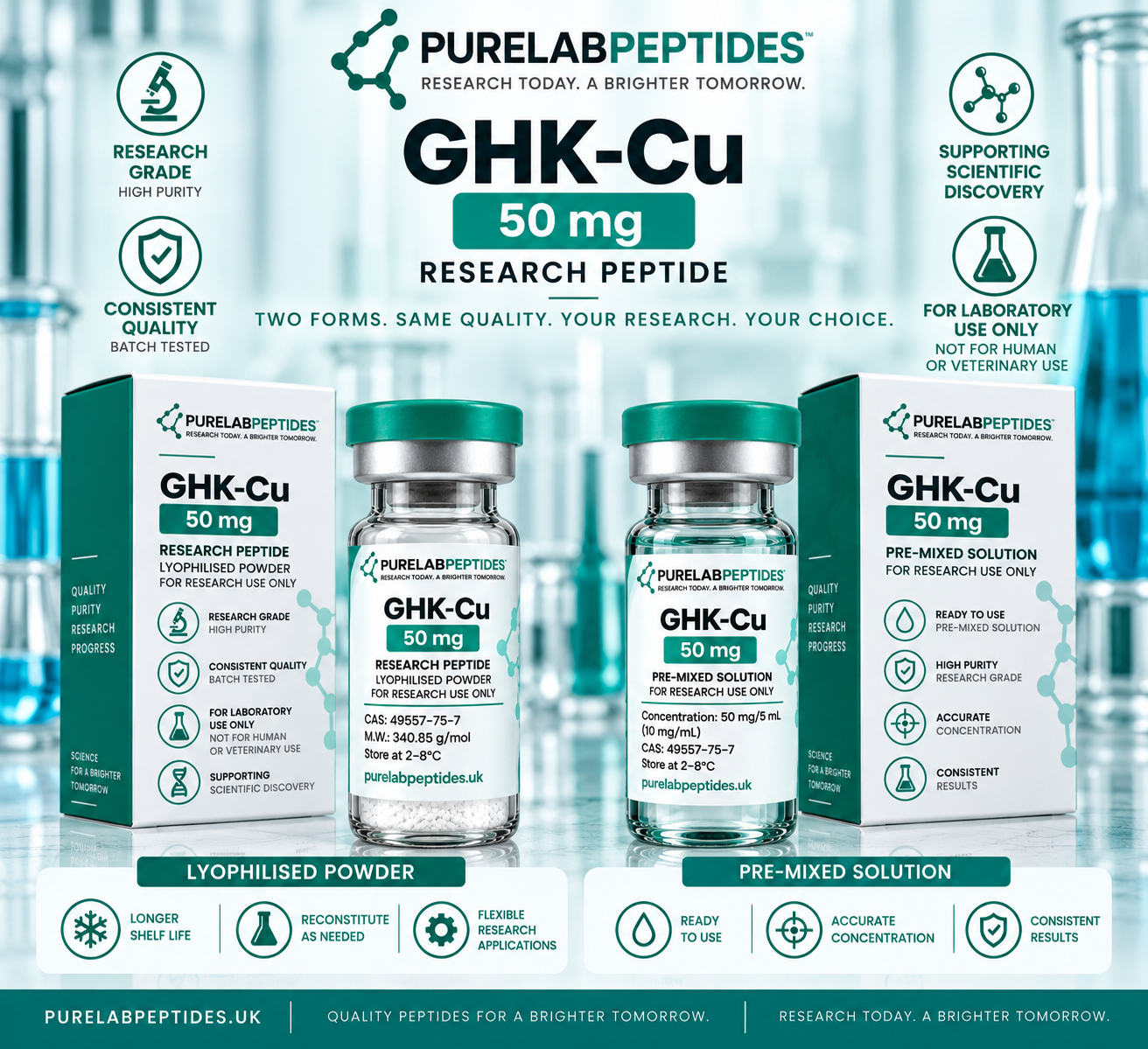
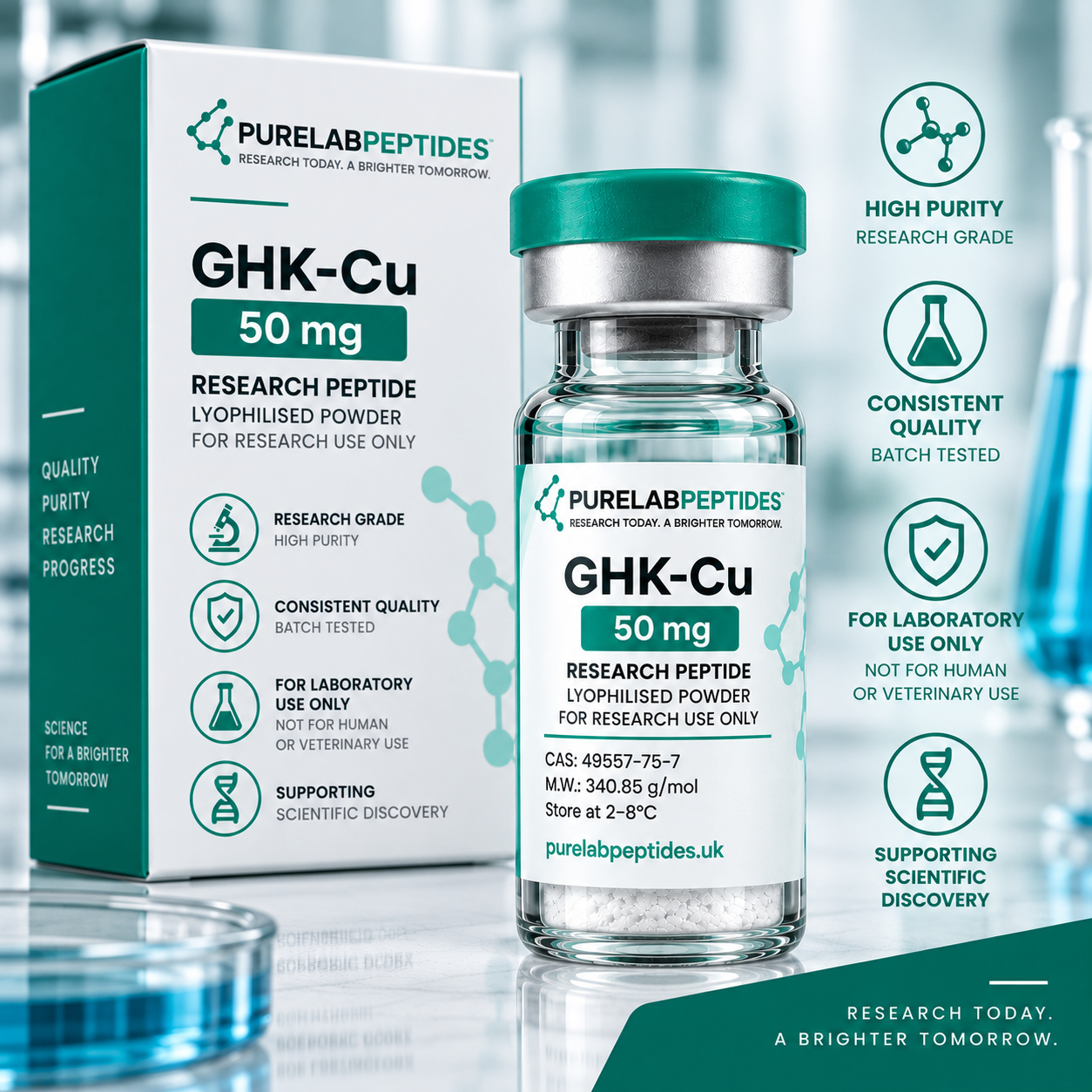
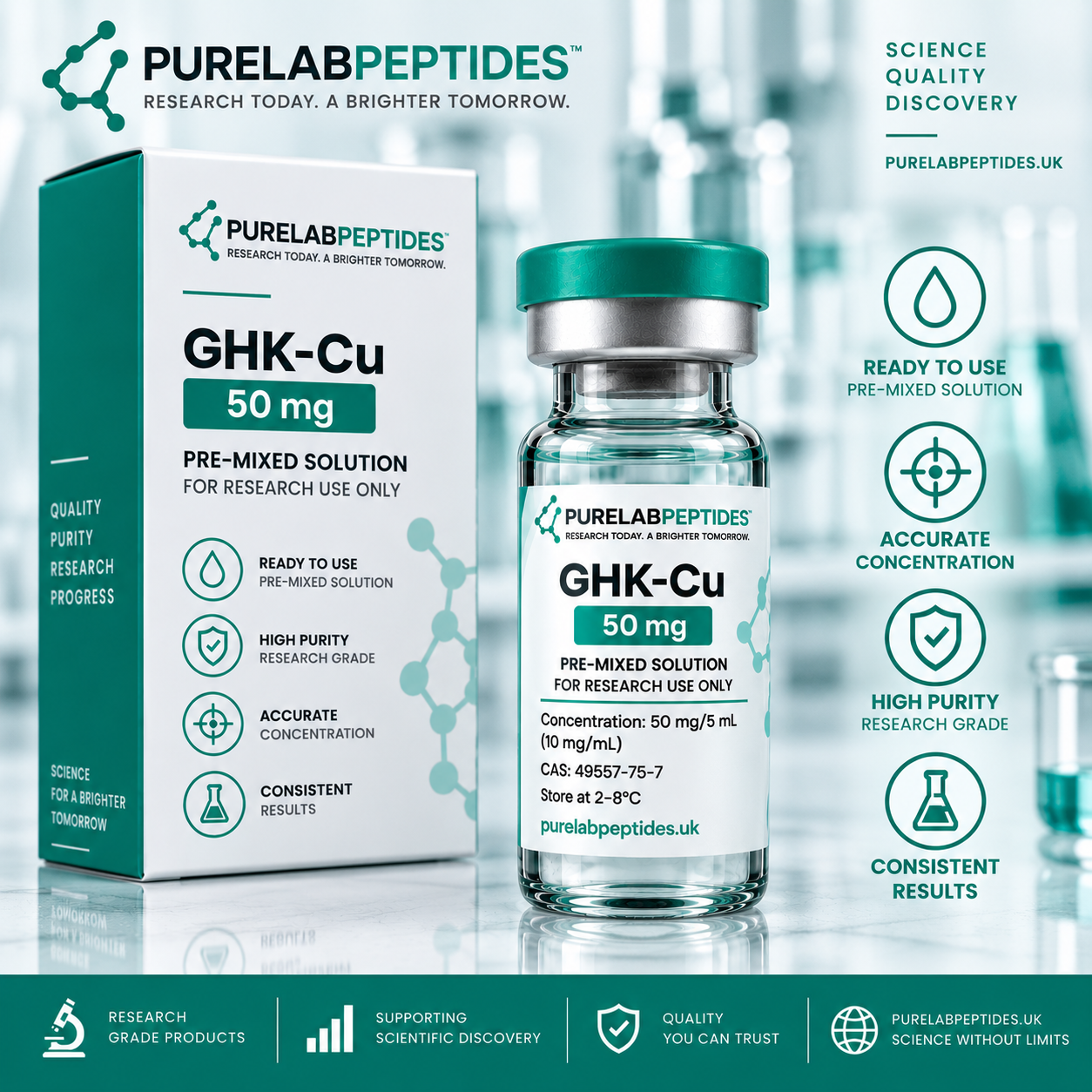
GHK-Cu 50mg Research Peptide from PureLabPeptides.uk is a copper-binding tripeptide supplied for controlled laboratory, analytical and biochemical research. The 50mg format provides researchers with a convenient quantity for investigations involving peptide chemistry, copper coordination, molecular interactions and experimental biological systems. For research use only. Not for human or veterinary consumption.
GHK-Cu 50mg from PureLabPeptides.uk is a research-grade peptide material designed for controlled scientific, analytical and laboratory investigation. GHK-Cu 50mg Research Peptide
GHK-Cu is a naturally occurring copper complex formed when the tripeptide glycyl-L-histidyl-L-lysine (GHK) binds copper ions. Its relatively simple three-amino-acid structure and ability to coordinate copper have made it an interesting subject within peptide chemistry, molecular biology and experimental biochemical research.
Researchers have investigated GHK and its copper complex across numerous experimental models, including studies concerned with molecular signalling, gene expression, extracellular environments and cellular responses.
PureLabPeptides.uk supplies GHK-Cu 50mg exclusively as a laboratory research material. It is not supplied as a medicine, cosmetic treatment, dietary supplement or product intended for self-administration. GHK-Cu 50mg Research Peptide
GHK is a naturally occurring tripeptide consisting of glycine, histidine and lysine.
When this peptide forms a complex with copper, it is commonly referred to as GHK-Cu or copper tripeptide-1.
The histidine component plays an important role in the peptide’s ability to interact with copper ions, creating a molecular complex that has attracted considerable scientific interest.
Researchers have studied GHK-Cu because metal-binding peptides can provide useful experimental systems for understanding how peptides interact with biologically relevant metal ions. GHK-Cu 50mg Research Peptide
Its small size also makes GHK-Cu particularly interesting for analytical peptide studies compared with considerably larger peptide molecules.
Peptide research helps scientists understand how short chains of amino acids participate in complex biological and chemical systems.
GHK-Cu has attracted research attention because it combines a defined tripeptide sequence with copper-binding characteristics.
Scientists may investigate how this complex behaves under different laboratory conditions, how environmental factors influence stability and how the molecule interacts with experimental biological systems.
Research involving GHK-Cu may include:
These applications represent areas of scientific investigation rather than established therapeutic uses.
Copper is an essential trace element involved in numerous biological processes.
Because free copper ions can participate in complex chemical reactions, biological systems use specialised molecules to bind, transport and regulate copper.
GHK provides researchers with an interesting example of a small peptide capable of forming a copper complex.
Scientists can examine characteristics such as coordination chemistry, molecular stability and interactions between GHK and copper under carefully controlled conditions.
This makes GHK-Cu relevant not only to peptide research but also to broader investigations involving bioinorganic chemistry and metal-peptide interactions.
The relatively compact structure of GHK-Cu makes it suitable for several forms of laboratory investigation.
Researchers may examine the compound using analytical techniques intended to characterize peptide identity, molecular composition or stability.
Experiments may also investigate how changes in temperature, concentration, pH or other environmental conditions influence the behaviour of the peptide-copper complex.
Other research may focus on interactions observed within appropriately designed cellular or biochemical models. GHK-Cu 50mg Research Peptide
When conducting these experiments, scientists should use suitable controls and clearly document experimental conditions to support reproducibility.
Results obtained from laboratory models should also be interpreted according to the limitations of the particular experimental system.
PureLabPeptides GHK-Cu is supplied in a 50mg format to provide researchers with a practical quantity for appropriately designed experimental work.
The larger research format may be useful for laboratories conducting repeated experiments, comparative analytical studies or projects requiring multiple experimental conditions.
Researchers remain responsible for calculating concentrations appropriate to their individual protocols.
The 50mg designation describes the quantity of research material supplied. It should not be interpreted as a recommended amount for human administration or cosmetic application. GHK-Cu 50mg Research Peptide
PureLabPeptides.uk does not provide human dosing instructions for this research product.
Accurate characterization is an important component of peptide science.
Researchers may investigate GHK-Cu using analytical approaches designed to examine molecular identity, purity, stability and related physicochemical characteristics.
Analytical investigations can also compare samples exposed to different environmental conditions.
For example, researchers might evaluate whether storage temperature or experimental preparation influences measurable characteristics of the compound.
These investigations can contribute to understanding how peptide-metal complexes behave and which variables should be controlled during laboratory experimentation.
Reliable scientific investigation requires careful control of research materials and experimental conditions.
Peptide identity, storage conditions, sample preparation, laboratory equipment and analytical methodology can all affect experimental results.
Researchers should therefore maintain comprehensive records when working with GHK-Cu.
Samples should be clearly identified, experimental conditions documented and appropriate controls incorporated into study designs.
Where product-specific analytical documentation is available, researchers should review the information before beginning experimental work.
Product specifications should never be interpreted as evidence that a research peptide has been authorised for therapeutic or cosmetic use.
GHK-Cu should be handled according to the storage information accompanying the particular research product.
Environmental factors including temperature, moisture and light exposure may influence peptide stability.
Researchers should minimise unnecessary environmental exposure and maintain appropriate laboratory storage conditions. GHK-Cu 50mg Research Peptide
Samples should also be protected from contamination and clearly labelled throughout experimental procedures.
Preparation methods and concentrations should be determined according to validated scientific protocols and the objectives of the individual research project. GHK-Cu 50mg Research Peptide
Research material should remain inaccessible to unauthorised individuals and should never be confused with medicines or consumer products.
GHK-Cu is widely discussed online, particularly in relation to skin, hair and other proposed applications. However, commercial claims should be distinguished from appropriately controlled scientific evidence.
PureLabPeptides GHK-Cu 50mg is supplied specifically for scientific investigation.
The product is not intended for human or veterinary consumption, self-administration, diagnosis, treatment or prevention of disease.
It should also not be represented as an authorised pharmaceutical or cosmetic product.
Qualified researchers should evaluate scientific literature independently and ensure that experiments comply with applicable laboratory and institutional requirements.
PureLabPeptides.uk supplies research peptides for laboratories, scientists and other qualified researchers seeking clearly presented experimental materials. GHK-Cu 50mg Research Peptide
GHK-Cu 50mg provides a convenient format for investigations requiring a copper-binding tripeptide.
Clear identification, responsible research-only positioning and appropriate product information help laboratories make informed purchasing decisions.
Researchers should always review current product specifications and available analytical information before deciding whether a material is appropriate for a particular experiment.
Researchers can order GHK-Cu 50mg Research Peptide directly from PureLabPeptides.uk for legitimate laboratory and scientific investigation.
The product can support appropriately designed studies involving peptide chemistry, copper coordination, molecular interactions and other biochemical research questions. GHK-Cu 50mg Research Peptide
Before ordering, confirm that the material and format meet the requirements of your research protocol.
PureLabPeptides GHK-Cu 50mg is supplied strictly for laboratory research and is not intended for human or veterinary consumption.
GHK-Cu is a copper complex of the tripeptide glycyl-L-histidyl-L-lysine. PureLabPeptides supplies the compound in a 50mg format intended exclusively for controlled laboratory and scientific investigation. GHK-Cu 50mg Research Peptide
GHK refers to the amino-acid sequence glycine-histidine-lysine. The Cu designation refers to copper associated with the peptide complex.
GHK is a tripeptide consisting of three amino acids: glycine, histidine and lysine.
Researchers study GHK-Cu in areas including peptide-metal interactions, copper coordination, molecular signalling, analytical characterization and experimental biochemical systems.
The 50mg designation describes the stated quantity of research material supplied. It does not represent a recommended human dose or application amount.
No. PureLabPeptides GHK-Cu 50mg is supplied specifically for laboratory research and is not intended for human or veterinary consumption or self-administration.
Yes. The interaction between GHK and copper is one of the molecular characteristics that makes the complex interesting for biochemical and peptide research.
Researchers should follow the product-specific storage instructions supplied with the material and protect samples from environmental conditions that could compromise peptide stability.
GHK-Cu 50mg Research Peptide can be ordered from PureLabPeptides.uk for legitimate scientific and laboratory research, subject to availability and applicable requirements.
No. Human dosing or application instructions are not provided because GHK-Cu 50mg is sold as a research material. Experimental concentrations should be established by qualified researchers according to validated laboratory protocols. GHK-Cu 50mg Research Peptide
| Form | Pre-Mixed, Vial |
|---|
Reviews
There are no reviews yet.