
£26.99 – £40.99Price range: £26.99 through £40.99
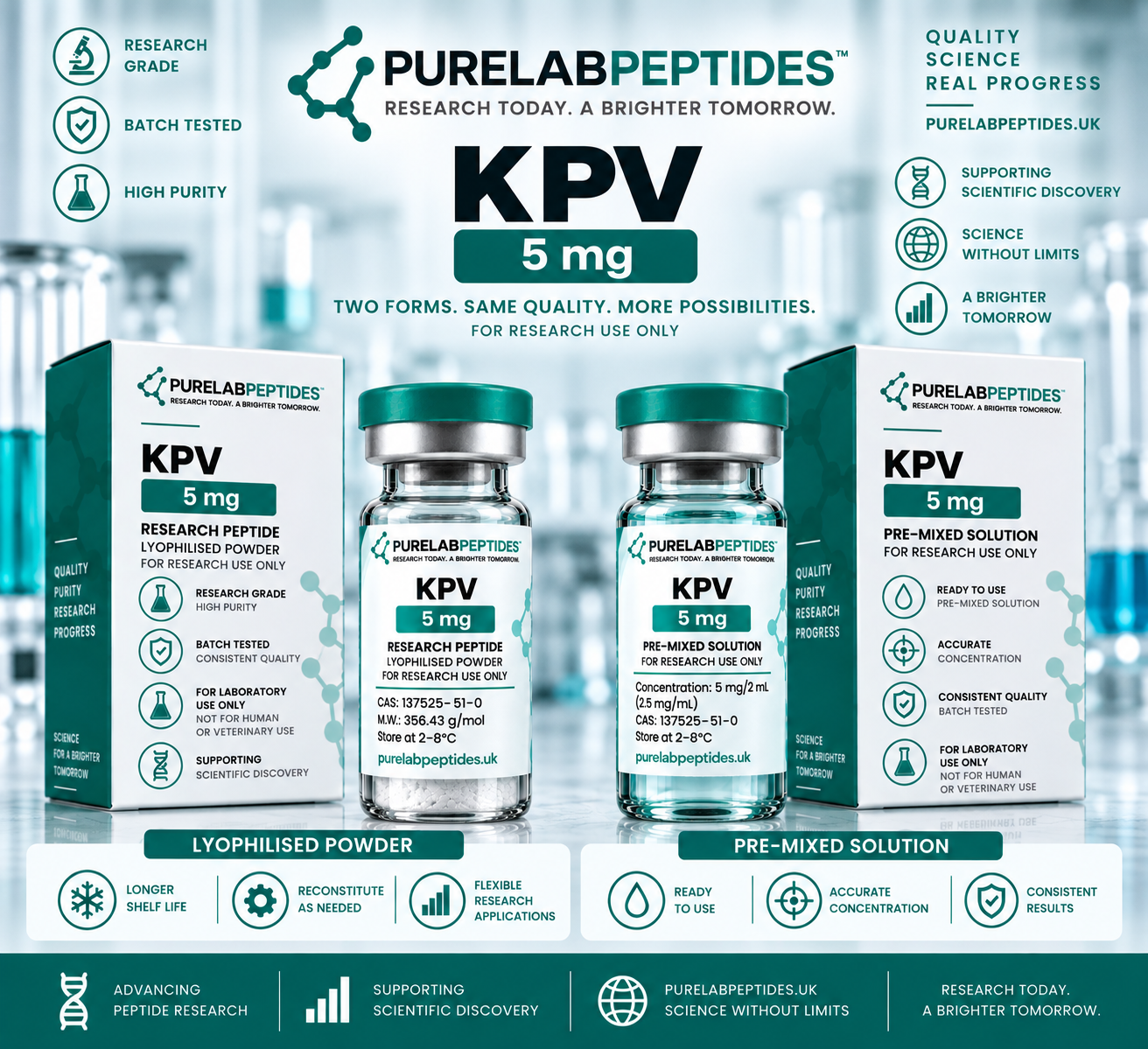
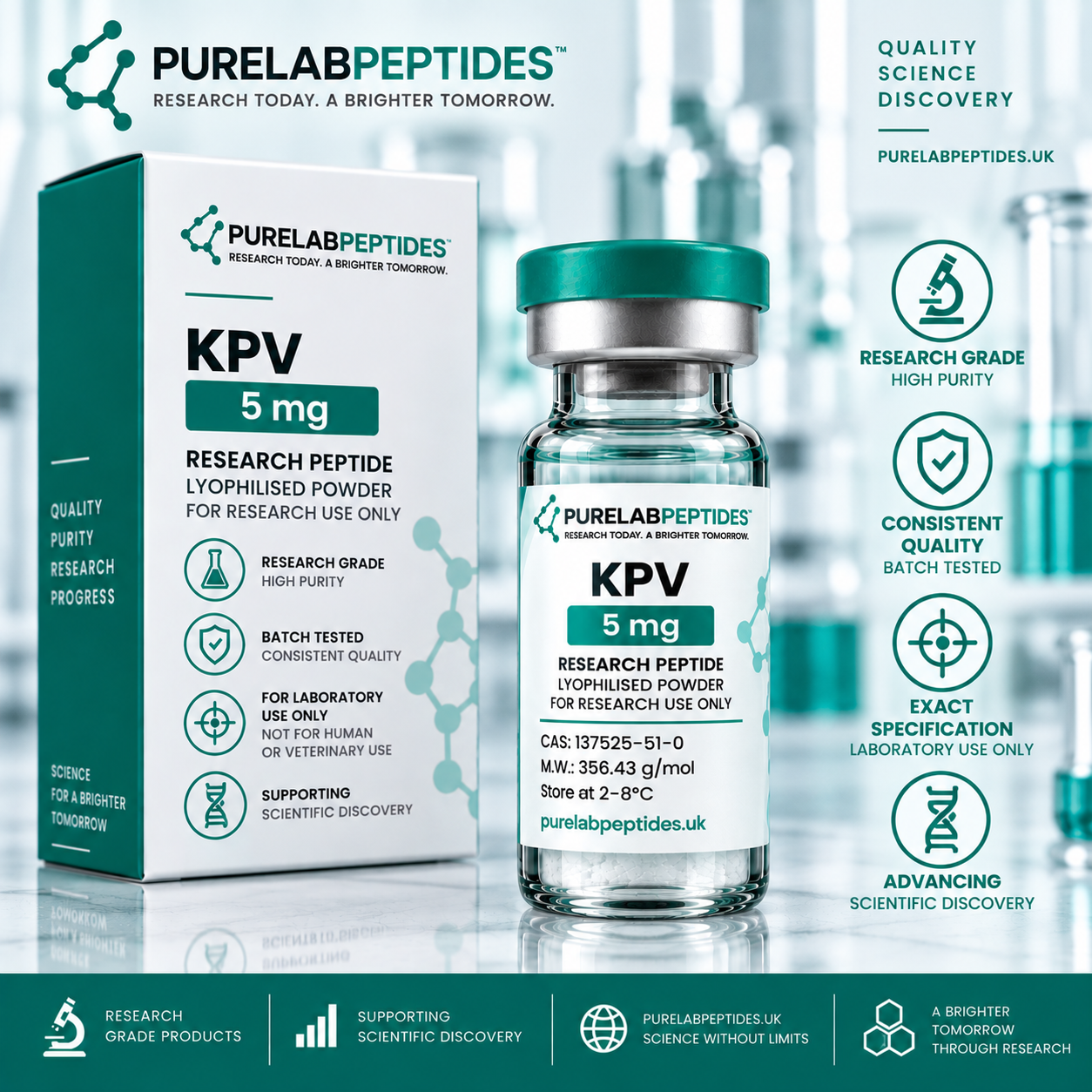
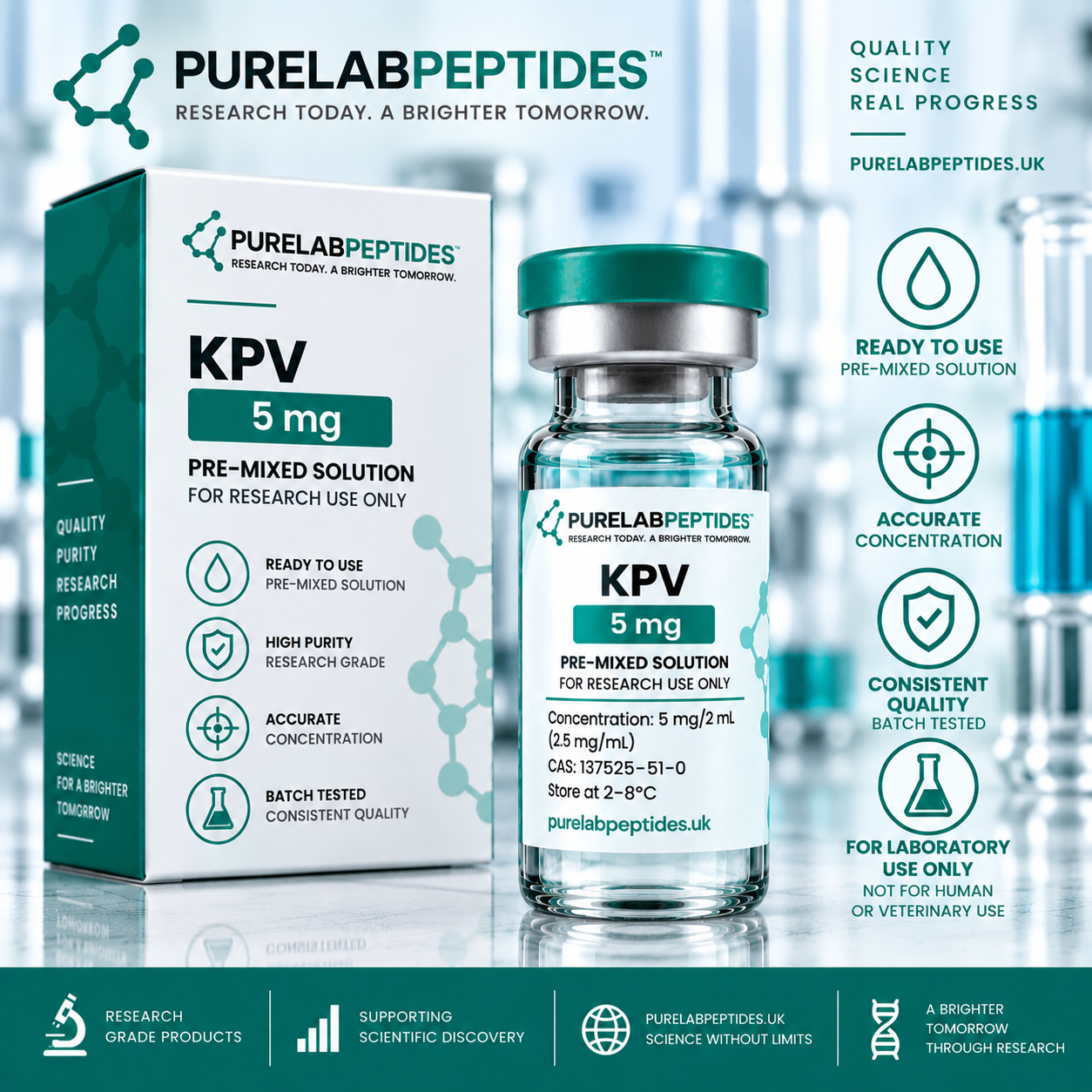
KPV 5mg Research Peptide from PureLabPeptides.uk is a short tripeptide composed of lysine, proline and valine, supplied for controlled laboratory and scientific investigation. As the C-terminal tripeptide associated with alpha-melanocyte-stimulating hormone (α-MSH), KPV provides researchers with an interesting material for studies involving peptide signalling, molecular interactions and experimental cellular pathways. For laboratory research use only. Not for human or veterinary consumption.
KPV 5mg from PureLabPeptides.uk is an experimental tripeptide supplied specifically for controlled laboratory, biochemical and analytical research. KPV 5mg Research Peptide
The name KPV represents its three-amino-acid sequence: lysine (K), proline (P) and valine (V).
KPV corresponds to the C-terminal tripeptide sequence of alpha-melanocyte-stimulating hormone, commonly abbreviated as α-MSH. Because KPV retains only a small portion of the parent peptide, scientists have investigated how this compact sequence behaves independently within different experimental systems.
Its small molecular structure makes KPV particularly interesting for peptide chemistry, molecular interaction studies, experimental signalling research and comparative investigations involving α-MSH-derived sequences.
PureLabPeptides.uk supplies KPV 5mg strictly as a research-use-only peptide. It is not supplied as a medicine, supplement, cosmetic treatment or product intended for self-administration. KPV 5mg Research Peptide
KPV is a tripeptide consisting of three amino acids arranged in the sequence Lys-Pro-Val.
It corresponds to residues 11–13 at the C-terminal end of α-MSH.
Alpha-melanocyte-stimulating hormone is a larger peptide derived from proopiomelanocortin. Researchers studying α-MSH identified shorter peptide fragments as useful tools for investigating which portions of the parent molecule contribute to particular experimental observations. KPV 5mg Research Peptide
KPV became particularly interesting because some preclinical studies reported biological activity despite its extremely short structure.
Scientists can therefore use KPV as an experimental model for studying relationships between peptide sequence, molecular structure and biological activity.
Small peptides can provide useful experimental systems because researchers can examine how individual amino-acid sequences influence molecular interactions. KPV 5mg Research Peptide
KPV has been investigated in preclinical research involving several experimental pathways.
Potential laboratory research areas include:
These applications describe areas of scientific investigation rather than established therapeutic uses.
One important aspect of KPV research concerns its relationship with α-MSH.
KPV represents the three amino acids located at the C-terminal region of the larger α-MSH sequence.
Researchers have compared KPV with α-MSH and other peptide fragments to investigate whether different portions of the parent peptide produce different responses within experimental systems. KPV 5mg Research Peptide
Some preclinical research has reported that KPV behaves differently from larger melanocortin peptides.
This has encouraged investigation into whether its experimental activity depends on traditional melanocortin receptor signalling or alternative molecular mechanisms.
These questions remain useful subjects for laboratory research.
Scientists have investigated KPV in cultured cellular systems to examine how the tripeptide interacts with signalling mechanisms.
Experimental work involving keratinocyte cells, for example, has examined intracellular responses associated with KPV and related α-MSH peptides.
Other laboratory studies have investigated inflammatory signalling pathways and cytokine-associated mechanisms.
Such research provides information about molecular behaviour under specific experimental conditions.
However, results obtained from isolated cells or other laboratory models cannot automatically establish clinical effects in humans. KPV 5mg Research Peptide
Researchers should therefore clearly distinguish mechanistic findings from demonstrated therapeutic outcomes.
Much of the scientific literature surrounding KPV consists of preclinical investigation.
Animal models and laboratory experiments have examined KPV in relation to inflammatory processes and other biological pathways.
These studies can help researchers generate hypotheses and identify mechanisms for further investigation.
They do not establish that a research peptide is safe or effective for treating a medical condition.
For this reason, PureLabPeptides.uk presents KPV 5mg specifically as an experimental laboratory material rather than a therapeutic product. KPV 5mg Research Peptide
Researchers should independently evaluate relevant scientific literature when designing experiments.
PureLabPeptides KPV is supplied in a convenient 5mg research format.
This provides laboratories with a defined quantity that can be incorporated into appropriately designed experimental protocols.
Researchers may use the material for analytical characterization, comparative experiments or controlled biochemical investigations depending on their research objectives.
The 5mg designation describes the stated quantity of research peptide supplied. KPV 5mg Research Peptide
It must not be interpreted as a recommended dose or amount for human administration.
PureLabPeptides.uk does not provide human dosing or self-administration instructions for KPV.
KPV’s short three-amino-acid sequence makes it particularly interesting from an analytical perspective.
Researchers may examine molecular identity, peptide stability and physicochemical behaviour under controlled laboratory conditions. KPV 5mg Research Peptide
Experimental designs might compare KPV with related peptide fragments or examine how changes in environmental conditions influence measurable characteristics.
Scientists may also investigate peptide transport, cellular uptake or interactions with particular experimental pathways where supported by appropriate methodology. KPV 5mg Research Peptide
Accurate record keeping and suitable experimental controls are important for ensuring meaningful results.
Reliable peptide research requires more than simply obtaining an experimental compound.
Storage conditions, material identity, experimental preparation, analytical equipment and research methodology can all influence results.
Researchers should therefore document experimental conditions carefully.
Appropriate positive and negative controls should be incorporated where relevant.
Where product-specific analytical documentation is available, laboratories should review that information before beginning experimental work.
Independent characterization may also be appropriate depending on institutional requirements and the objectives of the study. KPV 5mg Research Peptide
Product specifications should never be interpreted as evidence that KPV has received pharmaceutical approval.
Research peptides should be maintained according to the specific storage instructions accompanying the product.
Environmental factors such as temperature, moisture and repeated unnecessary exposure may affect peptide stability.
Researchers should use suitable laboratory practices to minimise contamination and preserve sample integrity.
All research materials should be clearly identified throughout storage and experimentation.
Experimental preparation and concentrations should be determined according to validated scientific protocols and individual research requirements.
KPV research material should remain securely stored and should not be confused with medicines, supplements or consumer products.
KPV is sometimes promoted online using claims relating to inflammation, intestinal health, skin conditions and recovery.
These marketing claims should not be confused with established clinical evidence.
Existing experimental literature includes cellular and animal investigations, while adequate human clinical evidence has not established KPV as an approved treatment.
PureLabPeptides KPV 5mg is therefore supplied strictly for scientific investigation.
It is not intended for human or veterinary consumption, self-administration, diagnosis, treatment, mitigation or prevention of disease.
Researchers should interpret experimental findings according to the limitations of the models used.
PureLabPeptides.uk provides research peptides for laboratories and researchers seeking clearly presented materials for controlled scientific investigation.
KPV 5mg offers a practical format for researchers studying short peptide sequences, α-MSH-derived fragments and related biochemical pathways.
Clear product identification and responsible research-only positioning help researchers determine whether a product is appropriate for their experimental objectives.
Researchers should review current specifications and available analytical information before purchasing.
Researchers can order KPV 5mg Research Peptide from PureLabPeptides.uk for legitimate laboratory, analytical and scientific investigation.
Its compact Lys-Pro-Val sequence makes KPV an interesting experimental material for investigations involving peptide chemistry, molecular signalling and α-MSH-derived peptide fragments.
Before purchasing, researchers should determine whether the product specifications and format meet the requirements of their experimental protocol.
PureLabPeptides KPV 5mg is supplied strictly for laboratory research use only and is not intended for human or veterinary consumption.
KPV is a short tripeptide consisting of lysine, proline and valine. PureLabPeptides supplies it in a 5mg format intended exclusively for controlled scientific and laboratory research.
The letters represent the standard one-letter amino-acid codes for its sequence: K for lysine, P for proline and V for valine.
KPV contains only three amino acids, making it a tripeptide.
Yes. KPV corresponds to the C-terminal Lys-Pro-Val sequence of alpha-melanocyte-stimulating hormone and is frequently identified in scientific literature as α-MSH(11–13).
Researchers have investigated KPV in experimental areas including peptide signalling, molecular interactions, α-MSH fragment biology and preclinical cellular pathways.
The 5mg designation refers to the stated quantity of research material supplied. It does not represent a recommended human dose.
This PureLabPeptides product is not supplied as an approved treatment. Preclinical research has investigated inflammation-related pathways, but those findings should not be interpreted as proof of clinical effectiveness.
No. PureLabPeptides KPV 5mg is supplied strictly for laboratory research and is not intended for human or veterinary consumption or self-administration.
Researchers should follow the specific storage instructions supplied with the product and maintain suitable laboratory conditions designed to preserve peptide stability and experimental integrity.
Researchers can purchase KPV 5mg Research Peptide through PureLabPeptides.uk for legitimate scientific and laboratory investigation, subject to product availability and applicable requirements.
| Form | Pre-Mixed, Vial |
|---|
Reviews
There are no reviews yet.